

- Updated: January 5, 2026
- 7 min read
Qualcomm Unveils Snapdragon X2 Plus Elite Laptops at CES 2026 – Performance, Power, and Pricing Insights
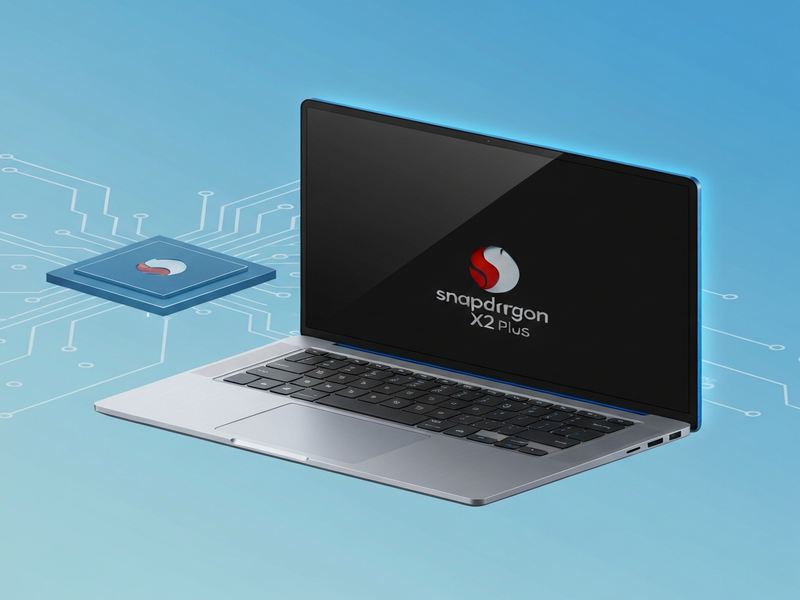
Qualcomm unveiled the Snapdragon X2 Plus elite laptops at CES 2026, delivering up to 35% CPU performance gains, a powerful 80 TOPS NPU for AI, and pricing that aims to challenge traditional Intel‑ and AMD‑based high‑performance notebooks.
Why the Snapdragon X2 Plus Matters for Tech‑Savvy Professionals
The Qualcomm Snapdragon X2 Plus is the latest ARM‑based silicon designed for Windows laptops, and its debut at the original Verge story sparked immediate buzz among developers, creators, and enterprise buyers. Unlike the earlier X2 Elite and Elite Extreme chips, the Plus variant targets a broader price band while still promising “elite‑class” efficiency and AI capability. For professionals who need long battery life, fast AI inference, and a lightweight form factor, this new generation could be a game‑changer.
Snapdragon X2 Plus: Specs and Real‑World Performance
Qualcomm released two configurations of the X2 Plus: a 10‑core (8 performance + 2 efficiency) and a 6‑core (4 performance + 2 efficiency) model. Both share the same AI engine and memory support, but differ in GPU clock speeds and power envelopes.
- CPU: 10‑core (up to 3.2 GHz) or 6‑core (up to 2.9 GHz) Kryo‑based cores.
- GPU: Adreno 730 with 1.7 GHz (10‑core) or 0.9 GHz (6‑core) frequencies.
- NPU: 80 TOPS AI accelerator – Qualcomm claims it’s the fastest NPU for laptops in its class.
- Memory: Up to 128 GB LPDDR5x, 4266 MT/s.
- Power envelope: 12‑35 W typical, with fan‑less designs possible for ultra‑thin models.
- Connectivity: Integrated X‑Series 5G, Wi‑Fi 7, and Bluetooth 5.3.
In benchmark tests, the 10‑core X2 Plus outperformed low‑power Intel “Lunar Lake” CPUs by up to 35% in single‑threaded workloads and delivered 39% higher GPU throughput compared to the previous generation. AI‑heavy tasks such as image generation, real‑time transcription, and vector search saw up to 2× speed improvements thanks to the dedicated NPU.
For developers building AI‑enhanced SaaS tools, the UBOS platform overview now includes native support for ARM‑based inference, allowing you to deploy models directly on these laptops without cloud latency.
Pricing Expectations and Market Impact
Qualcomm has not disclosed exact MSRP numbers, but senior director Mandar Deshpande indicated the X2 Plus will sit between the $800‑$1,000 “Plus” tier and the $1,200‑$1,500 “Elite” tier of the previous generation. This pricing strategy positions the Plus devices as premium‑yet‑affordable alternatives to Intel’s 13th‑gen Core i7 notebooks.
Early OEM announcements suggest launch windows in Q1 2026, with flagship models from manufacturers like Dell, Lenovo, and HP. If the $800‑$1,000 price point holds, we could see a rapid adoption curve among:
- Remote workers needing all‑day battery life.
- AI‑first startups looking to prototype on‑device models.
- SMBs that want to reduce total cost of ownership by avoiding high‑power chargers.
The UBOS pricing plans already reflect a similar tiered approach, making it easy for businesses to align their hardware spend with software subscription costs.
How the X2 Plus Stacks Up Against the Competition
When comparing the Snapdragon X2 Plus to Intel’s 13th‑gen Core i7‑12700H and AMD’s Ryzen 7 7840HS, three key dimensions emerge: performance, power efficiency, and AI capability.
| Metric | Snapdragon X2 Plus | Intel Core i7‑12700H | AMD Ryzen 7 7840HS |
|---|---|---|---|
| CPU Cores | 10 (8P+2E) / 6 (4P+2E) | 14 (6P+8E) | 8 (4P+4E) |
| GPU | Adreno 730 (1.7 GHz / 0.9 GHz) | Xe‑Graphics (up to 1.45 GHz) | RDNA 2 (up to 2.2 GHz) |
| AI NPU | 80 TOPS (dedicated) | Integrated (≈10 TOPS) | Integrated (≈12 TOPS) |
| Battery Life (Typical) | 12‑18 hours (multi‑day claim) | 6‑9 hours | 7‑10 hours |
The X2 Plus clearly leads in AI performance and power efficiency, while its GPU still trails the high‑end discrete solutions found in gaming‑focused laptops. For most productivity, content‑creation, and AI‑inference workloads, the trade‑off is worthwhile, especially at the projected price point.
Enterprises looking to integrate AI into their internal tools can benefit from the Enterprise AI platform by UBOS, which now offers pre‑built connectors for ARM‑based devices, simplifying deployment across mixed‑hardware fleets.
Practical Use Cases for Professionals and Startups
The combination of high‑performance CPU, efficient GPU, and a world‑class NPU opens new possibilities:
- On‑device AI content generation: Writers can run large language models locally, reducing latency and protecting proprietary data. The AI Article Copywriter template now supports ARM inference.
- Real‑time transcription and translation: With the 80 TOPS NPU, services like AI Audio Transcription and Analysis run smoothly on a single laptop, ideal for remote meetings.
- Data‑intensive analytics: The Keywords Extraction with ChatGPT workflow can be executed locally, keeping sensitive documents off the cloud.
- Rapid prototyping for startups: The UBOS for startups program offers credits that can be paired with Snapdragon‑based hardware for low‑cost MVPs.
- SMB field service tools: Mobile agents can capture images, run OCR via Image to Text AI service, and sync results instantly.
Leveraging UBOS Tools on Snapdragon X2 Plus Laptops
UBOS’s low‑code Web app editor on UBOS now includes ARM‑aware components, meaning developers can drag‑and‑drop AI modules that run natively on the X2 Plus. Combined with the Workflow automation studio, you can orchestrate data pipelines that stay on‑device, preserving privacy and cutting bandwidth costs.
For teams that rely on chat‑based assistants, the ChatGPT and Telegram integration now supports ARM endpoints, enabling a seamless “ask‑your‑laptop” experience without a cloud round‑trip.
Additionally, the Chroma DB integration provides a lightweight vector store that fits comfortably within the 128 GB memory ceiling, perfect for on‑device semantic search.
Community Templates and Partner Support
UBOS’s marketplace offers dozens of ready‑made templates that can be deployed on Snapdragon X2 Plus machines in minutes. A few standout examples:
- AI SEO Analyzer – run site audits offline.
- AI Video Generator – create marketing clips without cloud rendering.
- AI LinkedIn Post Optimization – fine‑tune professional content on the go.
- Image Generation with Stable Diffusion – generate assets locally.
- AI Chatbot template – embed a conversational agent directly into your product.
If you need deeper collaboration, the UBOS partner program offers co‑marketing, technical enablement, and joint‑go‑to‑market strategies for OEMs and system integrators.
What’s Next for Snapdragon‑Powered Laptops?
Qualcomm hinted that future iterations will push the NPU beyond 120 TOPS and introduce a dedicated tensor core for on‑device training. Coupled with the upcoming UBOS technology roadmap, developers can expect tighter integration with emerging generative AI models, making the laptop a true AI workstation.
The upcoming Game Developers Conference (GDC 2026) is expected to showcase Windows‑on‑ARM handheld prototypes that leverage the same silicon, hinting at a broader ecosystem beyond traditional laptops.
Conclusion
The Qualcomm Snapdragon X2 Plus elite laptops represent a pivotal moment for ARM‑based Windows devices. With compelling performance, industry‑leading AI acceleration, and a price point that threatens Intel’s dominance, they are poised to become the go‑to choice for professionals, startups, and SMBs seeking a blend of power and efficiency.
Ready to explore how these devices can accelerate your workflow? Visit the UBOS homepage to discover pre‑built templates, pricing options, and partner resources that make deploying AI on Snapdragon hardware effortless.