

- Updated: March 15, 2026
- 8 min read
DigiKey’s Rise in Thief River Falls: How a Small Minnesota Town Became a Global Electronics Hub
DigiKey, the global electronics distributor headquartered in Thief River Falls, Minnesota, is navigating U.S. tariffs by leveraging a foreign‑trade‑zone (FTZ) strategy that saves tens of millions of dollars each year while keeping the town’s economy thriving.
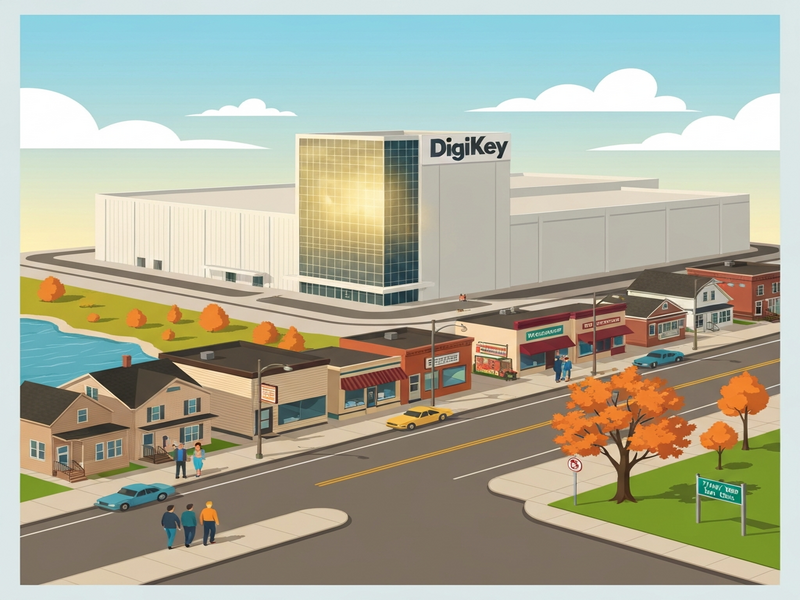
DigiKey’s Rise in Thief River Falls: From Ham‑Radio Hobby to Global Supply‑Chain Powerhouse
In a town of just under 9,000 residents, DigiKey has become the largest private employer, accounting for roughly half of Pennington County’s jobs. Founded in 1972 by ham‑radio enthusiast Ron Stordahl, the company grew from a mail‑order catalog of “Digi‑Keyer” parts to a 2.2‑million‑square‑foot distribution hub that ships an average of 25,000 orders per day to engineers, manufacturers, and hobbyists worldwide.
The story of DigiKey’s expansion is tightly linked to the About UBOS philosophy of building platforms that empower niche markets at scale. Just as UBOS enables developers to launch AI‑driven solutions without heavy infrastructure, DigiKey’s logistics model shows how a focused, technology‑first approach can transform a rural community into a global tech hub.
Why Thief River Falls? Geography, Workforce, and Vision
The decision to stay in Thief River Falls was not accidental. Stordahl’s early customers were local engineers and hobbyists who needed small quantities of components—something the big distributors of the era could not provide. By locating the warehouse near his hometown, DigiKey could offer rapid, same‑day shipping to the Upper Midwest while keeping labor costs competitive.
- Access to a stable, loyal workforce—many employees are multi‑generational families.
- Proximity to major rail lines and the Thief River Falls airport, enabling cargo‑plane deliveries.
- Lower real‑estate and utility costs compared with coastal tech hubs.
The company’s growth has spurred ancillary development: a cargo hangar, expanded runway, new hotels, and a vibrant downtown revitalization. The synergy mirrors the UBOS platform overview, where a core engine (the warehouse) powers an ecosystem of services (logistics, customer support, AI tools).
Tariff Turbulence: The Challenge of U.S. Trade Policy
Since 2018, DigiKey has shouldered more than $500 million in tariffs imposed on Chinese imports. The company’s trade‑compliance team, led by Vice President of Operational Excellence and Trade Compliance Teri Ivaniszyn, works around the clock to calculate, collect, and, where possible, reclaim these duties.
The tariff landscape is volatile:
- 10 % duties on Chinese electronic components (2018‑2020).
- Additional 10 % levies on steel and aluminum (2021).
- Fluctuating “section 301” tariffs that can jump from 0 % to 25 % within weeks.
DigiKey’s response has been two‑fold: internal cost‑absorption for U.S. customers and aggressive use of the foreign‑trade‑zone (FTZ) status for its Minnesota warehouse.
Foreign Trade Zone: How DigiKey Turns Tariffs Into a Competitive Edge
An FTZ is a “virtual” area where imported goods can be stored, processed, or re‑exported without incurring U.S. customs duties—unless the items enter the domestic market. DigiKey’s 2.2‑million‑square‑foot facility is designated as an FTZ, allowing the company to defer or avoid tariffs on a large portion of its inventory.
The mechanics are simple yet powerful:
- Suppliers ship components to the FTZ warehouse.
- DigiKey stores the parts duty‑free.
- If a U.S. customer orders the part, DigiKey pays the applicable tariff at the point of sale.
- If the order is for an overseas customer, no tariff is charged at all.
This model saves DigiKey “tens of millions” annually, a figure comparable to the revenue of a midsize SaaS startup. The savings are reinvested in automation, AI‑driven demand forecasting, and employee benefits—mirroring the Enterprise AI platform by UBOS, which helps businesses convert operational efficiencies into growth.
Economic Ripple Effects on the Minnesota Community
DigiKey’s presence has reshaped the local economy in measurable ways:
| Metric | Impact |
|---|---|
| Jobs Created | ~3,800 U.S. positions (≈50 % of county workforce) |
| Average Salary | $68,000 (above state median) |
| Local Tax Revenue | $12 M annually, funding schools and infrastructure |
| Secondary Business Growth | New hotels, restaurants, and logistics firms |
The town’s mayor, who also serves as an IT manager at DigiKey, notes that “if you’re not working here, a family member probably is.” This interwoven employment fabric is a hallmark of the UBOS solutions for SMBs approach—building ecosystems where every stakeholder benefits.
Future Outlook: Expansion, Automation, and AI Integration
DigiKey’s leadership is looking beyond tariff mitigation toward three strategic pillars:
- Automation & Robotics: New automated storage‑and‑retrieval systems (AS/RS) will increase pick‑rate efficiency by 30 %.
- AI‑Driven Forecasting: Machine‑learning models predict component demand spikes, reducing safety‑stock levels.
- Global FTZ Network: Exploring additional FTZ sites in the Midwest to diversify risk.
These initiatives echo the capabilities of the Workflow automation studio, where low‑code pipelines orchestrate data movement, alerts, and decision logic—exactly what DigiKey needs to stay ahead of tariff volatility.
Moreover, DigiKey is piloting AI‑enhanced customer support bots that can answer technical queries in real time. The prototype uses the OpenAI ChatGPT integration and will soon be extended with the ChatGPT and Telegram integration for on‑the‑go engineers.
How Other Tech Leaders Can Learn from DigiKey’s Model
The DigiKey case study offers a blueprint for any technology‑focused company operating in a regulated environment:
- Leverage Regulatory Zones: FTZs, free‑trade zones, or tax‑incentive districts can dramatically cut overhead.
- Invest in Automation Early: Reducing manual labor shields the business from sudden cost spikes.
- Build AI‑First Culture: Use AI for demand forecasting, compliance monitoring, and customer interaction.
- Maintain Community Ties: A strong local talent pool provides resilience against macro‑economic shocks.
Companies looking to replicate this success can explore the UBOS templates for quick start, which include pre‑built FTZ‑compliant inventory modules and AI‑driven analytics dashboards.
Explore Related AI Tools on UBOS Marketplace
While DigiKey’s logistics engine runs on physical infrastructure, the same principles of scalability and automation apply to AI solutions. Below are a few UBOS marketplace apps that embody the same MECE‑driven design:
- AI SEO Analyzer – Optimizes content for search engines using real‑time keyword data.
- AI Article Copywriter – Generates long‑form, SEO‑friendly articles in minutes.
- AI Survey Generator – Crafts market‑research surveys with adaptive logic.
- Web Scraping with Generative AI – Extracts structured data from any website.
- AIDA Marketing Template – Automates copywriting using the classic AIDA framework.
- Elevate Your Brand with AI – AI‑driven brand positioning and visual identity.
- AI Video Generator – Turns scripts into short marketing videos.
- AI Audio Transcription and Analysis – Converts calls and meetings into searchable text.
- Generative AI Text-to-Video – Creates visual stories from plain text.
- Know Your Target Audience – AI‑powered audience segmentation.
- AI LinkedIn Post Optimization – Boosts engagement on professional networks.
- Image Generation with Stable Diffusion – Produces high‑quality visuals for marketing.
- AI Chatbot template – Deploys conversational agents in minutes.
- Customer Support with ChatGPT API – Scales help‑desk operations.
- Multi-language AI Translator – Breaks language barriers for global teams.
- Translate Natural Language to SQL – Turns plain English into database queries.
- Factual Answering AI with ChatGPT API – Delivers precise answers from knowledge bases.
- Grammar Correction AI – Polishes copy for professionalism.
- Summarize for a 2nd Grader – Simplifies complex topics for any audience.
- AI Language Model Tutorial Chatbot – Teaches developers how to fine‑tune models.
- JavaScript Helper AI Chatbot – Assists developers with code snippets.
- Movie to Emoji AI Application – Fun, shareable content generator.
- Sarcastic AI Chat Bot – Adds personality to brand interactions.
- Unstructured Data AI Parser – Extracts insights from PDFs, emails, and logs.
- Product Name Generator AI – Sparks creative branding ideas.
- Python Bug Fixer AI – Automates debugging for developers.
- Airport Code Extractor – Streamlines travel logistics.
- Custom Interview Questions with AI – Enhances hiring processes.
- Create Study Notes with AI – Supports continuous learning.
- AI Restaurant Review App – Curates dining experiences.
- AI for Turn-by-Turn Directions – Enhances navigation services.
- AI Chat App with ChatGPT API – Builds community platforms.
- AI Recipe Creator – Generates culinary ideas on demand.
- AI-Powered Essay Outline Generator – Assists students and writers.
- AI-Powered VR Fitness Idea Generator – Fuels immersive wellness concepts.
- AI App with Text-to-Command – Turns natural language into actions.
- Calculate Time Complexity with ChatGPT – Helps developers optimize code.
- Keywords Extraction with ChatGPT – Powers SEO strategies.
- AI Voice Assistant – Enables hands‑free interaction.
- Extract Contact Information AI – Automates lead capture.
- AI File Manager – Organizes digital assets intelligently.
- GPT-Powered Telegram Bot – Extends support channels.
- Video AI Chat Bot – Engages users with visual conversation.
- Pharmacy Admin Panel – Streamlines healthcare operations.
- Help Me Write AI – Boosts content creation speed.
- Text-to-Speech Google AI – Converts text into natural speech.
- AI Image Generator – Produces custom graphics on demand.
- AI Email Marketing – Automates personalized campaigns.
Conclusion: DigiKey’s Blueprint for Resilient Growth
DigiKey demonstrates that a company can thrive in a remote location, survive aggressive trade policies, and still lead a global market. By combining a foreign‑trade‑zone strategy, aggressive automation, and AI‑enhanced operations, the firm protects its margins while fueling the local economy.
For technology leaders, the lesson is clear: leverage regulatory advantages, invest in scalable infrastructure, and embed AI at every decision point. Those who follow this roadmap will find themselves as indispensable to their communities as DigiKey is to Thief River Falls.
Want to explore how AI can transform your own supply‑chain or business model? Visit the UBOS homepage for a full suite of tools, or dive straight into the UBOS pricing plans to get started today.
For the original reporting, see the NPR story.
Andrii Bidochko
CTO UBOS
Andrii Bidochko is an AI entrepreneur and researcher focused on AI agents, reinforcement learning, and autonomous systems. He writes about the technologies shaping the future of machine intelligence, from frontier models and agent architectures to real-world AI applications.