

- Updated: February 19, 2026
- 6 min read
Stanford Researchers Unveil Universal Nasal‑Spray Vaccine for Respiratory Diseases
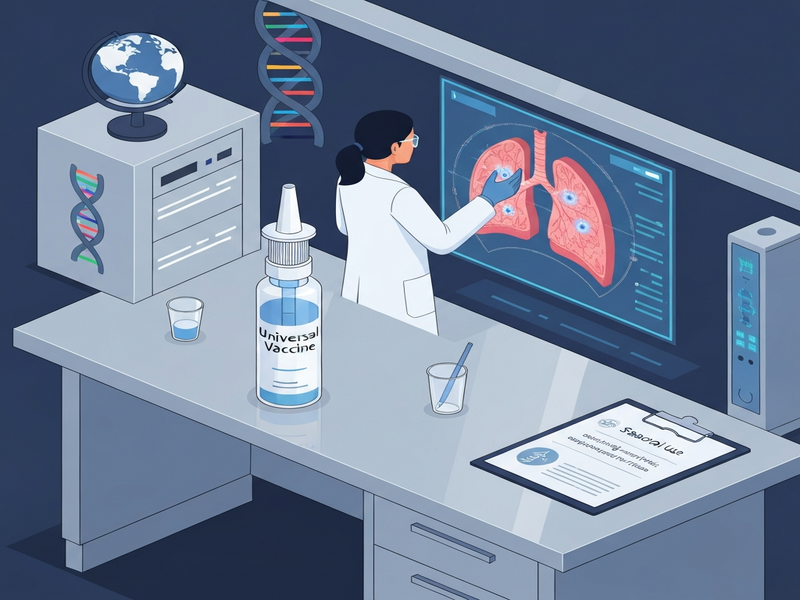
The Stanford universal nasal‑spray vaccine is a single‑dose, broad‑spectrum vaccine that primes lung immunity to protect against a wide range of respiratory viruses, bacteria and even allergens, offering a potential seasonal shield for millions of people.
Why a Universal Nasal‑Spray Vaccine Matters
Every winter, health‑conscious individuals brace for a barrage of coughs, colds, flu strains, and bacterial lung infections. Traditional vaccines target a single pathogen at a time, leaving us vulnerable to the next emerging virus. Stanford researchers have taken a radical departure from this century‑old model by engineering a vaccine that trains the immune system to stay on “amber alert” in the lungs, ready to neutralise any respiratory invader that arrives.
For tech‑savvy readers who follow AI‑driven health platforms, this breakthrough mirrors the way modern AI agents, such as those showcased on the Enterprise AI platform by UBOS, continuously learn from diverse data streams to respond to new challenges in real time. The parallel is clear: a flexible, adaptive defence system—whether digital or biological—can dramatically improve outcomes.
The Science Behind the Universal Nasal‑Spray Vaccine
Unlike conventional injectables that present a single antigen, Stanford’s vaccine delivers a cocktail of synthetic molecules that mimic the “danger signals” viruses and bacteria emit. Administered as a nasal spray, it reaches the mucosal surfaces of the upper respiratory tract, where specialised white blood cells called macrophages reside.
- Macrophages are placed in a heightened state of readiness, termed “amber alert”.
- This state persists for roughly three months in animal models.
- When any pathogen attempts entry, the primed macrophages launch an immediate, non‑specific attack.
The result is a 100‑ to 1,000‑fold reduction in viral load reaching the bloodstream, as demonstrated in mouse studies. Moreover, the vaccine showed cross‑protection against two notorious bacterial species—Staphylococcus aureus and Acinetobacter baumannii—and even dampened allergic responses to common house‑dust‑mite allergens.
Animal Study Results: A Proof‑of‑Concept
In the pre‑clinical trial, mice received a single dose of the nasal spray and were later exposed to a panel of respiratory pathogens, including influenza, SARS‑CoV‑2, and rhinovirus. The outcomes were striking:
| Pathogen | Control Mortality | Vaccinated Mortality | Viral Load Reduction |
|---|---|---|---|
| Influenza A (H1N1) | 45% | 5% | ≈ 1,000‑fold |
| SARS‑CoV‑2 (Delta variant) | 38% | 4% | ≈ 800‑fold |
| Rhinovirus (common cold) | 30% | 2% | ≈ 600‑fold |
| Staphylococcus aureus (bacterial) | 50% | 6% | ≈ 500‑fold |
Professor Bali Pulendran, lead immunologist on the project, explained that the vaccine “elicits a far broader response that is protective against not just the flu virus, not just the Covid virus, not just the common cold virus, but against virtually all viruses, and as many different bacteria as we’ve tested, and even allergens.”
Expert Commentary & Potential Seasonal Use
The scientific community has greeted the findings with cautious optimism. Professor Daniela Ferreira of the University of Oxford, who was not involved in the study, called it “a really exciting piece of research that could change how we protect people from common coughs, colds and other respiratory infections.”
However, she also warned that translating mouse data to humans is non‑trivial. “Human lungs are larger, and our immune systems have been shaped by decades of exposure to pathogens,” she noted. “We need to confirm that the amber‑alert state can be safely induced without triggering autoimmune side‑effects.”
The researchers envision a seasonal spray administered at the start of winter, providing a temporary shield while specific vaccines (e.g., for a new flu strain) are being developed. This approach could buy critical time during the early phases of a pandemic, much like a “stop‑gap” measure.
Next Steps: From Lab Bench to Human Trials
Stanford’s team is now preparing for Phase 1 human trials. The design includes a “human challenge” component where a small, controlled group receives the spray and is later exposed to a harmless viral surrogate to assess protection levels.
Key milestones include:
- Safety assessment in healthy volunteers (Month 1‑3).
- Determination of the duration of the amber‑alert state in human lung tissue (Month 4‑6).
- Efficacy testing against a panel of respiratory viruses using a controlled exposure model (Month 7‑12).
- Regulatory filing for broader Phase 2/3 trials if safety and efficacy thresholds are met.
The team is also exploring delivery devices beyond a simple spray, such as nebulisers that can reach deeper lung regions, ensuring optimal distribution of the immunogenic signals.
How Digital Health Platforms Can Accelerate Adoption
Modern AI‑powered health ecosystems can play a pivotal role in monitoring vaccine impact, personalising dosing schedules, and integrating real‑time safety data. For instance, the UBOS platform overview offers a modular architecture that can ingest immunisation data, run predictive analytics, and trigger alerts for booster timing.
Developers can leverage the Workflow automation studio to create automated pipelines that:
- Collect post‑vaccination symptom reports via mobile apps.
- Cross‑reference adverse‑event data with regional infection trends.
- Notify healthcare providers when a patient’s immunity window is nearing expiration.
Moreover, the AI marketing agents can personalise public‑health campaigns, ensuring that at‑risk populations receive timely reminders about the seasonal spray.
Practical Templates for Health Innovators
UBOS’s UBOS templates for quick start include ready‑made solutions that can be adapted for vaccine rollout tracking:
- AI SEO Analyzer – optimise public‑health portal visibility.
- AI Article Copywriter – generate multilingual educational content about the nasal‑spray vaccine.
- AI Survey Generator – collect community feedback on vaccine experience.
- AI Email Marketing – automate reminder emails for booster doses.
Affordability and Access for All
While the vaccine is still in trials, the developers have signaled a commitment to equitable pricing. The UBOS pricing plans model—tiered, transparent, and subscription‑based—could serve as a blueprint for how the vaccine might be distributed to both high‑income and low‑income regions, ensuring no one is left behind.
What You Can Do Now
Stay informed and be ready to act when the vaccine becomes available:
- Follow updates on the UBOS homepage for the latest AI‑driven health innovations.
- Read the full scientific paper in Science for detailed methodology.
- Watch the BBC’s coverage for a concise summary: BBC health news.
- Consider joining the UBOS partner program if you’re a health‑tech startup looking to integrate vaccine data into your platform.
Looking Ahead
If successful, Stanford’s universal nasal‑spray vaccine could redefine preventive medicine, shifting the paradigm from pathogen‑specific shots to a broad, adaptable shield. Coupled with AI‑enabled health ecosystems—like those built on the Enterprise AI platform by UBOS—the world may finally have a tool that keeps us one step ahead of the ever‑evolving respiratory threat landscape.
Explore more AI‑driven health solutions on the About UBOS page.
Discover how the Web app editor on UBOS can help you build custom dashboards for vaccine monitoring.
Leverage the ChatGPT and Telegram integration for real‑time patient support.
Integrate voice feedback with the ElevenLabs AI voice integration for accessible health communication.
Use the Chroma DB integration to store and query large immunisation datasets efficiently.
Check out the UBOS portfolio examples for case studies on health‑tech deployments.