

- Updated: February 6, 2026
- 5 min read
AI Talent Poaching in Silicon Valley: Loyalty Is Dead
AI talent poaching in Silicon Valley is accelerating, with tech giants like Meta, Google, and Nvidia snapping up top researchers while startups experience rapid churn, reshaping career motivations and investor strategies.
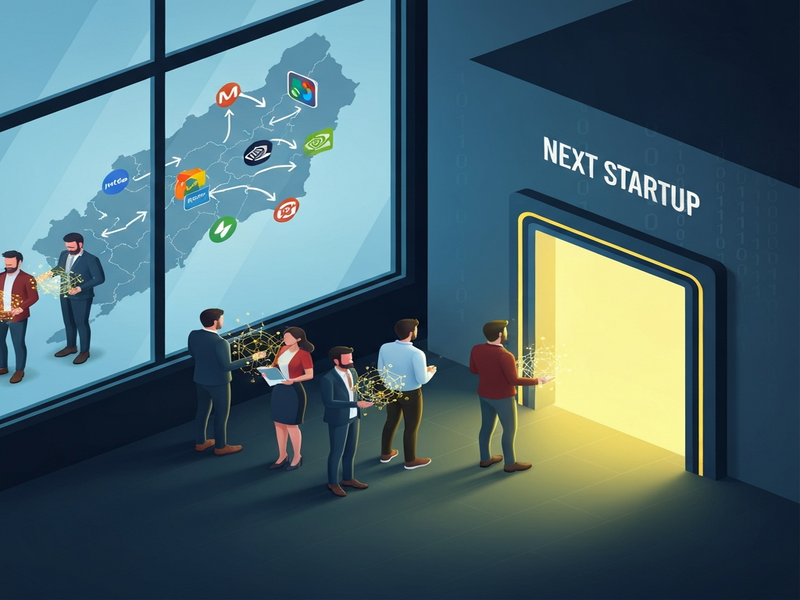
Silicon Valley’s AI Talent War: A New Era of Fluid Loyalty
Silicon Valley’s once‑steady loyalty culture is fading fast. A recent Wired investigation reveals a cascade of high‑profile AI talent acquisitions that are reshaping the ecosystem. Companies are no longer waiting for a “big exit”; they are actively hunting, hiring, and re‑hiring the same elite researchers within months.
1. Mega Acqui‑hires: Meta, Google, and Nvidia Lead the Charge
Since mid‑2023, three landmark deals have set the tone for the talent war:
- Meta’s $14 billion Scale AI deal – not only a cash infusion but also a talent grab that brought Scale AI’s CEO Alexandr Wang into Meta’s AI research hierarchy.
- Google’s $2.4 billion Windsurf acquisition – the purchase bundled cutting‑edge inference tech with the co‑founders and their research team, bolstering DeepMind’s capabilities.
- Nvidia’s $20 billion Groq acquisition – a strategic move to secure Groq’s inference engine and its senior engineers, reinforcing Nvidia’s dominance in AI hardware.
These deals illustrate a shift from “acquire the product” to “acquire the people who build the product.” The Enterprise AI platform by UBOS mirrors this trend, offering a modular environment where talent can plug into powerful infrastructure without the need for massive buyouts.
2. Startup Musical Chairs: OpenAI, Anthropic, and Thinking Machines Lab
While the giants are hoarding talent, the frontier AI labs are engaged in a relentless game of musical chairs:
- OpenAI recently rehired researchers who had left for Mira Murati’s ChatGPT and Telegram integration project, underscoring the magnetic pull of its resources.
- Anthropic, itself a spin‑off of OpenAI, has been poaching talent back from its parent, creating a feedback loop of expertise.
- OpenAI’s latest hire—a former Anthropic safety researcher as “head of preparedness”—highlights how safety and alignment expertise have become premium commodities.
These rapid moves are enabled by the Workflow automation studio, which lets teams prototype, test, and deploy AI models at breakneck speed, reducing the friction of switching employers.
3. From Idealism to Pragmatism: Why Money and Impact Matter More Than Ever
Historically, early‑stage engineers stayed for years, driven by mission‑centric loyalty. Today, the calculus has changed:
- Financial incentives – Meta’s packages now reach “tens or hundreds of millions,” offering generational wealth alongside cutting‑edge compute.
- Accelerated impact – A year at a generative‑AI startup can equal five years at a traditional tech firm, as products reach millions within months.
- Career agility – Researchers view each move as a step toward broader influence, often preferring short‑term, high‑impact roles over long‑term loyalty.
These motivations echo the rise of AI marketing agents, where professionals can instantly scale campaigns without building entire teams, further reducing the need for long‑term employment contracts.
4. How Investors Are Guarding Against the Talent‑War Fallout
Venture capitalists are adapting their playbooks to protect portfolio companies from sudden talent drains:
- Team chemistry vetting – Firms now prioritize “cohesion” over just technical brilliance, ensuring that teams can survive departures.
- Protective provisions – Deal terms increasingly require board consent for major IP licensing, limiting the damage of a sudden exit.
- Early‑stage talent contracts – Equity vesting schedules are being compressed, and “golden handcuffs” are introduced to retain key engineers.
Startups can also leverage the UBOS pricing plans to access scalable AI infrastructure without massive upfront costs, making them less dependent on a single talent pool.
5. What This Means for the Future of AI Development
The churn has several downstream effects:
- Innovation Velocity
- Rapid talent swaps accelerate research cycles, pushing breakthroughs into production faster.
- Intellectual Property Fragmentation
- Frequent moves can dilute IP ownership, prompting firms to embed stronger legal safeguards.
- Cultural Shift
- “Loyalty is dead” becomes a mantra, encouraging a gig‑economy mindset even among elite researchers.
- Talent Market Saturation
- As more capital pours into AI, the competition for top minds will intensify, driving salaries skyward.
Companies looking to stay competitive can adopt modular AI solutions like the UBOS platform overview, which decouples talent from infrastructure, allowing teams to plug in expertise as needed.
Take Action: Strengthen Your AI Strategy with UBOS
Whether you’re a startup founder, an investor, or a researcher navigating this volatile market, UBOS offers tools to future‑proof your AI initiatives:
- Explore ready‑made solutions in the UBOS templates for quick start, such as the AI SEO Analyzer and AI Article Copywriter, to accelerate content pipelines.
- Leverage the Web app editor on UBOS to prototype AI‑driven products without deep engineering hires.
- Integrate conversational AI quickly with the OpenAI ChatGPT integration or build voice‑first experiences using the ElevenLabs AI voice integration.
- Scale your outreach using AI marketing agents that personalize campaigns at scale.
- Join the UBOS partner program to co‑create solutions and tap into a network of AI innovators.
- For startups, the UBOS for startups page outlines financing‑friendly pathways to launch AI products.
- SMBs can benefit from UBOS solutions for SMBs, which bundle AI capabilities with affordable pricing.
- Experiment with cutting‑edge templates like the Talk with Claude AI app or the AI Video Generator to showcase AI‑driven media.
- Boost your professional presence using the AI LinkedIn Post Optimization tool.
- Deploy conversational interfaces fast with the AI Chatbot template or enhance support with Customer Support with ChatGPT API.
- Generate visual assets using the AI Image Generator and drive engagement with AI Email Marketing suite.
Visit the UBOS homepage to start building resilient AI teams that thrive even in a talent‑war environment.
Bottom Line
The AI talent landscape in Silicon Valley has entered a hyper‑mobile phase where loyalty is secondary to opportunity, compensation, and impact. Companies that adapt by building modular, talent‑agnostic platforms—like those offered by UBOS—will navigate this turbulence more effectively, turning churn into a catalyst for continuous innovation.