

- Updated: March 12, 2026
- 5 min read
African AI Data Workers Demand Fair Pay and Rights
African AI data labelers are the largely invisible workforce that annotates and moderates data for global AI models, often under poor conditions, and they are now organizing to demand fair pay and mental‑health support.
Introduction
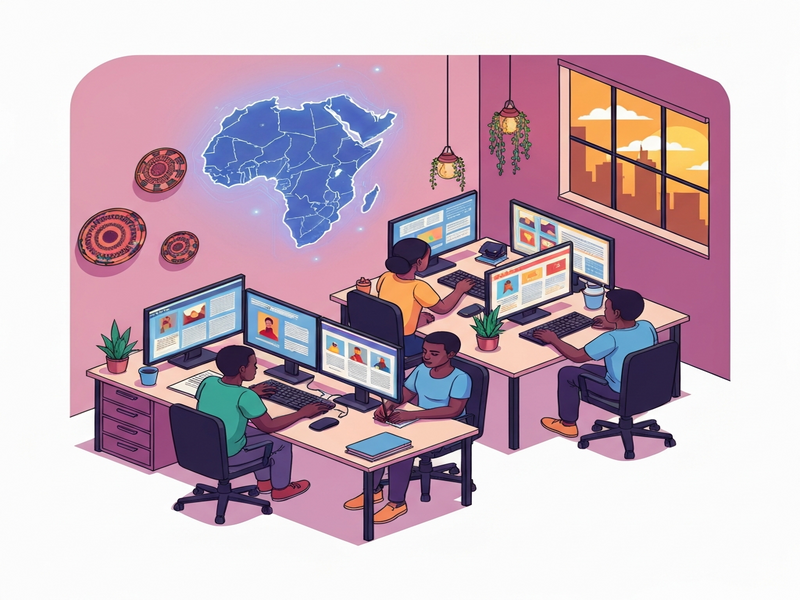
The rapid expansion of generative AI has created a hidden supply chain of human labor in Africa. Workers in Kenya, Nigeria, and other countries spend long hours labeling images, transcribing audio, and even moderating explicit content for tech giants. While their contributions power multimillion‑dollar AI products, many labelers earn just a few dollars a day and face severe mental‑health challenges. Recent activism, led by the Data Labelers Association (DLA), is shining a light on these injustices and calling for systemic change.
Background on AI Data Labeling in Africa
Data labeling is the process of adding human‑generated tags to raw data so that machine‑learning models can learn patterns. Companies such as OpenAI ChatGPT integration and Chroma DB integration rely on massive annotated datasets. Because labor costs are lower in many African nations, multinational firms outsource this work to local agencies and crowdsourcing platforms.
According to the UBOS data‑labeling hub, more than 30 % of the global data‑annotation workforce now resides in Africa, with Kenya emerging as a central hub due to its growing tech ecosystem and English‑language proficiency.
Workers’ Conditions and Mental Health
Labelers often endure eight‑hour shifts staring at graphic or sexually explicit content. The repetitive exposure leads to insomnia, anxiety, and post‑traumatic stress disorder (PTSD). One Kenyan labeler, Michael Geoffrey Asia, described how the job “fractured” his personal life, leaving him unable to maintain intimate relationships.
These conditions are exacerbated by:
- Low hourly wages (typically $2‑$4 per hour).
- Opaque algorithmic management that offers no human oversight.
- Strict non‑disclosure agreements that prevent workers from speaking out.
- Limited access to mental‑health resources or counseling.
From an AI ethics perspective, the exploitation of vulnerable workers raises serious questions about the moral responsibility of AI developers and the companies that profit from their labor.
Formation of the Data Labelers Association
In early 2026, a group of Kenyan labelers founded the Data Labelers Association (DLA) to give workers a collective voice. The DLA’s inaugural event at Nairobi Arboretum attracted over 200 participants, including tech activists, labor lawyers, and representatives from local NGOs.
The association’s charter focuses on four pillars:
- Fair compensation and transparent pay structures.
- Access to mental‑health services and safe working environments.
- Abolition of draconian NDAs that silence workers.
- Legal recognition of data labeling as formal employment.
By aligning with global labor movements, the DLA hopes to pressure multinational AI firms into adopting ethical sourcing standards.
Calls for Better Pay and Benefits
The DLA’s demands echo broader calls for a living wage in the tech sector. They propose a baseline of $15 per hour, health insurance, and paid sick leave. In addition, they request:
- Regular mental‑health check‑ins conducted by qualified professionals.
- Transparent performance metrics that replace opaque algorithmic scoring.
- Opportunities for upskilling into higher‑paid roles such as AI model testing or software development.
These proposals are supported by several ethical AI platforms, including the Enterprise AI platform by UBOS, which emphasizes responsible data sourcing and fair labor practices.
Impact on the AI Industry
Data labelers are the unsung heroes behind the success of products like ChatGPT and Telegram integration and the ElevenLabs AI voice integration. Their work improves model accuracy, reduces bias, and enables rapid iteration.
When labelers organize for better conditions, the ripple effect can lead to:
- Higher‑quality training data, which translates into more reliable AI outputs.
- Increased public trust in AI systems, especially in regions sensitive to data privacy.
- Stronger regulatory frameworks that protect both workers and end‑users.
Companies that ignore these concerns risk reputational damage and potential legal action, as seen in recent lawsuits against firms accused of labor violations in the data‑annotation sector.
How UBOS Is Supporting Ethical Labeling
UBOS, a leading AI platform, has launched several initiatives to promote responsible data practices:
- UBOS platform overview – provides transparent dashboards for data‑annotation projects.
- UBOS templates for quick start – include ethical checklists for labeling tasks.
- UBOS partner program – partners with local NGOs to fund mental‑health services for labelers.
These tools help companies align with the AI ethics guidelines while ensuring that workers receive fair treatment.
Real‑World Examples from the UBOS Marketplace
Developers can leverage pre‑built AI applications that respect ethical data sourcing. A few notable templates include:
- AI SEO Analyzer – uses clean, annotated data to improve search rankings without exploiting workers.
- AI Article Copywriter – demonstrates how high‑quality training data yields coherent content.
- AI YouTube Comment Analysis tool – showcases sentiment analysis built on responsibly sourced annotations.
- GPT‑Powered Telegram Bot – integrates safe conversational AI with transparent data pipelines.
These examples illustrate that ethical labeling is not only possible but also commercially viable.
Conclusion
The story of African AI data labelers underscores a critical paradox: the same humans who power the most advanced AI systems are often denied basic labor rights. As the Data Labelers Association gains momentum, the global AI community faces a clear choice—continue the status quo or adopt ethical sourcing practices that honor the workers behind the data.
For a deeper dive into the personal testimonies of Kenyan labelers and the emerging movement, read the original investigative piece by 404 Media: AI Is African Intelligence: The Workers Who Train AI Are Fighting Back.
By supporting fair wages, mental‑health resources, and transparent contracts, stakeholders can ensure that AI’s future is built on a foundation of dignity and respect.
Further Reading & Tools
Explore more about responsible AI development and related services:
Andrii Bidochko
CTO UBOS
Andrii Bidochko is an AI entrepreneur and researcher focused on AI agents, reinforcement learning, and autonomous systems. He writes about the technologies shaping the future of machine intelligence, from frontier models and agent architectures to real-world AI applications.