

- Updated: April 23, 2025
- 5 min read
AI Ethics and Cultural Diversity: Addressing Bias Beyond English-Centric Frameworks
AI, Ethics, and Cultural Diversity: A New Era of Responsible Innovation
The rise of artificial intelligence (AI) has been nothing short of revolutionary, reshaping industries and societies worldwide. However, with this rapid advancement comes a set of ethical challenges that cannot be ignored. At the forefront of these discussions is the work of Margaret Mitchell, whose contributions to AI ethics have been pivotal in addressing these issues. This article delves into the intersection of AI, ethics, and cultural diversity, exploring the significance of Mitchell’s work, the SHADES dataset, and the urgent need for a broader interdisciplinary approach.
Margaret Mitchell’s Contributions to AI Ethics
Margaret Mitchell is a renowned figure in the field of AI ethics, known for her pioneering efforts to test generative AI tools for bias. She co-founded the Ethical AI team at Google, alongside Timnit Gebru, before moving to Hugging Face, where she continues to lead in AI ethics. Her work has been instrumental in shaping the ethical standards of AI development, emphasizing the importance of transparency and accountability in AI systems.
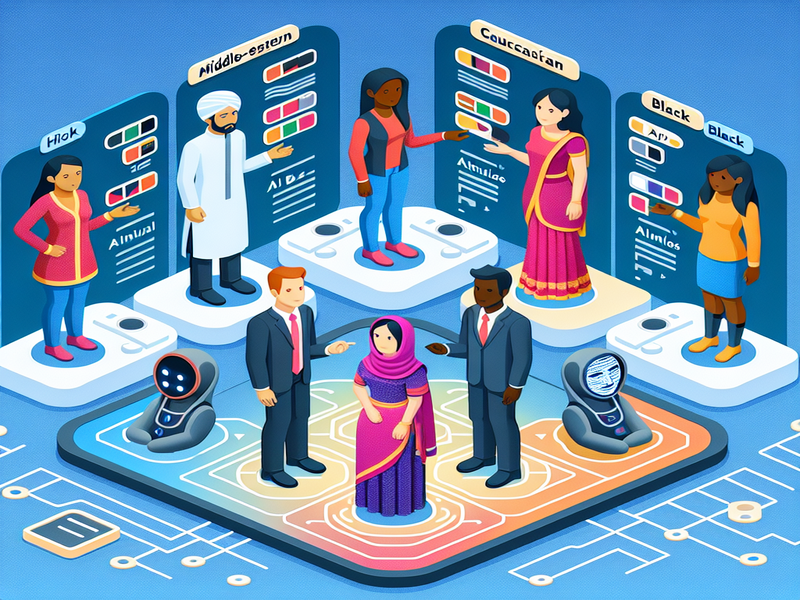
One of Mitchell’s significant contributions is her involvement in the creation of the SHADES dataset, designed to test AI models for biases that transcend language and culture. This initiative highlights her commitment to addressing biases that are often overlooked in English-centric AI frameworks. Her efforts have paved the way for more inclusive and equitable AI systems, setting a benchmark for ethical AI development.
Understanding the SHADES Dataset
The SHADES dataset is a groundbreaking tool designed to uncover biases in AI systems. Unlike traditional bias-mitigation efforts that focus primarily on English, SHADES is adaptable, with human translations for a wide range of languages and cultures. This dataset emerged from the BigScience project, an international collaboration aimed at training the first open large language model.
SHADES operates by allowing researchers to perform societal impact evaluations, comparing different identity characteristics such as gender and nationality. This approach is inspired by the Gender Shades project, which focused on gender and skin tone biases. By providing a comprehensive framework for evaluating biases across various languages, SHADES offers a more nuanced understanding of how AI systems can perpetuate stereotypes.
Challenges in Addressing AI Bias
Despite advancements in AI ethics, significant challenges remain in identifying and mitigating biases. Current AI technologies often exacerbate existing biases due to their reliance on biased training data. The dominance of English-centric frameworks further complicates efforts to address biases in non-English languages and cultures.
Real-world examples highlight the consequences of unchecked AI biases. For instance, AI systems have been known to justify stereotypes by referencing non-existent scientific literature, a phenomenon that underscores the need for rigorous evaluation and oversight. Addressing these challenges requires a concerted effort to develop technologies that are culturally aware and inclusive.
Broadening AI Perspectives Beyond English-Centric Frameworks
The predominance of English in AI development has significant implications for cultural diversity. Many AI models are trained on English data, leading to biases that may not be relevant or acceptable in other cultures. This issue is particularly concerning given the global deployment of AI systems.
Efforts to incorporate diverse cultural perspectives in AI development are crucial for creating equitable systems. Initiatives aimed at diversifying AI perspectives include the use of multilingual datasets and collaborations with researchers from various cultural backgrounds. These efforts are essential for ensuring that AI systems are representative of the diverse societies they serve.
The Importance of an Interdisciplinary Approach
An interdisciplinary approach is vital for addressing the complex ethical challenges posed by AI. By integrating insights from fields such as sociology, linguistics, and cultural studies, researchers can develop a more holistic understanding of AI ethics. This collaboration can lead to the creation of AI systems that are not only technologically advanced but also socially responsible.
The benefits of an interdisciplinary approach are manifold. It allows for the identification of biases that may not be immediately apparent and fosters the development of innovative solutions to ethical challenges. Future research should prioritize interdisciplinary collaboration to address the multifaceted issues associated with AI ethics.
Conclusion
In conclusion, the intersection of AI, ethics, and cultural diversity presents both challenges and opportunities. Margaret Mitchell’s work and the SHADES dataset exemplify the progress being made in this field, but there is still much to be done. Stakeholders must invest in ethical AI development and embrace cultural diversity to ensure that AI systems are equitable, inclusive, and culturally aware.
As we move towards a future where AI plays an increasingly central role in our lives, it is imperative that we prioritize ethical considerations. By doing so, we can harness the potential of AI to create a more just and equitable world.
For more insights into the role of AI in shaping future technologies, explore how AI chatbots are influencing the future of IT. Additionally, learn about the impact of generative AI agents on business growth and the importance of scaling AI in organizations.
Andrii Bidochko
CTO UBOS
Andrii Bidochko is an AI entrepreneur and researcher focused on AI agents, reinforcement learning, and autonomous systems. He writes about the technologies shaping the future of machine intelligence, from frontier models and agent architectures to real-world AI applications.