

- Updated: June 18, 2025
- 5 min read
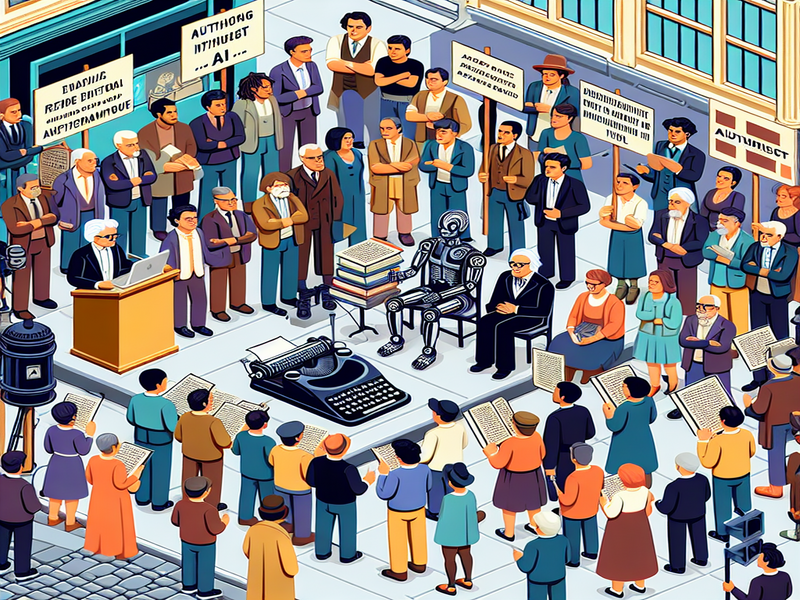
Authors Protest AI Use in Writing: A Deep Dive into the Controversy
AI in Writing: Navigating the Controversy and Preserving Creative Integrity
As the world of technology advances at an unprecedented pace, the use of AI in writing has become a hotbed of controversy. The literary community, particularly authors and publishers, is grappling with the implications of generative AI and its impact on creative integrity and originality. This article delves into the ongoing debate, exploring the concerns raised by authors, the challenges faced by indie writers, and the broader implications of AI across various creative fields.
Authors’ Protests and Concerns
Prominent authors have been vocal about their apprehensions regarding the use of AI in the creative process. Victoria Aveyard, a New York Times bestselling author, has been particularly outspoken, condemning the use of generative AI in writing. Aveyard argues that relying on AI for writing equates to theft, as it undermines the unique human touch that defines storytelling. Her sentiments are echoed by many in the literary world who fear that AI-generated content could dilute the authenticity and originality that are hallmarks of genuine artistic expression.
Authors are not just voicing their concerns; they are taking action. Many are sharing their writing processes through live streams and time-lapses to demonstrate their commitment to originality. Indie author Ashley Godschild, for instance, has posted videos showcasing her writing process, emphasizing that her work is free from AI interference. This transparency aims to reassure readers and critics alike, highlighting the human effort that goes into crafting a compelling narrative.
Impact on Indie Authors and Originality
The rise of AI in writing presents unique challenges for indie authors. In a landscape increasingly saturated with AI-generated content, proving the originality of one’s work has become a daunting task. Indie authors, who often rely on self-publishing, face the risk of their work being overshadowed by AI-generated content that can flood the market with similar narratives.
This saturation poses a threat to human creativity, making it difficult for readers to distinguish between original works and those produced by algorithms. The fear is that AI could devalue the creative process, reducing the appreciation for the hard work and dedication that goes into writing. Indie authors are therefore advocating for greater recognition of human creativity and urging readers to support genuine artistic endeavors.
Broader Implications of AI in Various Fields
Beyond the literary world, the implications of AI extend to numerous fields, including social media, gaming, and journalism. In these areas, AI is reshaping the way content is created and consumed, raising ethical questions about authorship and intellectual property. The use of AI in generating content for social media platforms, for instance, has sparked debates about the authenticity of online interactions and the potential for misinformation.
Similarly, in the gaming industry, AI is being used to create immersive experiences, but this raises questions about the originality of game design and the role of human creativity. The journalism field is also witnessing a shift, with AI being utilized to generate news articles and reports, prompting discussions about the future of journalism and the importance of human oversight in reporting.
Ethical Questions About Authorship and Intellectual Property
The integration of AI in creative processes has sparked a myriad of ethical questions, particularly concerning authorship and intellectual property. Who owns the rights to AI-generated content? Can a machine truly be considered an author? These questions are at the forefront of the debate, as creators and legal experts grapple with the implications of AI on traditional notions of ownership and creativity.
There is a growing call for clear guidelines and regulations to address these concerns, ensuring that the rights of human creators are protected and that the use of AI does not undermine the value of human creativity. As the technology continues to evolve, it is crucial to strike a balance between embracing innovation and preserving the integrity of creative industries.
Conclusion and Future Outlook
As the debate over AI in writing and other creative fields continues, it is clear that the technology presents both opportunities and challenges. While AI has the potential to enhance creativity and streamline processes, it also poses risks to originality and authenticity. The literary community, along with other creative industries, must navigate this complex landscape, finding ways to harness the benefits of AI while safeguarding the human element that is essential to artistic expression.
Looking ahead, it is imperative for stakeholders to engage in open dialogues and collaborate on developing frameworks that address the ethical and practical implications of AI. By doing so, we can ensure that technology serves as a tool to augment, rather than replace, human creativity, preserving the rich tapestry of original and authentic works that define our cultural heritage.
For more insights into the evolving role of AI in creative industries, explore the AI-powered chatbot solutions that are shaping the future of content creation. Additionally, learn about the revolutionizing marketing with generative AI to stay ahead in the competitive landscape.
Discover how the latest innovations from OpenAI are influencing the creative industry and explore the February product update on UBOS for advancements in AI technologies.
Stay informed and engaged with the latest developments in AI and its impact on creative industries by visiting the UBOS News section. Here, you’ll find a wealth of information and resources to help you navigate the evolving landscape of AI and creativity.
Andrii Bidochko
CTO UBOS
Andrii Bidochko is an AI entrepreneur and researcher focused on AI agents, reinforcement learning, and autonomous systems. He writes about the technologies shaping the future of machine intelligence, from frontier models and agent architectures to real-world AI applications.