

- Updated: January 31, 2026
- 6 min read
Why Precise Software Work Estimation Is Impossible – A Pragmatic Approach
Accurate software work estimation is fundamentally impossible, but you can still deliver reliable timelines by focusing on constraints, risk‑based scenarios, and aligning estimates with feasible solutions.
Why Software Work Estimation Remains a Moving Target
Every developer and project manager has heard the mantra: “Estimate the work, plan the project.” In reality, the software world is riddled with unknowns that make precise forecasting a myth. Sean Goedecke’s recent essay (original article by Sean Goedecke) cuts through the hype and offers a pragmatic lens for turning vague estimates into actionable plans.
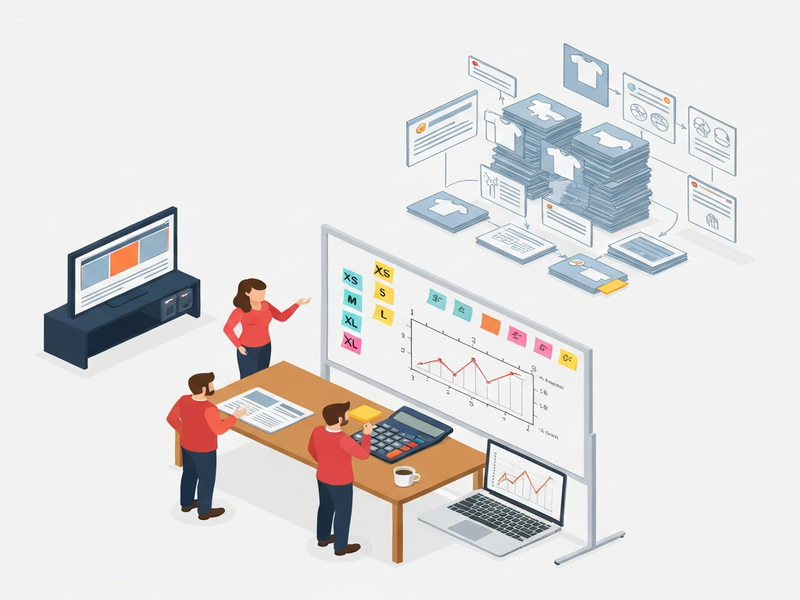
Understanding why estimation fails—and how to work around its limits—can empower teams to ship faster, reduce friction with stakeholders, and make smarter trade‑offs. Below we unpack the challenges, critique common practices, and present a step‑by‑step framework inspired by Goedecke’s approach.
The Inherent Challenges of Accurate Software Work Estimation
Software projects are dominated by unknown unknowns. Unlike manufacturing, where each component’s dimensions are fixed, codebases evolve, dependencies shift, and requirements mutate. The following factors illustrate why traditional estimation often falls short:
- Complex System Interactions: A single change can ripple through multiple services, databases, and third‑party APIs.
- Research‑Heavy Tasks: Most work begins with discovery—understanding existing architecture, locating hidden bugs, or evaluating new libraries.
- Human Factors: Team experience, motivation, and communication overhead vary dramatically from sprint to sprint.
- Scope Creep: Stakeholder expectations often expand mid‑project, adding hidden work that was never accounted for.
- Technical Debt: Legacy code and undocumented shortcuts increase the time needed for seemingly simple features.
Because these variables are difficult to quantify upfront, any estimate that pretends to be precise is, at best, a negotiation tool rather than a prediction.
Common Estimation Practices and Their Pitfalls
Teams have invented a variety of shortcuts to make estimation feel manageable. While these methods provide a shared language, they often mask deeper issues.
T‑Shirt Sizing
Assigning sizes like XS, S, M, L, XL translates abstract effort into a relative scale. The problem? When senior leadership converts those sizes into concrete dates, the original ambiguity resurfaces.
Story Points & Velocity
Agile teams use story points to capture effort relative to past work. However, velocity assumes a stable team and consistent context—rare in fast‑moving product environments.
Rule‑of‑Thumb Multipliers
Heuristics such as “double your estimate and add 20%” are essentially placeholders for uncertainty. They provide a false sense of safety while inflating budgets.
“Estimations become a political tool when they are used to justify budgets rather than to guide delivery.” – Agile Coach
These practices work only when teams treat estimates as starting points for conversation, not as immutable contracts.
Sean Goedecke’s Pragmatic Approach: Aligning Timelines with Feasible Solutions
Goedecke flips the conventional model on its head. Instead of asking, “How long will this take?” he asks, “What can we realistically deliver within the given timeframe?” This shift reframes estimation as a problem‑solving exercise.
Step‑by‑Step Breakdown
- Gather Political Context: Understand the pressure points—deadlines, stakeholder expectations, and budget constraints.
- Define the Timebox: Identify the exact window management expects (e.g., one week, two sprints).
- Map Feasible Approaches: Brainstorm multiple technical solutions that could fit inside the timebox, ranking them by risk and effort.
- Assess Unknowns: Highlight “dark forest” areas—parts of the codebase or external dependencies that could cause delays.
- Present a Risk‑Based Portfolio: Instead of a single estimate, deliver a set of options:
- Best‑case solution that meets the deadline with minimal risk.
- Mid‑range solution that adds value but may need extra time.
- Fallback plan that guarantees delivery by extending scope.
- Communicate, Don’t Commit: Frame the output as a risk assessment, not a hard date.
This method respects the reality that the unknown dominates software work. By surfacing risks early, teams avoid the surprise “we ran out of time” scenario.
Why It Works
Goedecke’s approach aligns with three core truths:
- Estimates are political, not technical. Presenting options gives managers the data they need to make trade‑offs.
- Risk visibility drives better planning. Highlighting unknowns early reduces hidden work later.
- Flexibility beats rigidity. Teams can pivot to a simpler solution if the risk profile changes.
Actionable Takeaways for Developers and Project Managers
Implementing Goedecke’s philosophy doesn’t require a complete process overhaul. Below are concrete steps you can adopt today.
1. Start with the Deadline, Not the Task
Ask stakeholders: “What is the latest acceptable delivery date?” Use that as the anchor for solution brainstorming.
2. Create a “Risk Matrix” for Each Feature
List potential unknowns and assign probability × impact scores. Prioritize low‑risk paths.
3. Offer Multiple Solution Paths
Prepare at least two implementation options—one “quick win” and one “full‑feature”—and let leadership choose based on risk tolerance.
4. Use Data‑Driven Templates
Leverage ready‑made estimation templates to capture assumptions consistently. UBOS provides a library of UBOS templates for quick start that can be customized for risk‑based planning.
5. Automate Repetitive Checks
Integrate tools like the Workflow automation studio to flag dependency changes, run impact analyses, and keep the risk matrix up‑to‑date.
6. Communicate with Visual Summaries
Use concise tables or Kanban boards to show the three‑option portfolio. Visuals help non‑technical leaders grasp trade‑offs quickly.
7. Iterate and Refine
After each sprint, compare actual effort against the risk matrix. Adjust probability scores for future estimates.
How UBOS Can Supercharge Your Estimation Process
UBOS offers a suite of AI‑enhanced tools that align perfectly with the risk‑based approach:
- UBOS platform overview: Centralizes project data, making it easy to pull metrics for risk analysis.
- AI marketing agents: Generate stakeholder‑friendly summaries of estimation scenarios.
- UBOS pricing plans: Choose a tier that includes advanced analytics for tracking estimation accuracy.
- UBOS for startups: Lightweight modules for early‑stage teams needing fast, reliable forecasts.
- UBOS solutions for SMBs: Scalable estimation dashboards tailored to small‑to‑medium enterprises.
- Enterprise AI platform by UBOS: Harness AI to predict unknowns based on historical code‑base patterns.
- Web app editor on UBOS: Rapidly prototype alternative solutions to test feasibility within a timebox.
- OpenAI ChatGPT integration: Use conversational AI to surface hidden dependencies during the discovery phase.
- ChatGPT and Telegram integration: Get real‑time alerts on risk matrix updates directly to your team channel.
By embedding these capabilities into your workflow, you turn estimation from a guess‑work exercise into a data‑driven, collaborative process.
Conclusion: Embrace Uncertainty, Deliver Predictability
Software work estimation will never be a crystal‑ball exercise. The key is to acknowledge uncertainty, surface risks early, and present stakeholders with a curated set of feasible paths. Sean Goedecke’s method—anchoring on the deadline, mapping options, and communicating risk—offers a practical roadmap that aligns engineering reality with business expectations.
Ready to modernize your estimation workflow? Explore the UBOS homepage for a free trial, dive into the About UBOS page to learn more about our AI‑first philosophy, and start building smarter estimates today.
Stay ahead of the curve—turn the art of estimation into a science of informed choices.