

- Updated: February 18, 2026
- 6 min read
Waymo’s Remote Assistance Program for Robotaxis: Staffing, Safety, and Senate Scrutiny
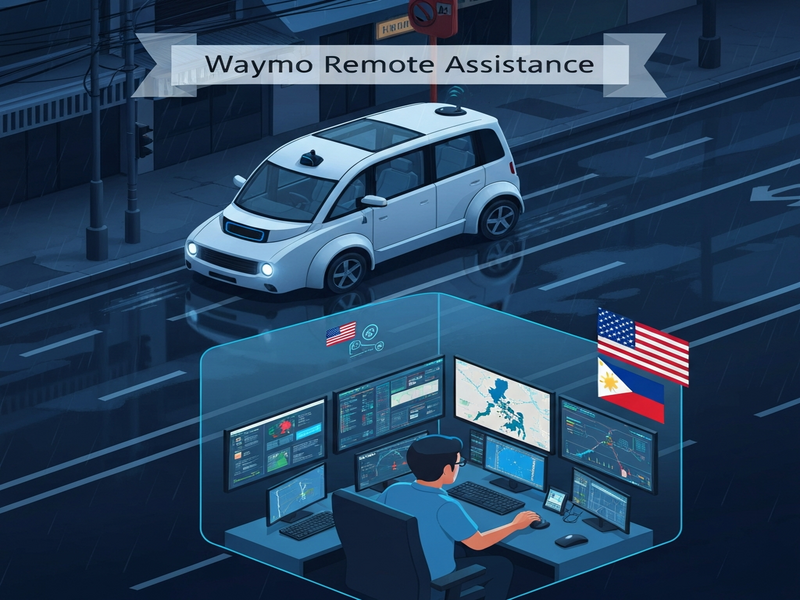
Waymo’s remote assistance program employs roughly 70 trained agents—about half in the United States and the other half in the Philippines—to provide real‑time advisory support to its Level‑4 robotaxis, without ever taking direct control of the vehicle.
Why Waymo’s Remote Assistance Matters for Today’s Commuter
As autonomous vehicle technology moves from pilot projects to everyday streets, the safety net that backs each driverless ride becomes a critical factor for riders and regulators alike. Waymo’s approach, detailed in a recent Senate hearing and later clarified in a letter to Sen. Ed Markey, showcases a hybrid model where human expertise augments machine intelligence only when the vehicle encounters ambiguous scenarios. For a deeper dive into the original reporting, see the Verge article.
This article unpacks the program’s structure, staffing, safety protocols, and industry implications, while also highlighting how platforms like UBOS platform overview enable similar remote‑assistance workflows for SaaS developers.
Program Overview: How Remote Assistance Works
Waymo’s remote assistance agents are not remote drivers; they act as “advisors on demand.” When the autonomous driving system (ADS) detects a situation that exceeds its confidence threshold—such as an unclear road sign, an unexpected obstacle, or a complex traffic pattern—it sends a request to a remote assistance center. The agent reviews a short video snippet, provides contextual guidance, and the ADS proceeds based on that input. Interactions typically last only a few seconds, ensuring minimal latency.
- Agents receive a live feed of sensor data only when prompted.
- Guidance is limited to suggestions, never direct steering commands.
- Latency averages 150 ms for U.S. centers and 250 ms for overseas centers.
This model mirrors the “human‑in‑the‑loop” design used by modern AI platforms, such as the OpenAI ChatGPT integration, where AI suggestions are vetted by humans before execution.
Staffing: A Global Team Split Between the U.S. and the Philippines
Waymo employs approximately 70 remote assistance agents. Roughly 35 are based in the United States, operating from dedicated support hubs, while the remaining 35 work from facilities in the Philippines. All agents are licensed drivers, fluent in English, and have passed rigorous background and drug screenings.
Training is tailored to each region’s traffic laws and road‑sign conventions. Agents undergo simulated scenario drills that replicate the most common edge cases encountered by Waymo’s fleet. Performance metrics are continuously monitored, and agents receive real‑time feedback to maintain high‑quality assistance.
The Philippines‑based team illustrates how offshore talent can be leveraged for safety‑critical AI operations—a concept also explored in the ChatGPT and Telegram integration, where remote AI bots assist users across time zones.
Safety Procedures and How Waymo Stands Apart from Competitors
Waymo’s safety architecture is built on three pillars: redundancy, transparency, and continuous learning. Remote assistance is just one layer; the primary layer remains the ADS itself, which can operate autonomously in most scenarios. When assistance is invoked, the system logs the event, the agent’s recommendation, and the vehicle’s response for post‑trip analysis.
Key safety mechanisms
- Event‑Driven Invocation: Assistance is only requested when the ADS flags low confidence.
- Limited Control Scope: Agents never steer or accelerate; they only suggest actions.
- Latency Management: Sub‑250 ms round‑trip times keep the vehicle’s reaction within safe bounds.
- Post‑Event Auditing: Every interaction is recorded for compliance and model improvement.
Compared to rivals, Waymo’s approach is more advisory than corrective. Tesla, for instance, employs remote drivers who can take full control of a vehicle in emergencies—a practice that has drawn regulatory scrutiny. May Mobility uses a similar advisory model, but Waymo’s scale and depth of data logging give it a distinct advantage.
The distinction is crucial for public trust. As Enterprise AI platform by UBOS demonstrates, clear role separation between AI and human operators reduces liability and improves system reliability.
Recent Incidents and the Senate Testimony That Sparked the Debate
Waymo’s remote assistance model entered the spotlight after several high‑profile incidents. In December, a power outage in San Francisco left several robotaxis stranded at intersections, prompting the ADS to request remote assistance for safe shutdown. Earlier, a low‑speed collision with a child in Santa Monica raised questions about the system’s decision‑making in pedestrian‑dense zones.
During a Senate hearing in early 2026, Sen. Ed Markey asked Waymo’s chief safety officer, Mauricio Peña, whether any remote assistants were located overseas. Peña confirmed that a portion of the team operated from the Philippines, a statement that quickly went viral. Critics misinterpreted the comment as evidence that Waymo’s robotaxis were being “remotely driven” from abroad.
“The Waymo phones a human friend for help,” Sen. Markey said, prompting widespread speculation about remote control.
Waymo’s subsequent clarification, delivered by Ryan McNamara, emphasized that remote agents only provide advice and never take the wheel. The company also disclosed that it does not publicly share the exact number of assistance sessions per mile, labeling the data “not material” for public disclosure.
For organizations building similar safety‑critical workflows, the Workflow automation studio offers a low‑code environment to design event‑driven human‑in‑the‑loop processes, mirroring Waymo’s advisory architecture.
Implications for the Autonomous Vehicle Industry
Waymo’s transparent stance on remote assistance sets a benchmark for emerging robotaxi operators. The model demonstrates that a hybrid human‑AI safety net can be both scalable and compliant with regulatory expectations, especially as legislators demand clearer accountability.
Key takeaways for the sector
- Regulatory Alignment: Explicitly defining the role of remote agents helps satisfy Senate and DOT inquiries.
- Cost‑Effective Talent Utilization: Offshore assistance centers can reduce operational costs while maintaining safety standards.
- Data‑Driven Improvement: Logging every advisory interaction fuels machine‑learning refinements.
- Public Perception Management: Clear communication prevents misinformation, as seen after the Markey hearing.
Companies looking to adopt similar frameworks can leverage the AI marketing agents concept, which pairs AI suggestions with human oversight—a pattern that is increasingly common across AI‑driven products.
Conclusion: The Road Ahead for Safe Robotaxis
Waymo’s remote assistance program illustrates a pragmatic path forward: combine cutting‑edge autonomous technology with a lean, well‑trained human advisory layer. This hybrid approach not only bolsters safety but also offers a template for other industries where AI decisions require human validation.
If you’re a tech‑savvy commuter or an industry professional eager to explore how AI‑enhanced safety can be built into your own products, start by exploring the UBOS homepage. From there, you can dive into UBOS for startups, discover UBOS solutions for SMBs, or examine real‑world case studies in the UBOS portfolio examples.
Ready to prototype a remote‑assistance workflow? Use the Web app editor on UBOS together with pre‑built templates like the AI SEO Analyzer or the AI Article Copywriter. These tools let you spin up a proof‑of‑concept in days, not months.
Join the conversation, share your thoughts on remote assistance, and explore partnership opportunities through the UBOS partner program. Together, we can shape a safer, smarter autonomous future.
Andrii Bidochko
CTO UBOS
Andrii Bidochko is an AI entrepreneur and researcher focused on AI agents, reinforcement learning, and autonomous systems. He writes about the technologies shaping the future of machine intelligence, from frontier models and agent architectures to real-world AI applications.