

- Updated: July 3, 2025
- 4 min read
The Rise of Empathetic Language Models: A New Era in AI
Understanding the Rise of Emotional Intelligence in AI: A New Era of Empathetic Machines
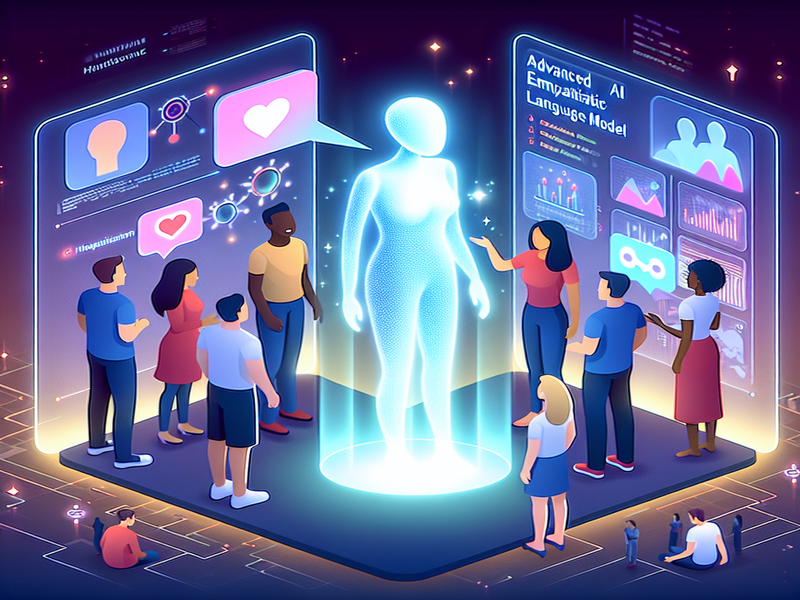
The realm of artificial intelligence (AI) is rapidly evolving, with a growing emphasis on emotional intelligence. This shift marks a significant step towards creating machines that can understand and interpret human emotions. The concept of empathetic language models is no longer a distant dream but an emerging reality. In this article, we will explore the advancements in AI emotional intelligence, focusing on LAION’s EmoNet, and the contributions of tech giants like OpenAI and Google.
The Emergence of EmoNet: A New Frontier in AI Emotional Intelligence
LAION’s introduction of EmoNet represents a pivotal moment in the development of emotionally intelligent AI. EmoNet is designed to interpret emotions, paving the way for AI systems that can engage with humans on a more personal level. This development highlights the increasing importance of emotional intelligence in AI, as machines are expected to become more empathetic and responsive to human needs.
EmoNet’s focus on understanding emotions is a testament to the growing demand for AI systems that can interact with humans in more meaningful ways. By leveraging advanced algorithms, EmoNet aims to bridge the gap between human and machine interaction, making technology more accessible and user-friendly.
Advancements by OpenAI and Google: Leading the Charge in Emotionally Intelligent AI
Companies like OpenAI and Google are at the forefront of developing emotionally intelligent AI. Their efforts are not only pushing the boundaries of what AI can achieve but also setting new standards for the industry. OpenAI’s OpenAI ChatGPT integration and Google’s initiatives are focused on enhancing AI’s ability to understand and respond to human emotions.
These advancements have resulted in AI systems that can outperform humans in emotional intelligence tests, showcasing the potential of AI to revolutionize various industries. By integrating emotional intelligence into AI, these companies are creating systems that can better serve users, providing more personalized and effective solutions.
The Potential Benefits of Emotionally Intelligent AI
The integration of emotional intelligence in AI offers numerous benefits. For businesses, emotionally intelligent AI can enhance customer service by providing more empathetic and personalized interactions. This can lead to increased customer satisfaction and loyalty, ultimately driving business growth.
In healthcare, emotionally intelligent AI can assist in diagnosing and treating mental health issues by understanding patient emotions and providing tailored support. Similarly, in education, AI systems equipped with emotional intelligence can adapt to the emotional needs of students, offering more effective learning experiences.
Risks and Challenges: Navigating the Complexities of Emotionally Intelligent AI
While the potential benefits of emotionally intelligent AI are significant, there are also risks and challenges to consider. One of the primary concerns is the potential for manipulative behavior, as AI systems could be used to exploit human emotions for unethical purposes. This underscores the need for careful development and regulation to ensure that AI systems are used responsibly.
Moreover, the complexity of human emotions poses a challenge for AI developers. Creating systems that can accurately interpret and respond to emotions requires sophisticated algorithms and extensive data, which can be difficult to achieve. As such, ongoing research and innovation are crucial to overcoming these challenges and realizing the full potential of emotionally intelligent AI.
Conclusion: A Call for Responsible Development in AI Emotional Intelligence
As we continue to explore the possibilities of emotionally intelligent AI, it is essential to prioritize responsible development. By ensuring that AI systems are designed with ethical considerations in mind, we can harness the power of emotional intelligence to create technology that truly benefits society.
The advancements made by companies like LAION, OpenAI, and Google are paving the way for a new era of AI, where machines are not only intelligent but also empathetic. As we move forward, it is crucial to embrace these developments while remaining vigilant about the potential risks and challenges. By doing so, we can ensure that emotionally intelligent AI becomes a force for good, enhancing human experiences and improving our interactions with technology.
For more insights into the latest AI advancements, visit our UBOS homepage and explore our comprehensive resources on AI-powered chatbot solutions and AI-infused CRM systems on UBOS.
Discover how AI agents for enterprises are transforming business operations and learn more about the generative AI agents for businesses that are shaping the future of technology.
Andrii Bidochko
CTO UBOS
Andrii Bidochko is an AI entrepreneur and researcher focused on AI agents, reinforcement learning, and autonomous systems. He writes about the technologies shaping the future of machine intelligence, from frontier models and agent architectures to real-world AI applications.