

- Updated: February 18, 2026
- 6 min read
Tesla Robotaxis Crash Rate 4× Higher Than Human Drivers – Autonomous Vehicles
Tesla’s robotaxi fleet is crashing at a rate roughly four times higher than the average human driver.
Tesla Robotaxis Crash at Four‑Times the Human Rate
New data released by the National Highway Traffic Safety Administration (NHTSA) shows that Tesla’s autonomous ride‑hailing service in Austin has logged 14 crashes over roughly 800,000 miles, equating to one incident every 57,000 miles. By comparison, the typical U.S. driver experiences a minor crash every 229,000 miles and a major collision every 699,000 miles. This stark disparity has reignited the debate over whether self‑driving cars are truly safer than their human‑piloted counterparts.
For a full read of the original report, see the original Gizmodo story.
Background: Tesla’s Robotaxi Ambitions
Since June 2025, Tesla has been operating a limited robotaxi service in Austin, Texas, using Model Y vehicles equipped with the company’s Full Self‑Driving (FSD) software. The program was marketed as a “future of urban mobility,” promising lower costs, reduced congestion, and, crucially, a safety advantage over human drivers.
Tesla’s vision aligns with its broader Enterprise AI platform by UBOS, which aims to accelerate AI‑driven products across industries. While Tesla builds its own AI stack, many SaaS innovators are leveraging platforms like UBOS to create complementary services—such as real‑time safety analytics and incident reporting dashboards—that could one day help autonomous fleets improve their safety records.
Crash Statistics: Numbers That Speak
Below is a concise breakdown of the data released by NHTSA and compiled by industry analysts:
- Total robotaxi miles (estimated by early 2026): ≈ 800,000
- Total crashes reported: 14
- Crash frequency: 1 crash per 57,000 miles
- Average U.S. driver crash frequency (minor): 1 per 229,000 miles
- Average U.S. driver crash frequency (major): 1 per 699,000 miles
When expressed as a ratio, Tesla’s robotaxis are experiencing roughly four times the crash rate of the average human driver. The incidents range from low‑speed collisions with stationary objects to a bus‑impact event while the vehicle was stopped.
For a visual snapshot, see the AI‑generated chart below:
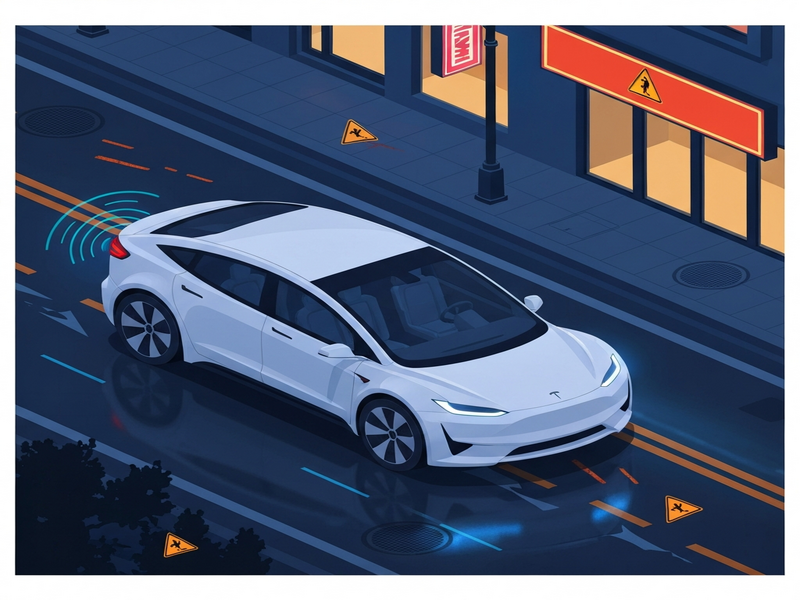
Figure: Visual representation of Tesla robotaxi crash data generated by UBOS AI.
Official Responses: Tesla and Regulators Speak
When approached for comment, Tesla cited ongoing investigations and emphasized that “the safety of our customers remains our top priority.” The company also highlighted that many of the reported incidents involved low‑speed impacts that did not result in serious injuries.
The NHTSA, meanwhile, has opened a formal probe into the Austin robotaxi fleet. In a statement, the agency noted that “the higher-than-expected crash frequency warrants a thorough review of the FSD system’s decision‑making processes, especially in complex urban environments.”
Regulatory scrutiny is not limited to Tesla. Waymo and Zoox have also faced investigations after incidents involving pedestrians and school buses, underscoring a broader industry challenge.
For more on how regulators are shaping autonomous vehicle policy, explore the autonomous vehicle regulations overview on UBOS.
Implications: What This Means for the Autonomous Vehicle Industry
The emerging data forces investors, city planners, and technology partners to reassess the risk‑reward calculus of robotaxi deployments. Key implications include:
- Investor Sentiment: Capital allocation may shift toward firms that demonstrate transparent safety reporting and robust post‑incident analytics.
- Regulatory Landscape: Expect tighter reporting requirements, mandatory safety benchmarks, and possibly new certification pathways for Level 4/5 autonomy.
- Technology Integration: Companies will likely double‑down on AI‑driven safety layers—such as real‑time sensor fusion validation, predictive collision avoidance, and post‑crash forensic analysis.
- Consumer Trust: Public perception of autonomous vehicles could be impacted, making clear communication and demonstrable safety improvements essential.
Platforms like Workflow automation studio enable developers to build automated safety‑check pipelines that ingest crash data, flag anomalies, and trigger corrective model updates without manual intervention.
How UBOS Is Empowering Safer AI‑Driven Mobility
UBOS provides a suite of tools that can be leveraged by autonomous‑vehicle developers to enhance safety, compliance, and operational efficiency:
AI‑Powered Incident Analytics
Using the Chroma DB integration, engineers can store high‑dimensional sensor data and query it efficiently to uncover hidden patterns that precede crashes.
Real‑Time Voice Alerts
The ElevenLabs AI voice integration enables fleets to broadcast context‑aware warnings to passengers and nearby pedestrians, reducing reaction times during critical events.
Chatbot‑Driven Support
Integrate ChatGPT and Telegram integration to provide instant, AI‑assisted incident reporting for drivers, fleet managers, and regulators.
Rapid Prototyping with Templates
Start a safety‑monitoring dashboard in minutes using the UBOS templates for quick start, such as the “AI Incident Analyzer” template.
Broader AI Ecosystem Connections
Beyond safety, autonomous vehicle firms are exploring synergies with conversational AI. The AI Chatbot template can be repurposed as an in‑car assistant that guides passengers through emergency procedures.
For startups looking to enter the mobility space, the UBOS for startups program offers cloud credits and mentorship focused on AI‑driven product development.
SMBs interested in fleet management can explore UBOS solutions for SMBs, which include low‑code dashboards for real‑time vehicle health monitoring.
Enterprises seeking a comprehensive AI stack can review the UBOS platform overview, which details integration points for sensor data, edge computing, and compliance reporting.
Conclusion: A Critical Juncture for Autonomous Mobility
The revelation that Tesla’s robotaxi fleet is crashing at a rate four times higher than human drivers is a wake‑up call for the entire autonomous‑vehicle ecosystem. While the technology holds transformative potential, safety must be demonstrably superior to earn public trust and regulatory approval.
By leveraging advanced AI platforms—such as those offered by UBOS—developers can build more transparent, data‑driven safety pipelines that not only reduce crash frequency but also satisfy the growing demand for accountability.
Stakeholders should monitor upcoming NHTSA findings, watch for policy shifts, and invest in AI tools that turn raw incident data into actionable insights. Only then can the promise of robotaxis evolve from a futuristic concept to a safe, everyday reality.
Meta description: Tesla’s robotaxi fleet in Austin is crashing at a rate four times higher than human drivers, prompting regulatory scrutiny and raising questions about autonomous vehicle safety. Learn the stats, industry impact, and how AI platforms like UBOS can help improve safety.