

- Updated: February 16, 2026
- 6 min read
Sony PlayStation Delay and Nintendo Switch 2 Price Hike Expected Amid AI‑Driven Memory Chip Shortage
The global shortage of high‑bandwidth memory chips is forcing Sony to postpone its next‑generation PlayStation launch to 2028‑2029 and is likely to push the Nintendo Switch 2 price above its current $450 target.
Background: Why Memory Chips Are Scarce
In 2024‑2026, the semiconductor industry has been hit by an unprecedented demand for AI‑optimized DRAM and GDDR memory. Data‑center operators training large language models consume massive quantities of high‑speed RAM, crowding out traditional consumer‑grade supplies. According to a recent original Verge article, this “AI memory chip shortage” is now spilling over into the gaming sector, where next‑gen consoles rely on the same high‑bandwidth modules to deliver 4K‑120 Hz performance and real‑time ray tracing.
The shortage is compounded by geopolitical tensions, limited fab capacity, and a surge in tariffs that have driven up the cost of raw silicon. As a result, manufacturers are prioritising contracts with AI cloud providers, leaving console makers to scramble for the remaining inventory.
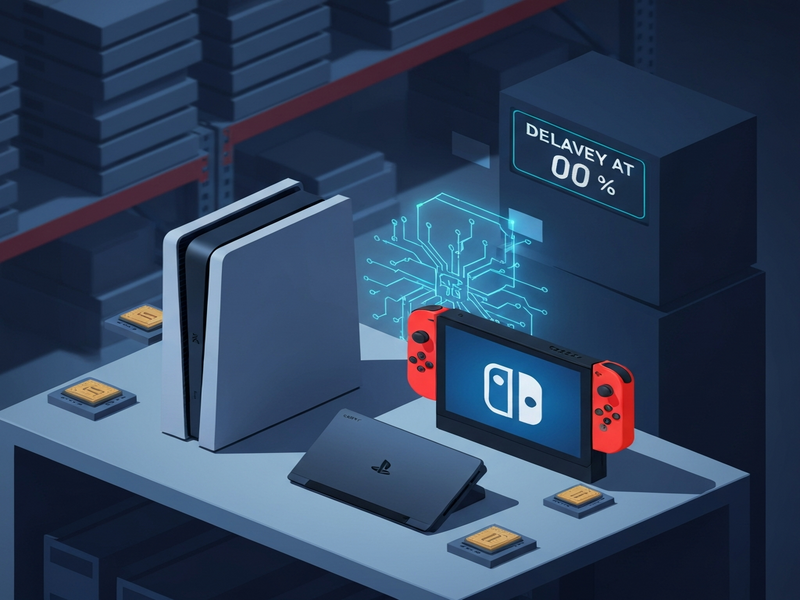
Sony PlayStation Timeline Under Pressure
Sony’s internal roadmap originally slated a PlayStation successor for 2027, following the typical six‑year generational cadence. However, Bloomberg reports that senior Sony sources are now eyeing a 2028 or even 2029 launch to accommodate the memory crunch. The delay is not merely a calendar shift; it reflects a strategic redesign of the console’s memory architecture to incorporate newer HBM3 modules that are still in limited production.
- Current PlayStation 5 uses 16 GB GDDR6; the next‑gen model aims for 24‑32 GB HBM3 to support AI‑enhanced graphics.
- HBM3 pricing is 30‑40 % higher than GDDR6, inflating the bill‑of‑materials.
- Sony is negotiating long‑term supply contracts, which could lock in higher costs for the next five years.
For developers, the memory shortage means longer lead times for prototype hardware and higher licensing fees for memory‑intensive titles. Smaller studios, especially those using the UBOS for startups platform, may need to adjust budgets or explore cloud‑based rendering solutions to stay competitive.
Nintendo Switch 2 Pricing and Availability
Nintendo’s Switch 2, slated for a 2024 release, was originally priced at $450. With memory chips now a premium commodity, analysts predict a price hike of up to 15 % to cover the increased component costs. While Nintendo has not officially confirmed the adjustment, Bloomberg suggests the company is weighing a new price point between $500 and $520.
The pricing pressure also threatens the console’s launch inventory. Early shipments may be limited, prompting resale markets to inflate secondary‑hand prices. For gamers, this could mean longer wait times and higher total cost of ownership.
Nintendo’s strategy to mitigate the shortage includes:
- Leveraging existing 8‑GB LPDDR5 stock for initial production runs.
- Partnering with memory manufacturers for priority allocation.
- Exploring a “lite” variant with reduced RAM for budget‑conscious markets.
Industry Perspective: AI‑Driven Memory Demand
The surge in AI workloads is reshaping the entire semiconductor ecosystem. Companies like Nvidia, AMD, and Samsung have announced multi‑year expansions of HBM production, yet the ramp‑up timeline extends into 2027‑2028. This lag creates a “memory bottleneck” that affects not only cloud providers but also high‑performance gaming consoles.
From an enterprise viewpoint, the same memory constraints are prompting a wave of AI‑centric platforms. The Enterprise AI platform by UBOS offers a unified environment where developers can prototype AI‑enhanced game features without needing on‑premise HBM, instead relying on scalable cloud memory pools.
Moreover, the rise of AI‑powered development tools—such as the UBOS templates for quick start—allows studios to generate assets (textures, dialogues, even code) using large language models that themselves consume significant memory during training and inference. This creates a feedback loop: more AI tools → higher memory demand → tighter chip supply.
What This Means for Gamers and the Market
For the average gamer, the immediate effects are tangible:
- Higher purchase price: Both PlayStation and Switch 2 may carry a premium.
- Longer pre‑order windows: Limited inventory could extend wait times.
- Potential shift to cloud gaming: Services like PlayStation Plus Premium may become more attractive as hardware costs rise.
Retailers are also adjusting strategies. Some are bundling memory‑intensive games with consoles to justify the price increase, while others are promoting refurbished units that use older, more abundant memory chips.
From an investment perspective, the shortage underscores the value of companies that control the memory supply chain. Venture capital is flowing into startups developing alternative memory technologies, such as 3D‑XPoint and MRAM, which could eventually alleviate the pressure on traditional DRAM.
Future Outlook and Mitigation Strategies
Looking ahead, several factors could reshape the landscape:
- New fab capacity: TSMC and Samsung have announced additional HBM lines slated for 2027‑2028, which may gradually ease the shortage.
- Software optimisation: Game engines are becoming more memory‑efficient, leveraging techniques like texture streaming and AI‑based compression.
- Hybrid cloud‑edge solutions: Platforms like the Workflow automation studio enable developers to offload heavy AI processing to the cloud while keeping gameplay local.
- Alternative revenue models: Subscription‑based access to premium titles can offset higher hardware costs for consumers.
Companies that can integrate AI services without relying on on‑device memory will have a competitive edge. For instance, the OpenAI ChatGPT integration allows developers to embed conversational agents that run on remote servers, reducing the need for local RAM.
Meanwhile, the AI marketing agents are already helping console manufacturers predict demand spikes and optimise supply chains, potentially smoothing out future shortages.
Conclusion: Navigating the Memory Crunch
The console memory shortage is a symptom of a broader AI‑driven transformation in the tech ecosystem. While Sony’s PlayStation may not appear until 2028‑2029 and Nintendo’s Switch 2 could see a price bump, the industry is rapidly adapting through cloud‑centric architectures, smarter software, and strategic partnerships.
Gamers who stay informed about supply‑chain developments and explore alternative platforms—such as the Web app editor on UBOS for indie titles—will be better positioned to enjoy next‑gen experiences without breaking the bank.
As memory production catches up and AI workloads become more efficient, the next wave of consoles will likely emerge with a balanced blend of on‑device power and cloud‑augmented intelligence, delivering richer worlds while keeping hardware costs sustainable.
Explore More on UBOS
- UBOS homepage – Discover the full suite of AI‑powered tools.
- UBOS platform overview – Learn how the platform unifies data, AI, and automation.
- UBOS pricing plans – Find flexible pricing for developers and enterprises.
- UBOS partner program – Join a network of technology partners.
- About UBOS – Our mission to democratize AI.
- Telegram integration on UBOS – Connect bots to your audience.
- ChatGPT and Telegram integration – Real‑time AI assistance.
- Chroma DB integration – Vector search for game assets.
- ElevenLabs AI voice integration – Natural‑sounding NPC dialogue.
- UBOS portfolio examples – See AI projects in action.
- AI SEO Analyzer – Optimize your game’s web presence.
- AI Article Copywriter – Generate marketing copy for launches.
- AI Video Generator – Create trailers with AI.
- Talk with Claude AI app – Conversational AI for community support.
- AI Chatbot template – Deploy help desks for gamers.
- GPT-Powered Telegram Bot – Automate updates on console releases.
- AI Image Generator – Produce concept art on the fly.
Andrii Bidochko
CTO UBOS
Andrii Bidochko is an AI entrepreneur and researcher focused on AI agents, reinforcement learning, and autonomous systems. He writes about the technologies shaping the future of machine intelligence, from frontier models and agent architectures to real-world AI applications.