

- Updated: March 17, 2026
- 5 min read
Sears AI Chatbot Data Leak Exposes Millions of Customer Interactions
Sears’ AI chatbot data exposure revealed that millions of customer conversations, audio recordings, and personal details were unintentionally published online, putting users’ privacy at risk and highlighting critical gaps in chatbot security.
What happened? An overview
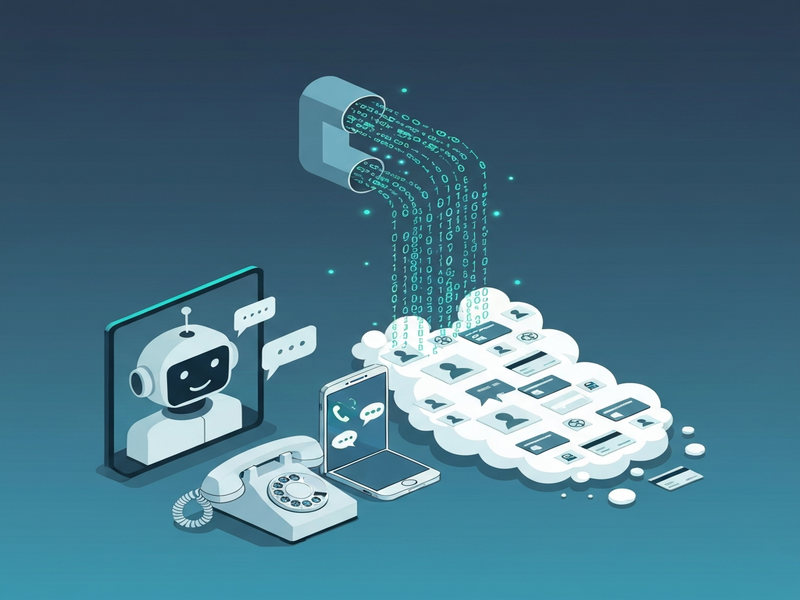
In early February 2024, security researcher Jeremiah Fowler discovered three publicly accessible databases containing more than 5 million records from Sears Home Services’ AI chatbot, Samantha. The breach included chat logs, audio files, and text transcriptions that revealed names, phone numbers, addresses, appliance details, and even hours of ambient conversation. The full story was first reported by the Wired article, which sparked a broader discussion about AI‑driven customer service and data protection.
Background on Sears’ AI chatbot
Sears Home Services, the nation’s largest appliance repair provider, processes over seven million repairs annually. To streamline support, the division launched Samantha, an AI virtual voice agent powered by the proprietary “kAIros” platform. Samantha handles inbound calls, schedules appointments, and answers common queries in both English and Spanish.
Why “Samantha” matters
By automating routine interactions, Samantha reduces wait times and operational costs. However, the convenience comes with a responsibility to safeguard the massive amount of personally identifiable information (PII) it processes. When that data is exposed, the consequences can be severe for both the brand and its customers.
Details of the data exposure
Fowler’s investigation uncovered three CSV files and a collection of audio recordings that were left unprotected on a public server. The key findings include:
- 3.7 million chat logs spanning from January 2024 to the present.
- 1.4 million audio recordings, some extending up to four hours of ambient sound.
- Plain‑text transcriptions of the audio files, providing searchable text versions of every conversation.
- Personal data such as full names, phone numbers, home addresses, appliance models, and scheduled service dates.
- Multilingual content, with both English and Spanish interactions captured.
Scale of the breach
One CSV file alone contained 54,359 complete chat logs. Across all files, the exposure represented a treasure trove for malicious actors seeking to craft targeted phishing or warranty‑scam attacks. Moreover, the audio recordings captured background noises—television programs, family conversations, and even private discussions—long after the user believed the call had ended.
Implications for privacy and security
The Sears incident underscores several critical risks inherent to AI‑driven customer service platforms:
- Phishing amplification: Detailed PII enables attackers to craft convincing, personalized phishing emails or voice scams.
- Warranty fraud: Knowledge of appliance models and service histories can be exploited for fraudulent warranty claims.
- Ambient data leakage: Extended recordings expose unrelated personal conversations, violating expectations of confidentiality.
- Regulatory exposure: Failure to protect PII may breach GDPR, CCPA, or other data‑protection statutes, leading to fines.
- Brand trust erosion: Publicized breaches diminish consumer confidence in AI assistants and the companies that deploy them.
Expert commentary
“The thing to remember is that it is real data of real people,” says Jeremiah Fowler, a researcher with Black Hills Information Security. “Companies must never take shortcuts when it comes to protecting that data. At a minimum, these files should have been password‑protected and encrypted.”
Security analysts also point out that the incident highlights a broader industry challenge: balancing rapid AI deployment with rigorous security controls. As AI agents become more ubiquitous, the need for built‑in privacy safeguards grows exponentially.
How UBOS helps you avoid similar pitfalls
If you’re building AI‑powered customer experiences, consider leveraging the UBOS platform overview, which offers end‑to‑end encryption, role‑based access controls, and audit logging for every AI interaction.
For teams looking to integrate voice assistants securely, the ElevenLabs AI voice integration provides a compliant text‑to‑speech solution that stores audio files in encrypted buckets.
Developers can also benefit from the Workflow automation studio, which lets you design data‑handling pipelines that automatically mask or redact PII before it reaches storage layers.
If you need to enrich chatbot capabilities with large‑language models, the OpenAI ChatGPT integration includes built‑in token‑level privacy controls, ensuring that user prompts never leave your secure environment.
For organizations that rely on messaging platforms, the Telegram integration on UBOS offers end‑to‑end encrypted channels, while the ChatGPT and Telegram integration demonstrates how to combine conversational AI with secure messaging.
Startups can accelerate their AI initiatives using the UBOS for startups program, which includes free credits for secure data pipelines and access to pre‑built templates such as the AI SEO Analyzer and the AI Article Copywriter.
SMBs looking for a cost‑effective solution can explore the UBOS solutions for SMBs, which bundle secure AI services with a transparent pricing model (UBOS pricing plans).
Enterprises that demand the highest level of governance can adopt the Enterprise AI platform by UBOS, featuring role‑based policies, data residency options, and compliance certifications.
Ready-to-use AI templates for secure chatbot development
UBOS’s template marketplace offers plug‑and‑play solutions that embed security best practices from day one. Notable examples include:
- AI Chatbot template – a fully audited conversational agent with built‑in PII redaction.
- Customer Support with ChatGPT API – integrates secure ticketing and audit trails.
- GPT-Powered Telegram Bot – leverages encrypted messaging for private user interactions.
- AI Voice Assistant – combines voice synthesis with end‑to‑end encryption.
Conclusion: Learning from Sears’ mistake
The Sears AI chatbot data exposure serves as a cautionary tale for any organization deploying generative AI in customer‑facing roles. Robust security controls, encryption at rest and in transit, and strict access policies are non‑negotiable. By partnering with platforms that prioritize privacy—such as UBOS homepage—businesses can harness the power of AI while protecting the very users they aim to serve.
Stay informed, audit your AI pipelines regularly, and consider a comprehensive AI security review. To explore how UBOS can safeguard your chatbot deployments, visit the About UBOS page or join the UBOS partner program for dedicated support.
Andrii Bidochko
CTO UBOS
Andrii Bidochko is an AI entrepreneur and researcher focused on AI agents, reinforcement learning, and autonomous systems. He writes about the technologies shaping the future of machine intelligence, from frontier models and agent architectures to real-world AI applications.