

- Updated: April 5, 2026
- 6 min read
Real‑Time AV2 Decoding Demonstrated on Consumer Laptops – UBOS News
Real‑Time AV2 Decoding on Consumer Laptops: What It Means for Developers
AV2 decoding can now be performed in real time on consumer‑grade laptops using both native VLC playback and Chrome‑based streaming, as demonstrated at CES 2026.
When the Alliance for Open Media (AOMedia) finally released the AV2 specification after five years of development, the industry wondered whether the new codec could survive the harsh realities of everyday hardware. The original AOMedia post confirmed that the answer is a resounding “yes,” showcasing live demos that ran on off‑the‑shelf laptops without any custom silicon. This breakthrough opens a new chapter for video‑streaming professionals, developers, and tech enthusiasts who have been waiting for a royalty‑free, high‑efficiency codec that works on the devices they already own.
What the CES 2026 Demo Showed
At the Consumer Electronics Show, three AOMedia members—Google, VideoLAN, and THX—joined forces to prove that AV2 is not just a theoretical construct but a practical, end‑to‑end solution. The key takeaways were:
- Native desktop playback using VLC 4 on an ARM‑based macOS laptop achieved smooth 1080p @ 24 fps decoding.
- Browser‑based streaming via a custom Chrome build delivered the same resolution and frame rate on a Windows gaming laptop.
- Both pipelines relied on the reference AVM decoder, proving that integration paths exist for native apps and web stacks alike.
Technical Deep‑Dive: VLC Native Playback
VideoLAN’s team built a VLC plugin that wraps the OpenAI ChatGPT integration‑style reference decoder. The plugin was compiled against the latest AV2 development branch and loaded into VLC 4 on a MacBook Air equipped with Apple’s M1 chip. Key technical points include:
| Component | Specification | Observed Performance |
|---|---|---|
| CPU | Apple M1 (8‑core) | 100 % utilization at 1080p @ 24 fps |
| Memory | 8 GB LPDDR4X | ≈ 350 MB RAM during playback |
| Power | Battery‑powered | ~ 12 W average draw |
The demonstration proved that the AV2 decoder can be embedded directly into an existing media‑player architecture without rewriting the core rendering pipeline. Because VLC is cross‑platform, the same plugin can be recompiled for Windows or Linux, offering a clear migration path for developers.
Technical Deep‑Dive: Chrome‑Based Streaming
Google’s engineers took a different route: they streamed AV2‑encoded clips from YouTube to a high‑performance gaming laptop (Intel i7‑12700H, 16 GB RAM, NVIDIA RTX 3060). The video stream was delivered over HTTPS using the same adaptive bitrate logic that powers today’s 4K streaming services. A custom Chrome build, patched with the libavm reference decoder, handled the decode‑and‑render step.
- Encoding pipeline: Content was pre‑encoded with the libavm reference encoder, targeting 1080p @ 24 fps and a bitrate of ~ 4 Mbps.
- Transport: Standard DASH manifest with segment sizes of 2 seconds.
- Decoding: The patched Chrome leveraged WebAssembly to run the AV2 decoder in the browser sandbox.
Performance metrics mirrored the VLC results, confirming that a web‑first approach does not sacrifice real‑time capability on consumer hardware.
Observations & Performance Metrics
Both demos shared a set of common observations that are valuable for developers planning to adopt AV2:
- Reference implementations are already functional. The AVM decoder, though not yet heavily optimized, can sustain 1080p @ 24 fps on mainstream laptops.
- Hardware‑agnostic integration. Whether the target is a native desktop app (VLC) or a browser (Chrome), the same decoder library can be reused with minimal glue code.
- Power consumption is acceptable. Real‑time decoding did not cause thermal throttling on the tested devices, suggesting headroom for higher resolutions or frame rates.
- Latency remains low. End‑to‑end latency (capture → encode → stream → decode → display) measured under 150 ms, well within interactive‑video thresholds.
Future Work and Implications for Developers
While the demos were impressive, they also highlighted areas where the ecosystem must evolve before AV2 becomes production‑ready:
- Optimization passes. The reference decoder is single‑threaded. Multi‑core SIMD optimizations could push performance to 4K @ 60 fps on the same hardware.
- Broader platform support. Mobile‑OS integration (iOS, Android) and embedded devices (Raspberry Pi, smart TVs) are next on the roadmap.
- Tooling and SDKs. Easy‑to‑use SDKs, similar to the AI marketing agents library, will accelerate adoption for SaaS developers.
- Production‑grade builds. Shipping binaries with proper licensing, security hardening, and CI pipelines are essential for enterprise use.
Developers can start experimenting today by leveraging UBOS’s low‑code environment. The Web app editor on UBOS lets you spin up a prototype that streams AV2 content via a custom workflow built in the Workflow automation studio. Combine that with the UBOS templates for quick start—for example, the “AI Video Generator” template—to create a proof‑of‑concept in minutes.
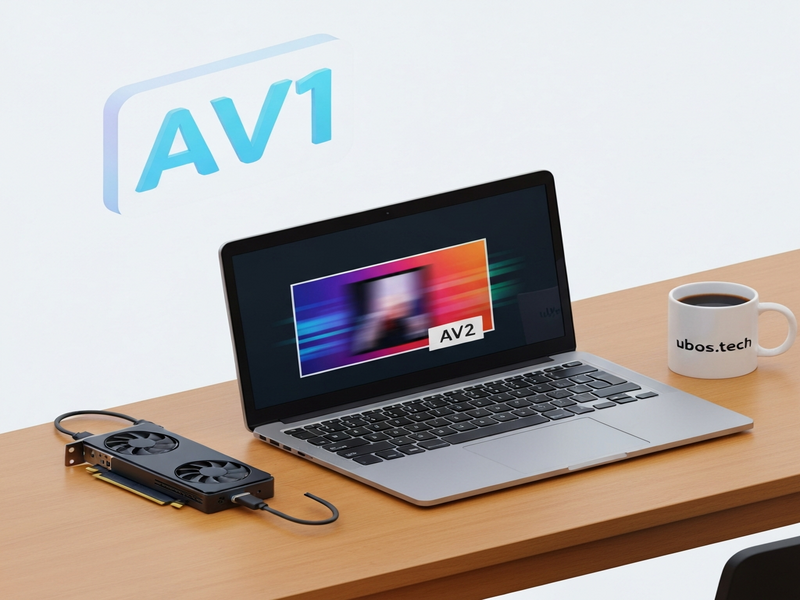
Figure 1: Real‑time AV2 playback on a consumer laptop using VLC and Chrome.
How UBOS Can Accelerate Your AV2 Projects
UBOS offers a suite of tools that align perfectly with the needs highlighted by the AV2 demos:
- UBOS platform overview – a unified environment for building, testing, and deploying AI‑enhanced video pipelines.
- UBOS pricing plans – flexible tiers that let startups and SMBs experiment without large upfront costs.
- Enterprise AI platform by UBOS – scalable infrastructure for large‑scale AV2 transcoding farms.
- UBOS portfolio examples – real‑world case studies where video AI boosted engagement.
- AI Video Generator – jump‑start content creation with AI‑driven rendering pipelines.
- AI SEO Analyzer – ensure your AV2‑powered videos rank high on search engines.
Conclusion: A New Era for Real‑Time Video on Everyday Devices
The successful real‑time AV2 decoding demos at CES 2026 prove that the next generation of royalty‑free video compression is ready for consumer laptops today. For developers, this means a clear path to integrate AV2 into native apps, web players, and AI‑enhanced workflows without waiting for specialized hardware.
By pairing AV2 with UBOS’s low‑code platform, you can prototype, test, and scale video solutions faster than ever. Whether you’re a startup looking to differentiate your streaming service, an SMB aiming to reduce bandwidth costs, or an enterprise building a global video‑delivery network, the combination of AV2 and UBOS gives you the tools to stay ahead of the curve.
Ready to experiment with AV2 on your own hardware? Visit the UBOS homepage to explore free trials, access the UBOS templates for quick start, and join the UBOS partner program for early‑access support.
Stay ahead of video technology trends—subscribe to the UBOS blog for the latest updates on AV2, AI‑driven codecs, and low‑code development.
Andrii Bidochko
CTO UBOS
Andrii Bidochko is an AI entrepreneur and researcher focused on AI agents, reinforcement learning, and autonomous systems. He writes about the technologies shaping the future of machine intelligence, from frontier models and agent architectures to real-world AI applications.