

- Updated: March 16, 2026
- 6 min read
Palantir’s £1.5 billion UK MOD Deal Raises Data‑Sovereignty and Security Concerns

Palantir’s partnership with the UK Ministry of Defence (MOD) is a multi‑billion‑pound data‑analytics agreement that gives the US‑based firm deep access to sovereign government data, sparking intense debate over data ownership, cybersecurity, and national‑security implications.
Why the Palantir‑UK MOD deal matters now
The UK MOD has signed a £1.5 billion contract with Palantir Technologies to deploy its Foundry platform across defence, logistics, and intelligence pipelines. The deal, announced in September 2025, is billed as a leap forward for government data analytics and AI‑driven decision‑making. Yet, the same contract also raises red‑flag questions about data sovereignty, the extent of private‑sector insight into classified information, and the long‑term security posture of the United Kingdom.
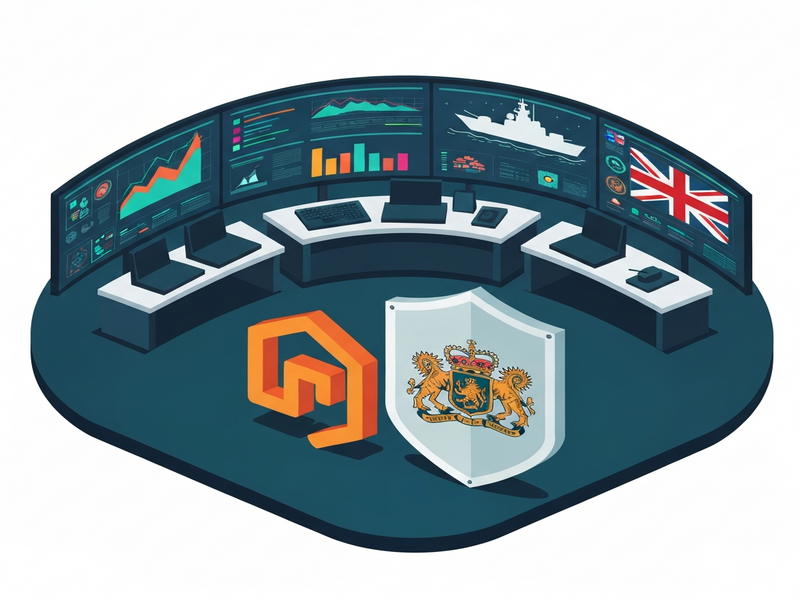
Background on Palantir and the MOD collaboration
Palantir, founded in 2003 and now a staple of US‑government contracts, specializes in large‑scale data integration, predictive analytics, and visualisation. Its two flagship products—Gotham (law‑enforcement) and Foundry (enterprise)—are built to ingest disparate data streams, cleanse them, and surface actionable insights.
The MOD’s Palantir‑UK MOD partnership is intended to replace legacy siloed databases with a unified analytics layer that can:
- Accelerate threat‑assessment cycles for naval and air assets.
- Provide real‑time logistics optimisation for supply‑chain resilience.
- Enable predictive maintenance on critical platforms such as submarines and radar installations.
From a procurement perspective, the MOD sees the deal as a way to “future‑proof” defence operations with enterprise AI platform by UBOS‑style scalability, even though the actual technology stack is Palantir’s.
Data ownership, sovereignty, and security concerns
While the MOD publicly assures that “all data remains sovereign and under the ownership of the MOD,” insiders argue that the legal nuance of “ownership” does not prevent Palantir from extracting, transforming, and monetising derived insights. The distinction matters because:
- Metadata aggregation: Palantir can combine seemingly innocuous data points (e.g., supply‑chain timestamps, GPS pings, and equipment serial numbers) to infer classified operational details.
- Intellectual‑property claims: In past US contracts, Palantir has asserted ownership over the analytical models it builds, potentially limiting the MOD’s ability to reuse or share those models without additional licensing.
- Cross‑border data flow: As a US‑registered company, Palantir is subject to the US‑UK data‑protection framework, which could expose UK data to US intelligence requests.
These concerns echo the Chroma DB integration debate in the private sector, where data‑lake owners wrestle with who truly controls the “knowledge” extracted from raw inputs.
Expert opinions and stakeholder quotes
“Allowing a single foreign entity to synthesize sovereign defence data creates a ‘mosaic’ that could be weaponised by adversaries or leveraged in diplomatic negotiations.” – Dr. Amelia Hart, senior cyber‑policy analyst, Royal United Services Institute
Cyber‑security veteran UBOS partner program manager James Larkin adds:
“The MOD’s contractual language focuses on data ‘ownership,’ but the real risk lies in the analytics layer that can infer secrets from unclassified inputs. That’s the same risk we see in commercial AI‑driven platforms.”
From the industry side, AI marketing agents specialist Priya Desai notes that “the same technology powering targeted ads can be repurposed for battlefield intelligence, blurring the line between commercial and defence use‑cases.”
Implications for national security and the wider tech ecosystem
The partnership’s ripple effects can be grouped into three strategic domains:
1. National‑security posture
By centralising data in Palantir’s cloud‑native environment, the MOD gains unprecedented situational awareness—but also creates a single point of failure. A breach or forced disclosure could expose a “digital blueprint” of the UK’s defence infrastructure.
2. Data‑sovereignty policy
Parliamentary committees are likely to demand tighter clauses that explicitly forbid the export of derived insights without a sovereign‑government licence. The debate mirrors the About UBOS narrative of building “AI in‑house” to retain control.
3. Commercial AI market dynamics
Other vendors—such as OpenAI ChatGPT integration and ElevenLabs AI voice integration—are watching the MOD’s move closely. Success could accelerate public‑sector adoption of similar platforms, while any scandal could trigger a wave of “AI‑nationalisation” policies across Europe.
What decision‑makers should do next
For procurement officers, defence analysts, and enterprise data leaders, the following checklist can help mitigate risk while still leveraging Palantir’s capabilities:
- Audit all data pipelines for metadata leakage before ingestion.
- Negotiate explicit clauses that grant the MOD perpetual rights to any AI‑generated models.
- Implement a zero‑trust architecture that isolates Palantir’s environment from other critical networks.
- Require regular, independent security assessments—preferably from a UK‑based cyber‑risk firm.
- Consider parallel development of an in‑house web app editor to prototype low‑risk analytics workloads.
By taking these steps, the MOD can enjoy the benefits of advanced analytics while safeguarding the nation’s most sensitive data assets.
Further reading
The original investigative report that sparked this discussion was published by The Guardian. The article provides a detailed timeline of contract negotiations and includes additional statements from MOD spokespeople.
Explore related UBOS resources
UBOS offers a suite of tools that can help organisations build sovereign‑first AI solutions:
- UBOS templates for quick start – pre‑built data pipelines that keep data on‑premise.
- Workflow automation studio – design secure, auditable processes without writing code.
- UBOS pricing plans – transparent pricing for government and enterprise customers.
- UBOS portfolio examples – case studies of data‑centric projects in the public sector.
- UBOS for startups – how new ventures can adopt AI responsibly from day one.
- UBOS solutions for SMBs – scaling security‑first analytics for mid‑size organisations.
- Palantir‑UK MOD partnership – a deep‑dive into the contract’s technical specifications.
UBOS Template Marketplace – AI tools you can deploy today
Below are a few marketplace apps that illustrate how sovereign AI can be built without relying on external data‑harvesting platforms:
AI SEO Analyzer
Analyzes website content while keeping all crawl data on your own servers.
AI Article Copywriter
Generates marketing copy with a strict data‑privacy policy.
AI Survey Generator
Create secure employee feedback loops without third‑party exposure.
Web Scraping with Generative AI
Extract public data while respecting robots.txt and GDPR.
Bottom line
The Palantir‑UK MOD partnership is a watershed moment for British defence data strategy. It showcases the power of AI‑driven analytics while simultaneously exposing the fragility of data‑sovereignty frameworks. Stakeholders who act now—by tightening contracts, demanding transparent model ownership, and investing in sovereign AI platforms—will shape whether the UK’s defence data becomes a strategic asset or a potential liability.
© 2026 UBOS – All rights reserved.
Andrii Bidochko
CTO UBOS
Andrii Bidochko is an AI entrepreneur and researcher focused on AI agents, reinforcement learning, and autonomous systems. He writes about the technologies shaping the future of machine intelligence, from frontier models and agent architectures to real-world AI applications.