

- Updated: January 18, 2026
- 5 min read
OpenAI Safety Lead Andrea Vallone Joins Anthropic: Implications for AI Alignment
Andrea Vallone, the former head of model‑policy research at OpenAI, has joined Anthropic’s alignment team, a move that could reshape AI safety strategies across the industry.
OpenAI Safety Lead Andrea Vallone Departs for Anthropic – What It Means for AI Alignment
Quick Overview
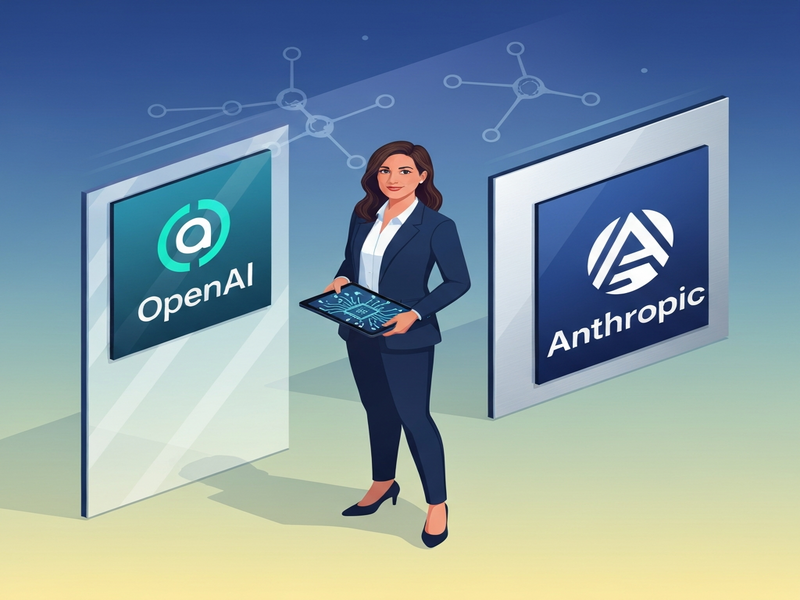
In January 2026, Andrea Vallone announced her transition from OpenAI, where she led the model‑policy research group, to Anthropic, a fast‑growing AI‑alignment startup. Her new role focuses on refining Claude’s behavior, tackling mental‑health‑related safety challenges, and strengthening Anthropic’s overall alignment roadmap.
Andrea Vallone’s Impact at OpenAI
During her three‑year tenure at OpenAI, Vallone built the model‑policy team from the ground up. Her work spanned:
- Designing safety guardrails for GPT‑4 and the upcoming GPT‑5.
- Creating rule‑based reward systems that guide model responses in high‑risk scenarios.
- Leading research on how AI should react when users exhibit signs of emotional distress or mental‑health crises.
These initiatives placed OpenAI at the forefront of AI safety research, but Vallone’s own reflections hinted at growing tensions between safety priorities and product velocity.
Why Anthropic? The Transition Explained
Anthropic, founded by former OpenAI researchers, has positioned itself as a “safety‑first” AI lab. Vallone’s move aligns with several strategic factors:
- Leadership Continuity: She will report to Jan Leike, who also left OpenAI in 2024 over similar safety‑culture concerns.
- Focused Alignment Mission: Anthropic’s public commitment to “conversational safety” gives Vallone a broader canvas to experiment with alignment techniques.
- Resource Allocation: Anthropic’s recent funding round earmarked $200 M for safety research, promising dedicated budgets for model‑policy work.
In a LinkedIn post, Vallone wrote, “I’m eager to continue my research at Anthropic, focusing on alignment and fine‑tuning to shape Claude’s behavior in novel contexts.”
“Over the past year, I led OpenAI’s research on a question with almost no established precedents: how should models respond when confronted with signs of emotional over‑reliance or early indications of mental‑health distress?” – Andrea Vallone
Implications for AI Safety and Model Policy
The shift has several ripple effects across the AI safety ecosystem:
1. Reinforcement of Safety‑First Culture
Anthropic’s explicit safety charter may attract other talent disillusioned with “shiny product” pressures at larger labs. This could accelerate the development of robust safety frameworks that prioritize user well‑being over rapid feature roll‑outs.
2. New Research Directions
Vallone’s expertise in mental‑health‑related guardrails is expected to expand Anthropic’s Anthropic news coverage and internal blog posts, potentially spawning:
- Dynamic risk‑assessment modules that adapt to user sentiment in real time.
- Cross‑modal safety checks that combine text, voice, and image inputs.
- Open‑source toolkits for third‑party developers to embed safety layers.
3. Competitive Pressure on OpenAI
OpenAI may need to double‑down on its own safety investments to retain market leadership. Expect tighter internal audits, more transparent safety reporting, and possibly new “model‑policy” roles that echo Vallone’s former responsibilities.
4. Policy & Regulatory Impact
Regulators worldwide are watching high‑profile safety departures. Vallone’s move could be cited in upcoming EU AI Act consultations as evidence that leading labs are actively reshuffling talent to meet emerging compliance demands.
Broader Impact on the AI Alignment Landscape
Beyond immediate safety concerns, this transition signals a strategic realignment of the AI research community:
Talent Migration
High‑profile moves like Vallone’s encourage a more fluid talent market, where researchers can choose environments that match their ethical priorities.
Collaboration Opportunities
Anthropic’s open‑source stance may foster joint projects with universities and NGOs focused on mental‑health safety, expanding the ecosystem of alignment tools.
Innovation in Alignment Techniques
Expect new fine‑tuning methods, reinforcement‑learning‑from‑human‑feedback (RLHF) variants, and multimodal safety checks that could become industry standards.
Market Differentiation
Companies that can demonstrate rigorous safety pipelines will likely gain a competitive edge, especially in regulated sectors like healthcare and finance.
What This Means for You
If you’re a developer, product manager, or policy maker, the evolving safety landscape offers both challenges and opportunities:
- Leverage UBOS platform overview to prototype safety‑first AI workflows without building infrastructure from scratch.
- Explore the UBOS templates for quick start, including the “AI SEO Analyzer” and “AI Article Copywriter,” which embed best‑practice guardrails.
- Consider joining the UBOS partner program to stay ahead of compliance trends.
- Review our UBOS pricing plans to find a cost‑effective solution for scaling safe AI services.
By integrating robust safety mechanisms early, you can future‑proof your AI products against regulatory scrutiny and public backlash.
Conclusion
Andrea Vallone’s departure from OpenAI to Anthropic underscores a pivotal moment in the AI safety narrative. It highlights the growing demand for dedicated alignment talent, the need for transparent model‑policy frameworks, and the strategic advantage of safety‑centric AI development. As the industry watches, the ripple effects will shape research agendas, product roadmaps, and policy discussions for years to come.
Stay informed on the latest AI safety breakthroughs and alignment strategies by exploring our resources, such as the AI safety hub and the Enterprise AI platform by UBOS. Together, we can build a future where powerful models are both innovative and responsibly governed.
Andrii Bidochko
CTO UBOS
Andrii Bidochko is an AI entrepreneur and researcher focused on AI agents, reinforcement learning, and autonomous systems. He writes about the technologies shaping the future of machine intelligence, from frontier models and agent architectures to real-world AI applications.