

- Updated: February 19, 2026
- 8 min read
New York Drops Robotaxi Legalization Plan, Impacting Waymo
New York Drops Robotaxi Legalization Plan – What It Means for Waymo and the AV Industry
New York has officially abandoned its proposal to legalize robotaxis, delivering a major setback for Waymo and other autonomous‑vehicle companies that were counting on the state’s massive taxi market.
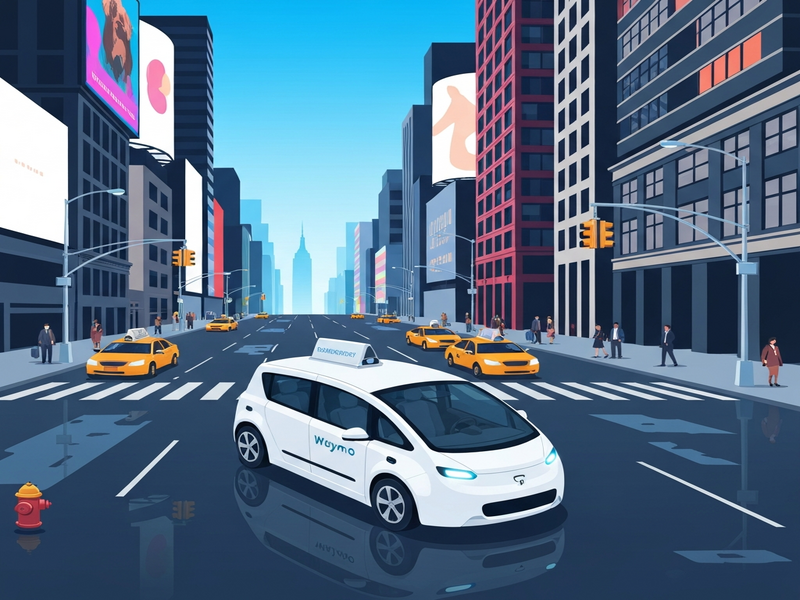
Illustration: A robotaxi cruising through Manhattan’s bustling avenues.
The decision, announced by Governor Kathy Hochul’s office on February 19, 2026, removes the last legislative foothold for autonomous‑vehicle operators seeking to launch commercial robotaxi services outside of New York City. The move reverberates across the U.S. autonomous‑vehicle (AV) ecosystem, where Waymo, Cruise, and a host of startups have long eyed the Empire State as a proving ground for large‑scale, driverless ride‑hail operations.
For tech‑savvy commuters, investors, and transportation professionals, the news reshapes expectations about when—and where—self‑driving cars will become a daily reality. Below, we break down the background, the political roadblocks, industry reactions, and the broader implications for the future of autonomous taxis in America.
The Rise and Fall of New York’s Robotaxi Pilot Program
In late 2025, New York State introduced a pilot framework that would have permitted limited robotaxi deployments in municipalities outside the five boroughs, while leaving the decision for Manhattan, Brooklyn, Queens, the Bronx, and Staten Island to the city government. The proposal was part of Governor Hochul’s broader transportation modernization agenda, which also included investments in electric‑bus fleets and smart‑traffic infrastructure.
Waymo, the industry leader in driverless technology, had already secured a temporary permit to operate manually‑driven autonomous vehicles under the supervision of safety drivers. The company was poised to transition to fully driverless robotaxi service as soon as the state legislation cleared. According to internal filings, Waymo had invested over $1.8 million in lobbying New York officials since 2019, hoping to secure a foothold in the nation’s most valuable taxi market.
Other players, such as Cruise, Optimus Ride, and Mobileye, had also filed exploratory applications, hoping to leverage New York’s dense urban environment for data collection and algorithm refinement. The pilot was expected to generate up to 5,000 autonomous rides per day within the first year of operation, according to a original Verge article.
Political Gridlock and Regulatory Hurdles
The proposal’s demise was not a surprise to insiders. State legislators, many representing suburban districts with limited exposure to autonomous‑vehicle testing, expressed concerns over safety, insurance liability, and the potential impact on traditional taxi medallion owners. A key sticking point was the removal of the mandatory police escort clause that had been part of the original 2023 draft, a concession that appeased safety advocates but alienated some lawmakers who feared insufficient oversight.
Sean Butler, a spokesperson for Governor Hochul, explained, “Based on conversations with stakeholders, including in the legislature, it was clear that the support was not there to advance this proposal.” The lack of bipartisan backing meant the bill stalled in committee and never reached a floor vote, effectively rendering the plan dead on arrival (DOA).
The regulatory environment in New York also remains fragmented. While the state permits autonomous vehicles with safety drivers, the city’s Department of Transportation (DOT) still requires a driver to keep hands on the wheel, a rule that conflicts with Waymo’s fully driverless roadmap. This regulatory mismatch further complicated the path to commercial robotaxi deployment.
Reactions from Waymo, Competitors, and City Officials
“While we are disappointed by the Governor’s decision, we’re committed to bringing our service to New York and will work with the State Legislature to advance this issue,” said Waymo spokesperson Ethan Teicher.
Waymo’s public statement underscored a willingness to continue lobbying, but the company also hinted at a strategic pivot toward states with more predictable regulatory pathways, such as Arizona, Texas, and California. In a recent earnings call, Waymo’s CEO noted that “the New York setback will accelerate our focus on expanding in markets where we already have a clear regulatory framework.”
Cruise, which had previously announced a test in lower Manhattan that was quietly shelved, issued a brief comment: “We remain optimistic about future opportunities in the Northeast, but we respect the state’s decision to prioritize safety and public input.” Optimus Ride’s CEO, meanwhile, highlighted the importance of “private‑road pilots” as a fallback while public‑road approvals remain elusive.
City officials, including Mayor Eric Adams, expressed disappointment but emphasized that the city will continue to explore “pilot‑grade” autonomous vehicle programs under existing safety‑driver rules. The DOT’s director noted that “any future robotaxi rollout will require a collaborative approach that balances innovation with public safety.”
What This Means for the Future of Autonomous Taxis in the United States
- Shift Toward Friendly Jurisdictions: Companies will likely double down on states with clear, supportive legislation, accelerating deployments in Arizona, Texas, and Florida.
- Regulatory Harmonization Pressure: The New York setback may prompt a national dialogue on standardizing AV regulations to avoid a patchwork of state‑by‑state rules.
- Investor Sentiment: Venture capital flows could tilt toward firms that have already secured operating permits in multiple states, reducing exposure to regulatory risk.
- Technology Roadmap Adjustments: Firms may prioritize safety‑driver‑enabled services as a stepping stone, rather than aiming for full autonomy in a single market.
- Impact on Urban Mobility Plans: Cities that hoped to use robotaxis to reduce congestion and emissions will need to revisit short‑term strategies, possibly leaning on electric‑bus expansions and micro‑mobility solutions.
Leveraging AI Platforms to Navigate a Complex Regulatory Landscape
While the robotaxi debate unfolds, AI‑driven development platforms are empowering transportation startups to iterate faster and stay compliant. UBOS platform overview showcases a low‑code environment where engineers can prototype autonomous‑vehicle dashboards, integrate real‑time sensor data, and automate compliance reporting.
For instance, the Workflow automation studio enables teams to set up triggers that alert legal teams whenever a new state regulation is published, ensuring rapid policy alignment. Meanwhile, the Web app editor on UBOS lets developers build custom rider‑experience portals without writing extensive front‑end code.
Companies targeting the robotaxi market can also benefit from AI marketing agents that generate localized outreach campaigns, helping them navigate the political lobbying process that proved decisive in New York. The Enterprise AI platform by UBOS offers robust data‑governance tools, essential for handling the massive telemetry streams generated by autonomous fleets.
Startups can accelerate time‑to‑market using pre‑built templates such as the UBOS templates for quick start. For a robotaxi operator, the AI Article Copywriter can draft regulatory whitepapers, while the AI SEO Analyzer ensures that public‑facing content ranks well in search, amplifying stakeholder communication.
Moreover, the AI Video Generator can produce explainer videos for city councils, and the AI YouTube Comment Analysis tool helps gauge public sentiment on autonomous‑vehicle initiatives.
By integrating these tools, AV firms can reduce development cycles, maintain regulatory compliance, and present compelling narratives to both investors and policymakers—critical capabilities in a market where legislative approval can make or break a launch.
Further Reading and Tools for Autonomous‑Vehicle Stakeholders
The UBOS portfolio examples include case studies of logistics firms that have successfully integrated AI‑driven routing and compliance dashboards. For emerging startups, the UBOS for startups page outlines pricing tiers and support packages tailored to high‑growth tech companies.
Small‑ and medium‑size enterprises can explore the UBOS solutions for SMBs, which provide scalable AI modules for fleet management, predictive maintenance, and driver‑behavior analytics.
Pricing transparency is key; the UBOS pricing plans detail per‑user and per‑feature costs, allowing AV firms to budget for AI integration without hidden fees.
For partners looking to co‑develop solutions, the UBOS partner program offers joint‑go‑to‑market opportunities, technical enablement, and revenue‑share models.
Finally, developers interested in conversational AI for rider support can experiment with the AI Chatbot template or the GPT-Powered Telegram Bot to provide real‑time assistance and incident reporting.
Conclusion
New York’s decision to drop the robotaxi legalization plan underscores how pivotal political will and regulatory clarity are to the autonomous‑vehicle industry. While the setback delays Waymo’s entry into one of the world’s most lucrative taxi markets, it also accelerates the industry’s focus on states with friendlier frameworks and pushes companies to adopt smarter, AI‑driven compliance tools.
For innovators, investors, and city planners, the lesson is clear: success in autonomous mobility will depend as much on navigating legislation as on perfecting sensor stacks. Leveraging platforms like UBOS homepage can provide the agility needed to stay ahead of policy shifts while delivering cutting‑edge rider experiences.
Stay informed, stay compliant, and stay ahead—explore how AI can power the next generation of autonomous transportation today.