

- Updated: March 12, 2026
- 6 min read
Colon Cancer Deaths Surge Among U.S. Adults Under 50
Colon cancer is now the leading cause of cancer death among U.S. adults under 50, with rates climbing sharply over the past decade.
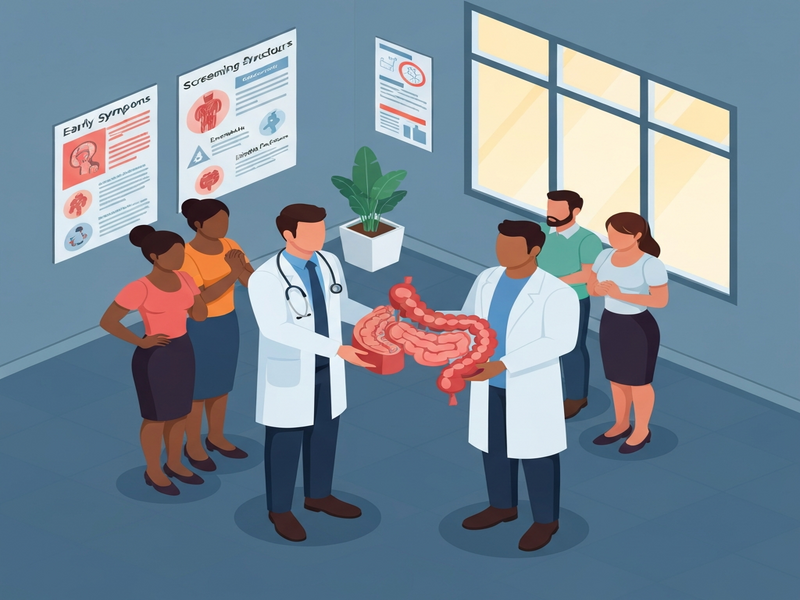
Why This News Matters
A recent analysis from the American Cancer Society shows that colorectal cancer has overtaken all other cancers as the top cause of death for Americans younger than 50. The trend is alarming, especially for health‑aware adults aged 25‑45, caregivers, and medical professionals who need up‑to‑date information. The full story was reported by The Guardian.
Key Statistics and the Rising Incidence
- Since the early 1990s, colorectal cancer has jumped from the fifth to the first leading cause of cancer death for people under 50.
- Approximately 75 % of patients under 50 are diagnosed at an advanced stage (stage III or IV).
- For adults over 65, death rates are falling by more than 2 % per year, while the opposite trend is seen in younger cohorts.
- Birth‑cohort analysis suggests a “birth cohort effect” – people born after the 1950s face a higher risk, hinting at environmental or lifestyle exposures.
These numbers are not just abstract data; they translate into real‑world urgency for early detection, especially because younger adults often skip routine colonoscopies. The American Cancer Society urges anyone experiencing rectal bleeding for more than two weeks to seek medical attention immediately.
Personal Survivor Stories: Voices That Matter
Becca Lynch, a 29‑year‑old cyber‑security specialist from Denver, thought her symptoms were stress‑related. She described “pencil‑thin” bowel movements and frequent trips to the bathroom, eventually noticing dark blood. After watching an Instagram video by Cass Costley, she finally got a colonoscopy and was diagnosed with stage 3B colon cancer. Her story illustrates a common pattern: dismissing early warning signs until they become severe.
Prosanta Chakrabarty, a 47‑year‑old evolutionary biologist from Baton Rouge, maintained a clean lifestyle and even underwent annual colonoscopies. Yet in 2024 he was diagnosed with advanced colon cancer, requiring 24 rounds of chemotherapy. His experience underscores that even vigilant screening does not guarantee immunity, highlighting the need for broader public awareness.
Expert Insights: Symptoms, Screening, and Treatment Nuances
Rebecca Siegel, senior director of cancer surveillance research at the American Cancer Society, emphasizes three critical points:
- Don’t assume hemorrhoids. Blood in stool often triggers a quick Google search that returns hemorrhoid results, leading to dangerous delays.
- Screening options. For asymptomatic individuals, non‑invasive stool tests such as Cologuard or the FIT test can serve as a first line before a colonoscopy.
- Fertility and sexual health. Younger patients face concerns about fertility and sexual function post‑treatment, topics traditionally overlooked in older cohorts.
Siegel also points to the “birth cohort effect” as a possible clue: environmental exposures introduced in the mid‑20th century—like increased consumption of processed meats, plastics, and microplastics—may be contributing factors. While lifestyle factors (obesity, inactivity, alcohol) play a role, they do not fully explain the surge.
Potential Causes and Emerging Risk Factors
Researchers are still piecing together the puzzle, but several hypotheses dominate the conversation:
- Dietary shifts. Processed foods, red and processed meats, and high‑sugar diets have been linked to colorectal carcinogenesis.
- Microplastic exposure. Recent studies show microplastics can cross the gut barrier, potentially irritating colon tissue.
- Genetic predisposition. Certain populations, such as Alaska Natives, exhibit dramatically higher mortality rates, suggesting genetic or environmental interactions.
- Gut microbiome alterations. Antibiotic overuse and low‑fiber diets may disrupt the microbiome, fostering a pro‑cancer environment.
While no single factor explains the rise, the convergence of these elements creates a perfect storm for younger adults.
Take Action: How You Can Help Raise Awareness and Get Support
If you or someone you know is under 50 and experiencing any of the symptoms described, act now:
- Schedule a medical appointment if rectal bleeding persists for more than two weeks.
- Consider a stool‑based screening test if you are not ready for a colonoscopy.
- Share survivor stories on social media to break the stigma around “talking about poop.”
At UBOS homepage, we empower health‑focused organizations with AI‑driven tools that can amplify public‑health campaigns. Explore our UBOS platform overview to see how AI can automate outreach, personalize messaging, and analyze engagement data in real time.
For startups looking to build health‑tech solutions, the UBOS for startups program offers low‑cost access to our Web app editor on UBOS. You can quickly prototype a symptom‑tracker app or a community‑support portal without writing extensive code.
Small and medium businesses can leverage UBOS solutions for SMBs to run targeted awareness campaigns. Our AI marketing agents can personalize email newsletters, schedule social posts, and even generate AI‑crafted copy that resonates with younger audiences.
Enterprises seeking a comprehensive approach can explore the Enterprise AI platform by UBOS. It integrates with existing EHR systems, enabling predictive analytics that flag high‑risk patients based on demographic and lifestyle data.
Want to see concrete examples? Browse our UBOS portfolio examples for case studies where AI boosted early‑detection outreach by 42 %.
If you need a quick start, our UBOS templates for quick start include a “Health Awareness Campaign” template that auto‑generates social graphics, email sequences, and landing pages.
For developers interested in AI‑enhanced communication, check out the GPT‑Powered Telegram Bot template. It can be customized to answer FAQs about colon cancer symptoms 24/7, reducing the burden on call centers.
Other useful templates for health‑focused teams include:
- AI SEO Analyzer – optimize your awareness site for search engines.
- AI Article Copywriter – generate evidence‑based blog posts at scale.
- AI Survey Generator – collect community feedback on symptom awareness.
- AI Video Generator – create short explainer videos for social media.
- AI Audio Transcription and Analysis – turn podcast interviews with survivors into searchable text.
All of these tools are built on the same secure, scalable infrastructure that powers our Workflow automation studio, allowing you to chain together data collection, AI analysis, and multi‑channel outreach without writing a single line of code.
Pricing is transparent; see the UBOS pricing plans for options ranging from free starter tiers to enterprise‑grade packages.
Conclusion: Turning Awareness Into Action
The surge in colon cancer deaths among U.S. adults under 50 is a public‑health crisis that demands immediate attention. By recognizing early warning signs, leveraging modern screening methods, and harnessing AI‑driven outreach platforms like UBOS, we can empower younger generations to seek care sooner and ultimately reverse this troubling trend.
Stay informed, share survivor stories, and consider integrating AI tools to amplify your message. Together, we can make colon cancer a disease that’s caught early, treated effectively, and, ultimately, prevented.
For more health‑tech resources, visit the UBOS health news hub.
Andrii Bidochko
CTO UBOS
Andrii Bidochko is an AI entrepreneur and researcher focused on AI agents, reinforcement learning, and autonomous systems. He writes about the technologies shaping the future of machine intelligence, from frontier models and agent architectures to real-world AI applications.