- Updated: January 30, 2026
- 6 min read
Netflix’s $82.7 billion Acquisition of Warner Bros: 2026 Media Merger Insights
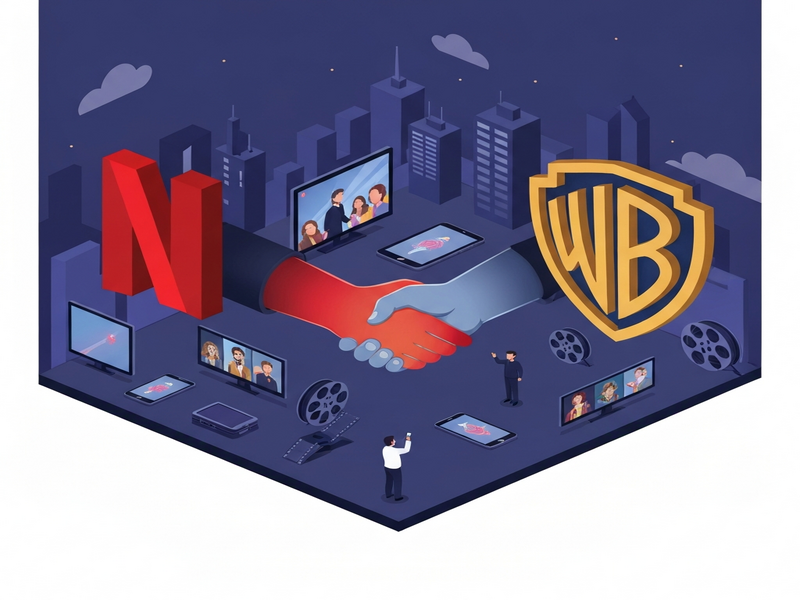
Netflix’s $82.7 billion acquisition of Warner Bros instantly creates the world’s largest streaming powerhouse, merging the platform with an unrivaled library of iconic film and TV franchises.
Netflix’s Landmark Purchase of Warner Bros: What It Means for the Streaming Industry
The deal that shocked the media world in early December 2025 finally took shape in 2026, as Netflix announced it will acquire Warner Bros.’ film, television, and streaming assets—including HBO and HBO Max—for an estimated $82.7 billion. The move promises to reshape content distribution, pricing models, and competitive dynamics across the globe. For a deeper dive into the original reporting, see the TechCrunch article that broke the news.
Background: How the Deal Came Together
Warner Bros. Discovery (WBD) first signaled a possible sale in October 2025 after years of mounting debt—over $30 billion—and a steady decline in traditional cable revenue. The company’s leadership explored multiple suitors, from Paramount to Comcast, but Netflix emerged as the clear front‑runner. Unlike rivals that pursued a full‑company takeover, Netflix focused exclusively on WBD’s content creation and streaming divisions, leaving the broader corporate structure untouched.
Netflix’s bid, initially announced at $27.75 per share, was later refined into an all‑cash offer, reassuring investors and signaling confidence in its ability to fund the transaction without diluting equity. The board of WBD ultimately favored Netflix’s proposal, citing a lower debt burden compared with Paramount’s $108 billion cash offer, which would have saddled the combined entity with unsustainable liabilities.
This strategic alignment mirrors the growing trend of “content‑first” acquisitions, where platforms prioritize premium libraries over legacy distribution assets. As the media mergers of 2026 continue to reshape the market, Netflix’s move stands out for its scale and focus on creative assets.
Financial Terms & Strategic Implications
- Deal Value: Approximately $82.7 billion, making it the largest media‑tech acquisition in history.
- Payment Structure: All‑cash transaction at $27.75 per WBD share, financed through a mix of cash reserves and new debt facilities.
- Debt Impact: Netflix’s post‑deal leverage is projected to rise modestly, but remains well below the thresholds that would trigger covenant breaches.
- Synergy Targets: Cost savings of $3‑4 billion over five years through combined production pipelines, shared technology stacks, and unified marketing.
- Revenue Upside: Access to Warner Bros.’ franchises—Harry Potter, DC, Game of Thrones—expected to boost subscriber acquisition by 15‑20 million within two years.
From a strategic standpoint, the acquisition gives Netflix a robust pipeline of high‑budget productions and a ready‑made global distribution network for theatrical releases. It also positions the company to experiment with hybrid release windows, potentially shortening the theatrical‑to‑streaming gap for blockbuster titles.
For enterprises looking to harness similar AI‑driven content workflows, the Enterprise AI platform by UBOS offers a scalable foundation for automating video editing, metadata tagging, and audience analytics—capabilities that will become essential as content libraries expand.
Industry Reactions & Regulatory Hurdles
The merger has ignited a firestorm of responses across Hollywood, Wall Street, and Capitol Hill. The Writers Guild of America filed an amicus brief urging the Justice Department to block the deal on antitrust grounds, fearing reduced bargaining power for creators. Meanwhile, major investors praised the strategic fit, with several analysts upgrading Netflix’s stock rating.
Regulatory scrutiny is intense. Senators Elizabeth Warren, Bernie Sanders, and Richard Blumenthal have publicly warned that the combined entity could dominate streaming pricing and limit competition. Netflix co‑CEO Ted Sarandos is slated to testify before a Senate subcommittee in March, where he will address concerns about market concentration and consumer impact.
Should regulators reject the acquisition, Netflix would owe a $5.8 billion breakup fee, and Warner Bros. could revisit prior acquisition overtures. The outcome hinges on the Federal Trade Commission’s assessment of whether the deal would substantially lessen competition in the U.S. and EU markets.
In the meantime, industry players are scrambling to differentiate. AI‑enhanced marketing tools, such as AI marketing agents, are being deployed to personalize content recommendations and optimize ad spend, helping smaller services stay relevant against the Netflix‑Warner behemoth.
Future Outlook: What’s Next for Streaming?
The consolidation promises several long‑term shifts:
- Bundling Opportunities: Netflix may eventually integrate HBO’s premium content into a single subscription tier, creating a “mega‑bundle” that rivals traditional cable packages.
- Pricing Dynamics: While Netflix has pledged no immediate price hikes, historical patterns suggest incremental increases every 12‑18 months to fund content creation.
- Global Expansion: Warner Bros.’ strong foothold in Europe and Asia will accelerate Netflix’s penetration in markets where it currently lags behind local competitors.
- Content Production Innovation: The combined R&D budgets will likely accelerate AI‑driven production tools, from script generation to post‑production visual effects.
- Competitive Response: Rivals such as Disney+, Amazon Prime Video, and Apple TV+ are expected to double down on exclusive IP and explore strategic partnerships to offset Netflix’s expanded catalog.
For media startups eyeing a foothold in this evolving ecosystem, leveraging low‑code platforms can accelerate time‑to‑market. The UBOS for startups suite provides pre‑built templates—like the AI SEO Analyzer and AI Video Generator—that enable rapid deployment of niche streaming services or content‑curation tools.
Moreover, the Workflow automation studio can orchestrate complex publishing pipelines, ensuring that new releases are simultaneously prepared for theatrical, streaming, and social media distribution.
Conclusion: Navigating the New Streaming Era
Netflix’s acquisition of Warner Bros. marks a watershed moment, consolidating unmatched creative assets under a single streaming roof. While the deal promises richer libraries and innovative release strategies, it also raises legitimate concerns about market concentration, pricing power, and creative diversity. Stakeholders—from investors to independent creators—must stay vigilant as regulators deliberate and competitors adapt.
If you’re a media professional or a tech‑savvy entrepreneur looking to thrive in this transformed landscape, explore how UBOS can empower your next project. From the UBOS platform overview to flexible UBOS pricing plans, we provide the tools to build, scale, and monetize AI‑enhanced streaming experiences.
Stay informed, stay agile, and leverage the power of AI‑driven platforms to stay ahead of the curve.