

- Updated: March 26, 2026
- 6 min read
Neal Stephenson Slams Meta’s AR Glasses as ‘Creepy’ and Questions the Future of Face‑Worn VR
Neal Stephenson, the author who coined “Metaverse,” now says Meta’s AR glasses are creepy and that there is no viable business case for consumer‑focused VR headsets.
Why Stephenson’s Verdict Matters for the Metaverse
When a novelist’s imagination helped launch an entire industry, his later reflections become a barometer for the sector’s health. Neal Stephenson’s recent comments—published in the original Verge article—challenge the prevailing narrative that immersive hardware will dominate the next decade of digital interaction. For tech‑savvy readers tracking AR glasses, VR headsets, and the broader Metaverse, understanding his perspective is essential for strategic decisions, from product roadmaps to investment theses.
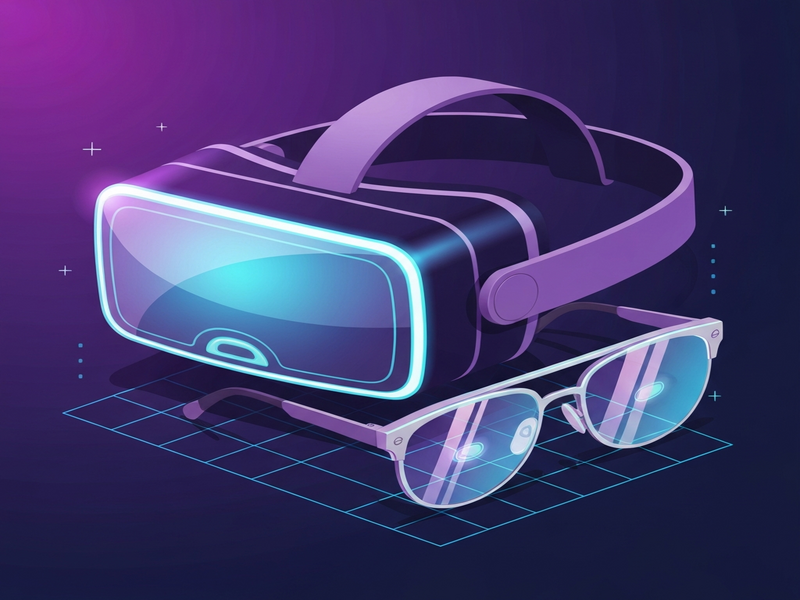
Stephenson’s critique arrives at a crossroads: Meta is pouring billions into mixed‑reality hardware, while startups scramble to find a sustainable revenue model for immersive experiences. This article dissects his statements, contextualizes them within industry trends, and explores what the future may hold for both head‑mounted displays and handheld devices.
Stephenson’s Comments on Meta Glasses and VR Headsets
During a recent interview, Stephenson described Meta’s upcoming AR glasses as “creepy,” adding that “people don’t like wearing things on their faces and don’t trust those who do.” He went further, asserting that “there is no business case for headsets any more.” These remarks echo a broader sentiment that the market may be shifting away from face‑worn computing toward more discreet, phone‑centric interactions.
He also reflected on his earlier optimism: “When I was working at Magic Leap, I believed that twenty years from now everyone would still be staring at little rectangles in their hands.” Today, he flips that view, suggesting that the only alternative to uncomfortable wearables is the ubiquitous smartphone.
Stephenson’s stance aligns with a growing chorus of industry leaders—including Epic Games CEO Tim Sweeney—who argue that the “Metaverse” can thrive without immersive hardware, focusing instead on interoperable, flat‑screen experiences.
Key Points and Direct Quotes from the Verge Story
- “People don’t like wearing things on their faces and don’t trust those who do.” – Neal Stephenson
- “There is no business case for headsets any more.” – Stephenson on the future of VR hardware
- Stephenson acknowledges that “shrinking headsets down to the size of glasses won’t work as long as they stay creepy.”
- He suggests that the “Metaverse” may evolve into a collection of “simpler flat games” rather than fully immersive worlds.
These statements were originally published in a blog post that Stephenson linked to from his personal site. The post provides a nuanced view of why he believes the hardware trajectory is misaligned with consumer comfort and trust.
Industry Implications: From Hardware to Business Models
The ramifications of Stephenson’s critique ripple across several layers of the AR/VR ecosystem:
1. Investor Sentiment
Venture capitalists have become increasingly cautious about funding pure‑play headset startups. Stephenson’s endorsement of a “phone‑first” future may accelerate this trend, prompting investors to favor platforms that leverage existing mobile hardware.
2. Product Development Priorities
Companies like Meta, Apple, and Google are now emphasizing mixed reality that blends transparent displays with everyday objects, rather than fully opaque goggles. The goal is to reduce the “creepy” factor while preserving immersive capabilities.
3. Content Strategy Shifts
Developers are pivoting toward experiences that can be accessed via browsers or mobile apps, such as AI SEO Analyzer and AI Article Copywriter. These tools illustrate how AI‑driven content can thrive without requiring users to don a headset.
4. Enterprise Adoption
Large organizations are exploring AR for specific use cases—like remote assistance or data overlay—rather than broad consumer entertainment. The Enterprise AI platform by UBOS exemplifies how AI can augment existing workflows without demanding new hardware.
Headsets vs. Glasses: Technical and Social Comparison
To understand why Stephenson finds glasses “creepy,” it helps to compare the two form factors across key dimensions.
| Dimension | VR Headsets | AR Glasses |
|---|---|---|
| Immersion Level | Full‑screen, 360° visual block | Transparent overlay, limited field‑of‑view |
| Weight & Comfort | Heavy, requires straps; can cause fatigue | Lightweight, resembles sunglasses; still perceived as “wearable tech” |
| Social Acceptance | Low—often used in private spaces | Higher potential, but “creepy” factor remains |
| Battery Life | 2‑4 hours (high power draw) | 8‑12 hours (lower draw) |
| Development Ecosystem | Unity, Unreal, proprietary SDKs | WebXR, ARCore/ARKit, lightweight SDKs |
While headsets excel at total immersion, their bulk and social stigma limit everyday adoption. Glasses aim to blend into daily life, yet Stephenson argues that unless the “creepy” perception is solved, they will not achieve mass appeal.
Future Outlook: What Comes After the “Creepy” Phase?
Stephenson’s skepticism does not signal the death of immersive tech; rather, it highlights a pivot point. The next wave may involve:
- Context‑aware AR. Devices that only surface digital information when truly needed, reducing visual clutter.
- Hybrid experiences. Combining phone‑based AR with occasional headset sessions for high‑fidelity tasks (e.g., design, training).
- AI‑driven personalization. Leveraging platforms like the AI marketing agents to tailor content in real time, making the hardware feel indispensable.
- Enterprise‑first rollouts. Companies will adopt AR for maintenance, logistics, and remote collaboration before consumers demand it.
In parallel, the UBOS platform overview demonstrates how low‑code environments can accelerate the creation of mixed‑reality applications without deep hardware expertise. By integrating services such as OpenAI ChatGPT integration and ElevenLabs AI voice integration, developers can prototype AR experiences that run on existing smartphones, sidestepping the “creepy” hardware hurdle.
How UBOS Helps Teams Navigate This Transition
Businesses looking to stay ahead of the AR/VR curve can leverage several UBOS solutions:
- Web app editor on UBOS – Build responsive AR interfaces that run in browsers.
- Workflow automation studio – Automate data pipelines for real‑time AR overlays.
- UBOS templates for quick start – Jump‑start projects with pre‑built AR modules.
- UBOS pricing plans – Scale from startup budgets to enterprise deployments.
- UBOS partner program – Collaborate with technology partners for custom hardware integrations.
These tools empower developers to create “mixed reality” experiences that respect user comfort while delivering the value Stephenson believes is essential for the next generation of the Metaverse.
Conclusion: A Cautious Yet Optimistic Path Forward
Neal Stephenson’s warning that “Meta glasses are creepy” serves as a reality check for an industry that has long been driven by hype. While the allure of full‑immersion remains strong, consumer trust, comfort, and clear business models will dictate which form factor survives.
For now, the balance appears to tip toward lightweight, phone‑centric AR solutions that can be deployed quickly and at scale. Companies that can blend AI‑enhanced content (think AI Video Generator or AI Chatbot template) with seamless hardware experiences will likely lead the next wave of the Metaverse.
As the ecosystem evolves, staying informed—and leveraging platforms that reduce development friction—will be crucial. Whether you’re a startup, an SMB, or an enterprise, the tools highlighted above can help you navigate the “creepy” phase and emerge with compelling, user‑friendly mixed‑reality products.
Explore more about UBOS:
Andrii Bidochko
CTO UBOS
Andrii Bidochko is an AI entrepreneur and researcher focused on AI agents, reinforcement learning, and autonomous systems. He writes about the technologies shaping the future of machine intelligence, from frontier models and agent architectures to real-world AI applications.