

- Updated: February 19, 2026
- 7 min read
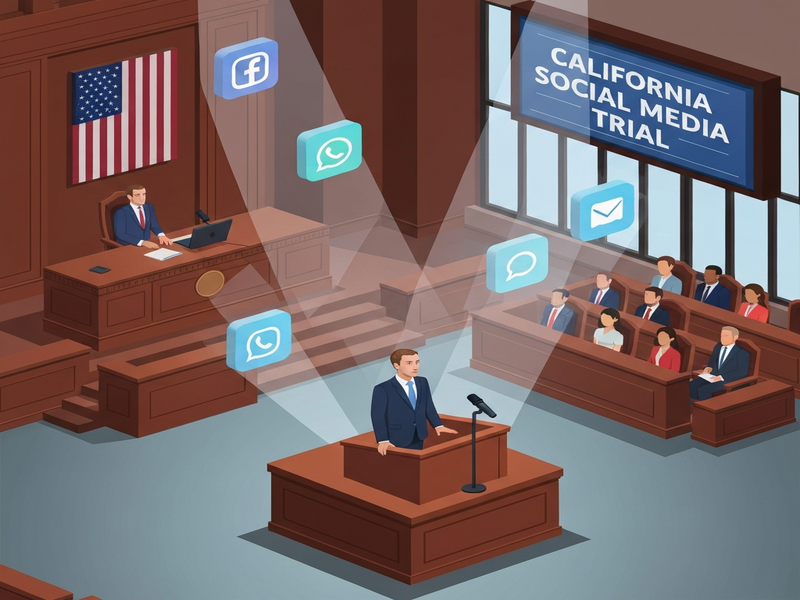
Meta Trial: Zuckerberg Testifies on Underage Users and Social Media Regulation in California
The Meta trial in California, featuring Mark Zuckerberg’s testimony, focuses on the platform’s usage goals, the protection of under‑age users, and the broader push for stricter social‑media regulation in the Golden State.
Key Facts at a Glance
- Location: San Francisco County Superior Court, California.
- Defendant: Meta Platforms, Inc. (owner of Facebook, Instagram, WhatsApp).
- Witness: Mark Zuckerberg, CEO and Founder of Meta.
- Core issues: alleged design choices that prioritize engagement over safety, especially for users under 18.
- Potential outcome: new state‑level regulations that could reshape how social‑media companies handle data, advertising, and age verification.
The trial, which began in early May 2026, has quickly become a bellwether for how U.S. states might regulate the digital lives of millions of teenagers. Below we unpack the background, the testimony, and what the verdict could mean for the future of social‑media governance.
Background of the California Trial
California’s Attorney General opened the case in 2024, alleging that Meta’s platforms systematically expose minors to harmful content, excessive screen time, and targeted advertising that exploits their developmental vulnerabilities. The lawsuit cites violations of the Children’s Online Privacy Protection Act (COPPA) and claims that Meta’s “usage‑goal” algorithms are designed to maximize user engagement without adequate safeguards for younger audiences.
Legal scholars note that California has a history of pioneering digital‑privacy legislation—from the California Consumer Privacy Act (CCPA) to the recent California Privacy Rights Act (CPRA). The current trial could become the third landmark case that forces tech giants to redesign core product features.
Why California?
California represents more than 40 million internet users, with a disproportionate share of teens active on Instagram and TikTok. The state’s legislative bodies have already introduced bills that would require:
- Mandatory age‑verification for all accounts under 18.
- Transparent reporting of algorithmic “time‑spend” metrics.
- Limits on micro‑targeted advertising to minors.
These proposals set the stage for the courtroom arguments that follow.
Mark Zuckerberg’s Testimony: What He Said
When Zuckerberg took the stand, he faced a line of probing questions from both the prosecution and defense. His testimony can be broken down into three thematic pillars:
1. Commitment to User Safety
“Our mission is to give people the power to build community and bring the world closer together. That mission includes a responsibility to protect the most vulnerable among us, especially children.” – Mark Zuckerberg, May 2026.
Zuckerberg highlighted Meta’s investment of $2 billion over the past three years into safety tools, including AI‑driven content moderation, parental‑control dashboards, and the rollout of “Age‑Gate” prompts that appear before a user can create an account.
2. Usage Goals vs. Engagement Metrics
The prosecution argued that Meta’s “usage goals” are deliberately engineered to increase screen time, citing internal documents that label “maximum daily active minutes” as a key performance indicator. Zuckerberg countered by stating that these metrics are now balanced with “well‑being scores” that measure user satisfaction, mental‑health impact, and time‑spend thresholds.
3. Underage User Protections
Addressing the under‑age user controversy, Zuckerberg admitted that “no system is perfect,” but emphasized ongoing collaborations with child‑psychology experts and the development of a real‑time age‑verification API that leverages government‑issued IDs and AI‑based facial analysis. He also referenced a pilot program in three U.S. states that reduced under‑13 sign‑ups by 68 % within six months.
Usage Goals and Underage User Concerns
While Zuckerberg painted a picture of progress, critics remain skeptical. The core tension lies in reconciling two competing objectives:
- Business Imperative: Advertising revenue is directly tied to user engagement. Longer sessions translate into more ad impressions and higher CPMs.
- Public‑Policy Imperative: Protecting minors from addictive design, data harvesting, and manipulative advertising.
Industry analysts estimate that over 30 % of Meta’s ad revenue in 2025 originated from users aged 13‑17, underscoring why the “usage‑goal” debate is so heated.
Key Findings from the Testimony
| Area | Zuckerberg’s Claim | Critics’ Counterpoint |
|---|---|---|
| Age Verification | AI‑driven API reduces under‑13 sign‑ups by 68 %. | Accuracy concerns; false positives/negatives still high. |
| Well‑Being Scores | Integrated into product roadmaps. | Metrics are proprietary; no public audit. |
| Content Moderation | 100 M AI‑reviewed posts daily. | Still 15 % of harmful content slips through. |
These contradictions illustrate why the trial’s outcome could reshape the balance between profit‑driven design and user protection.
Implications for Social‑Media Regulation
The California case is more than a single lawsuit; it is a template for how states might regulate the digital ecosystem. Below are the most likely regulatory pathways:
A. New State‑Level Statutes
Legislators are drafting a “Digital Youth Protection Act” that would:
- Require verifiable age checks before any account creation.
- Mandate quarterly public reports on under‑age user metrics.
- Impose fines up to $5 million per violation for non‑compliance.
B. Federal Ripple Effects
Should California secure a precedent‑setting judgment, Congress may feel pressure to amend COPPA or introduce a national “Children’s Digital Safety Act.” Companies would then need to harmonize compliance across 50 states, dramatically increasing operational complexity.
C. Industry Self‑Regulation
In parallel, trade groups are proposing a voluntary “Digital Well‑Being Charter.” While less enforceable, such frameworks could mitigate harsher legislative action if they demonstrate measurable impact.
How AI Platforms Like UBOS Are Responding to New Regulations
Companies that build AI‑driven products are already re‑architecting their solutions to meet stricter standards. UBOS, a leading UBOS platform overview, showcases several features that align with emerging California rules:
- Built‑in Age‑Gate Modules: Using the Telegram integration on UBOS, developers can embed real‑time verification flows that sync with government ID APIs.
- Transparent AI Auditing: The Chroma DB integration logs every decision‑tree change, enabling regulators to audit algorithmic bias.
- Well‑Being Dashboards: Through the AI marketing agents module, marketers can monitor “engagement‑to‑well‑being” ratios and automatically throttle campaigns that exceed safe thresholds.
- Compliance‑First Templates: The UBOS templates for quick start include pre‑configured privacy notices and consent flows that satisfy both COPPA and the upcoming California statutes.
For startups looking to navigate this evolving landscape, UBOS for startups offers a low‑cost sandbox that simulates regulatory checks before launch. Mid‑size businesses can leverage UBOS solutions for SMBs to embed age‑verification without extensive engineering overhead.
Enterprises, on the other hand, may adopt the Enterprise AI platform by UBOS, which integrates with existing data lakes and provides a unified compliance dashboard across multiple jurisdictions.
These capabilities illustrate how a forward‑thinking AI platform can turn regulatory pressure into a competitive advantage, turning compliance costs into product differentiators.
Further Reading on Regulation and Ethics
To deepen your understanding of the policy environment surrounding Meta and other tech giants, explore our in‑depth analyses:
- Meta Regulation – A comprehensive look at how global regulators are targeting large social networks.
- Social Media Ethics – An ethical framework for responsible platform design.
Original Reporting
For the full courtroom narrative and additional quotations, see the original Wall Street Journal coverage: Meta trial: Mark Zuckerberg’s testimony on social‑media practices.
Conclusion
The California Meta trial is a watershed moment that could redefine the relationship between tech giants and the public they serve. Zuckerberg’s testimony acknowledges both progress and gaps, but the ultimate decision will hinge on whether courts and legislators deem the company’s remedial steps sufficient. As states like California push for stricter safeguards for underage users, platforms will need to embed compliance into the core of their product architecture—something AI‑focused firms like UBOS are already doing.
Whether you are a developer, a policy maker, or a concerned parent, the outcome of this case will shape the digital environment for the next generation of internet users. Stay informed, stay proactive, and watch how the legal landscape evolves in real time.