

- Updated: January 18, 2026
- 6 min read
Mercedes-Benz Pauses Level 3 Drive Pilot Rollout, Shifts to Level 2++ Assist for S‑Class
Mercedes‑Benz has temporarily paused the rollout of its Level 3 Drive Pilot system, delaying its inclusion in the upcoming S‑Class and shifting focus to a new Level 2++ feature that still requires driver attention.
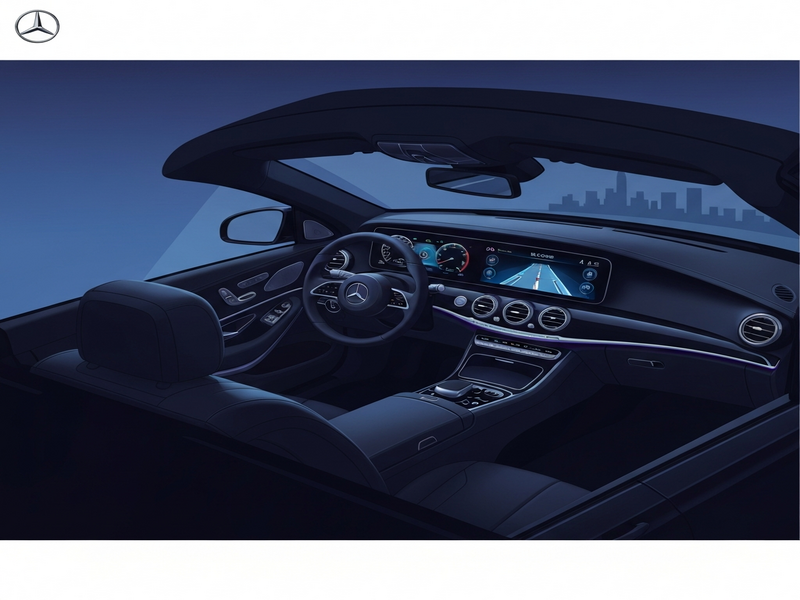
Mercedes‑Benz suspends Level 3 “eyes‑off” driving for the new S‑Class
On January 13, 2026, the German automaker announced that the highly anticipated Drive Pilot Level 3 autonomous‑driving feature will not be available in the next‑generation S‑Class when it launches later this month. The decision, reported by The Verge, cites limited consumer demand, regulatory constraints, and the high cost of the underlying sensor suite. Instead, Mercedes is accelerating the deployment of a new Level 2++ system—dubbed “Drive Pilot Assist”—that mirrors Tesla’s Full Self‑Driving (FSD) in offering city‑wide assistance while keeping the driver’s hands on the wheel.
What is Drive Pilot and why Level 3 matters
Drive Pilot was introduced in the 2023 EQS and S‑Class models as the world’s first production‑ready Level 3 system. In the SAE taxonomy, Level 3 allows the vehicle to handle all aspects of driving under defined conditions, while the driver can safely disengage from the driving task—eyes off the road, hands off the wheel. Mercedes marketed this as a “hands‑free, eyes‑off” experience for traffic‑jam situations up to 40 mph (64 km/h), later expanded to 59 mph (95 km/h) in 2024.
Key technical pillars of the original Drive Pilot included:
- High‑definition maps covering specific highway segments.
- Lidar sensors (originally sourced from Luminar) for depth perception.
- Camera arrays and radar for object detection.
- Strict operational design domain (ODD) requiring clear weather, visible lane markings, and a lead vehicle.
These constraints limited the system to certain German autobahns and select U.S. highways in California and Nevada, reducing its real‑world utility for most owners.
Why Mercedes is pulling the plug—impact on the new S‑Class
Mercedes spokesperson Tobias Mueller explained the pause in a press briefing:
“We don’t want to offer a system which, from a customer‑value perspective, doesn’t deliver enough benefit. The next two to three years will bring a more compelling solution.”
The automaker highlighted three primary pain points:
- Demand mismatch: Early adopters found the ODD too restrictive, leading to low utilization rates.
- Cost pressure: Lidar and high‑resolution mapping added millions per vehicle, eroding profit margins.
- Regulatory uncertainty: Current laws in Europe and the U.S. only permit Level 3 operation under tightly controlled scenarios.
Consequently, the upcoming S‑Class will ship with the new Drive Pilot Assist—a Level 2++ system that provides lane‑keeping, adaptive cruise, and traffic‑jam assist but still requires the driver to keep eyes on the road. This aligns Mercedes with competitors like Tesla, which already offers a similar “hands‑on” assistance suite.
What this means for the autonomous‑driving industry
The suspension of a flagship Level 3 feature from a premium brand sends a clear signal to the broader automotive ecosystem:
- Regulators are still catching up. Until legislation expands the legal ODD for Level 3, manufacturers face a fragmented market.
- Cost‑effective sensor stacks win. Companies that can achieve comparable perception with cameras and radar—without expensive lidar—are gaining a competitive edge.
- Consumer expectations are evolving. Drivers now prioritize convenience over full autonomy; a reliable Level 2 system that works in more scenarios is often more valuable than a limited Level 3.
Key players reacting to this shift include:
| Company | Current Focus | Strategic Move |
|---|---|---|
| Tesla | Full Self‑Driving (Level 2+) | Expanding beta to more markets, emphasizing driver‑in‑the‑loop safety. |
| Waymo | Level 4 robo‑taxis | Doubling fleet size in Phoenix, focusing on city‑wide autonomy. |
| Cruise | Level 4 urban deployment | Partnering with GM for wider rollout in San Francisco. |
For tech‑savvy readers, the shift underscores the importance of AI‑driven perception pipelines that can adapt without costly hardware upgrades. Platforms that integrate Chroma DB integration for vector search, or leverage OpenAI ChatGPT integration for real‑time decision support, are poised to become the backbone of next‑generation driver assistance.
Industry voices weigh in
Analyst Maria Jensen of About UBOS noted:
“Mercedes’ move is pragmatic. The market isn’t ready for a fragmented Level 3 experience, and the cost of lidar is still prohibitive for mass‑market vehicles. The real breakthrough will come when AI can fuse camera and radar data to achieve comparable safety margins.”
Meanwhile, a senior engineer at a leading autonomous‑driving startup, speaking on the UBOS partner program, added:
“We see a surge in demand for modular AI platforms that let OEMs plug‑and‑play perception models. Solutions that combine ElevenLabs AI voice integration for driver alerts with robust data pipelines are becoming the new standard.”
Leveraging AI platforms to accelerate autonomous features
Companies looking to bridge the gap between Level 2 and Level 3 can benefit from a flexible AI development environment. The UBOS platform overview offers:
- Rapid prototyping with the Web app editor on UBOS, enabling engineers to test perception models without deep‑code changes.
- End‑to‑end workflow automation via the Workflow automation studio, which can orchestrate sensor data ingestion, model inference, and driver‑alert generation.
- Pre‑built AI templates such as the AI SEO Analyzer or AI Image Generator that illustrate how generative AI can be repurposed for visual perception tasks.
For startups, the UBOS for startups program provides cost‑effective compute credits and access to a library of pre‑trained models, reducing time‑to‑market for advanced driver‑assistance systems (ADAS). SMBs can also explore the UBOS solutions for SMBs, which include ready‑made APIs for real‑time lane detection and traffic‑sign recognition.
Conclusion: A strategic pause, not a retreat
Mercedes‑Benz’s decision to suspend its Level 3 Drive Pilot is a calculated response to market realities, regulatory limits, and the economics of high‑end sensor suites. While the S‑Class will launch without “eyes‑off” capability, the new Drive Pilot Assist keeps Mercedes competitive in the fast‑evolving ADAS arena. The move also highlights a broader industry trend: the shift toward AI‑centric, software‑first solutions that can be updated over‑the‑air, reducing reliance on expensive hardware.
For automotive innovators, the lesson is clear—invest in adaptable AI platforms that can evolve from Level 2 to Level 3 and beyond without a complete hardware overhaul. Platforms like Enterprise AI platform by UBOS provide the modularity and scalability needed to stay ahead of regulatory changes and consumer expectations.
Ready to accelerate your autonomous‑driving projects? Explore the UBOS pricing plans and start building with our AI Chatbot template or the AI Video Generator to prototype driver‑alert interfaces today.
Visit the UBOS homepage to discover more AI‑powered solutions for the automotive industry.