

- Updated: February 16, 2026
- 6 min read
Google DeepMind Unveils New AI Delegation Framework to Secure the Agentic Web
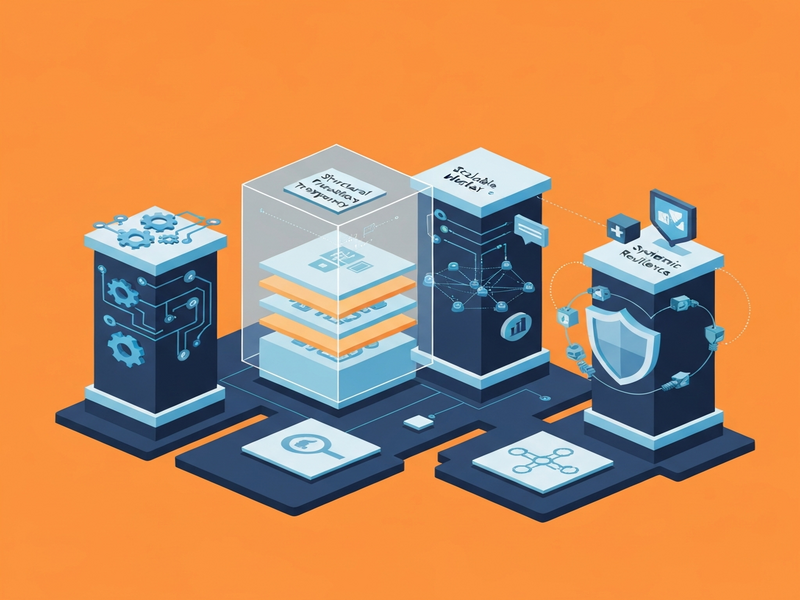
Answer: Google DeepMind’s new AI delegation framework introduces four core pillars—Adaptive Execution, Structural Transparency, Scalable Market, and Systemic Resilience—to enable trustworthy, autonomous AI agents that can safely operate in the emerging agentic web and power future economies.
Google DeepMind Unveils a Blueprint for Intelligent AI Delegation
In a landmark paper released on February 15, 2026, DeepMind researchers outlined a comprehensive AI delegation framework designed to secure the nascent agentic web. The proposal moves beyond brittle heuristics, offering a contract‑first, verifiable approach that aligns AI agents with human‑like authority, responsibility, and accountability. This article breaks down the framework, its four pillars, and why it matters for businesses, startups, and the broader AI ecosystem.
Framework Overview: From Simple Subroutines to Intelligent Delegation
Traditional software treats delegation as a simple “outsourcing” of a subroutine. DeepMind redefines it as an intelligent delegation process where a delegator transfers not only tasks but also authority and responsibility, backed by risk assessment, capability matching, and trust verification. The framework is built on a contract‑first decomposition principle: a task is recursively broken down until each sub‑task can be verified by concrete, automated checks such as unit tests or formal proofs.
By embedding verification at every level, the system creates a chain of custody for AI actions, ensuring that each agent in the delegation chain can be held accountable. This approach directly addresses the security and reliability concerns that have plagued multi‑agent systems in production environments.
The Four Pillars of Intelligent Delegation
| Pillar | Technical Implementation | Core Function |
|---|---|---|
| Adaptive Execution | Adaptive Coordination | Handling context shifts and runtime failures. |
| Structural Transparency | Monitoring & Verifiable Completion | Auditing both the process and the final outcome. |
| Scalable Market | Trust & Reputation & Multi‑objective Optimization | Efficient, trusted coordination in open markets. |
| Systemic Resilience | Security & Permission Handling | Preventing cascading failures and malicious use. |
Adaptive Execution: Flexibility in Real‑Time Environments
Adaptive Execution equips agents with the ability to re‑coordinate tasks on the fly. When a downstream service becomes unavailable, the delegating agent can dynamically reassign work, leveraging the Workflow automation studio to re‑wire the process without human intervention. This reduces downtime and aligns with the framework’s emphasis on handling context shifts.
Structural Transparency: Auditable Chains of Custody
Transparency is achieved through cryptographic attestations. Each delegation step produces a signed receipt, creating an immutable audit trail. Companies can integrate this with the Enterprise AI platform by UBOS to visualize provenance, ensuring compliance with regulations such as GDPR and upcoming AI governance standards.
Scalable Market: Trust‑Based Coordination at Scale
In open AI marketplaces, agents must evaluate trust and reputation before accepting tasks. DeepMind proposes Delegation Capability Tokens (DCTs) that encode fine‑grained permissions. This mirrors the token model used in the AI delegation framework on UBOS, where tokens limit read/write access to specific resources, preventing over‑privileged agents.
Systemic Resilience: Guardrails Against Cascading Failures
Resilience is built into the protocol through permission handling and sandboxed execution. By enforcing the principle of least privilege, agents cannot inadvertently trigger system‑wide failures. This aligns with UBOS’s AI frameworks, which provide built‑in isolation layers for each agent, reducing attack surfaces.
Implications for the Agentic Web and Future Economies
The framework’s emphasis on verifiable delegation paves the way for a robust agentic web—a decentralized network where autonomous services negotiate, transact, and collaborate without human micromanagement. This shift has three major economic ramifications:
- New Marketplaces: Trust‑anchored AI agents can create micro‑services marketplaces, enabling rapid composition of complex workflows.
- Reduced Operational Costs: Adaptive Execution cuts downtime, while Systemic Resilience minimizes costly security incidents.
- Regulatory Alignment: Structural Transparency offers auditable trails that satisfy emerging AI governance policies.
For businesses, the framework translates into actionable opportunities. Startups can leverage the UBOS for startups to prototype agentic services using pre‑built templates such as the AI SEO Analyzer or the AI Article Copywriter. SMBs can adopt UBOS solutions for SMBs to automate routine tasks while maintaining full auditability.
Enterprises, on the other hand, can integrate the framework into their existing AI stacks via the UBOS platform overview, combining it with advanced modules like the Chroma DB integration for vector search or the ElevenLabs AI voice integration for conversational agents.
Key Quotes from the Original MarkTechPost Article
“The most significant shift is contract‑first decomposition, where a delegator only assigns a task if the outcome can be precisely verified. If a task is too subjective, the system recursively decomposes it until verification is possible.” – DeepMind Research Team
“Delegation Capability Tokens act as cryptographic caveats, enforcing the principle of least privilege and preventing the ‘confused deputy’ problem in multi‑agent ecosystems.” – DeepMind Research Team
How UBOS Aligns with DeepMind’s Vision
UBOS has already built many of the building blocks described in DeepMind’s framework. Our UBOS partner program encourages collaboration between AI vendors, ensuring that agents can exchange DCTs securely. The Web app editor on UBOS lets developers design contract‑first workflows visually, reducing the need for hand‑coded delegation logic.
For teams looking to prototype quickly, the UBOS templates for quick start include ready‑made agents such as the GPT‑Powered Telegram Bot and the AI Chatbot template, both of which demonstrate adaptive execution and structural transparency out of the box.
Moreover, our UBOS pricing plans are tiered to support everything from hobbyist developers to large enterprises, making the adoption of a secure delegation framework financially viable at any scale.
Real‑World Use Cases Powered by the Framework
- Customer Support Automation: Combine the Customer Support with ChatGPT API template with DCTs to ensure agents only access ticket data they are authorized to view.
- Content Generation Pipelines: Use the AI Video Generator together with the AI Image Generator to produce marketing assets while the platform logs every generation step for compliance.
- Data Extraction & Analysis: Deploy the AI Audio Transcription and Analysis service alongside the Keywords Extraction with ChatGPT to create searchable knowledge bases, all governed by transparent token permissions.
Conclusion: A Secure Path Forward for Autonomous AI
Google DeepMind’s AI delegation framework offers a rigorous, verifiable foundation for the next generation of autonomous agents. By embedding Adaptive Execution, Structural Transparency, Scalable Market, and Systemic Resilience, the framework addresses the core challenges that have limited the scalability of the agentic web. UBOS’s suite of tools—from the AI delegation framework to our extensive template marketplace—provides a ready‑to‑use ecosystem that aligns perfectly with DeepMind’s vision.
As businesses transition to AI‑first operations, adopting a contract‑first, token‑driven delegation model will be essential for maintaining trust, compliance, and resilience. Whether you are a startup building a new AI‑driven product, an SMB automating routine workflows, or an enterprise scaling complex agentic marketplaces, the principles outlined by DeepMind—and operationalized by UBOS—will be the cornerstone of future AI economies.
Ready to future‑proof your AI strategy? Explore the About UBOS page to learn how our platform can help you implement intelligent delegation today.
Andrii Bidochko
CTO UBOS
Andrii Bidochko is an AI entrepreneur and researcher focused on AI agents, reinforcement learning, and autonomous systems. He writes about the technologies shaping the future of machine intelligence, from frontier models and agent architectures to real-world AI applications.