

- Updated: March 4, 2026
- 5 min read
Giving LLMs a Personality: Tool‑Centric AI for Better User Experience
Giving large language models (LLMs) a personality is the most practical way to turn them from raw statistical engines into reliable, user‑friendly tools.
Why the debate matters now
The conversation around LLM personalities has resurfaced after an insightful opinion piece by Nathan Beacom, which argues that AI should be treated strictly as a tool—like a calculator or a search engine—rather than a companion. You can read the original argument here. While the piece raises valid concerns about over‑humanizing AI, the technical reality is more nuanced. This article unpacks the key points, explores the ethical landscape, and shows how a well‑designed personality actually enhances safety and usability.
Key takeaways from the discussion
- LLMs start as “base models” that lack direction and can produce anything from helpful text to harmful content.
- Post‑training “personality” layers steer the model toward desirable behavior without altering its core knowledge.
- Anthropomorphic cues can improve user experience but also risk misleading users about AI capabilities.
- A tool‑centric view emphasizes transparency, controllability, and ethical guardrails.
- Integrations such as Telegram integration on UBOS and ChatGPT and Telegram integration demonstrate how personality can be harnessed responsibly.
Why a personality is essential for LLMs
Without a guiding persona, a language model behaves like a wild ocean of text—capable of answering a question, but also of spitting out disinformation, bias, or outright nonsense. A personality acts as a filter and a compass:
- Contextual relevance: It biases the model toward the parts of its training data that align with user intent.
- Safety guardrails: By defining “who” the model is (e.g., a helpful assistant), developers can embed policies that suppress toxic outputs.
- Consistency: Users receive predictable tone and style, which builds trust and reduces cognitive load.
For example, the OpenAI ChatGPT integration on the UBOS platform uses a friendly, professional persona that guides the model to prioritize clarity and factuality.
Risks of over‑anthropomorphizing AI
When developers dress LLMs up with overly human traits, several pitfalls emerge:
“Stop calling it by a human name, stop dressing it up like a person, and don’t give it the functionality to simulate personal relationships, choices, thoughts, beliefs, opinions, and feelings that only persons really possess.” – Nathan Beacom
- Misplaced trust: Users may assume the AI has intentions or understanding beyond statistical prediction.
- AI psychosis: Over‑identification can lead to unrealistic expectations and disappointment when the model fails to meet “human” standards.
- Regulatory scrutiny: Misleading representations could attract legal challenges under consumer protection laws.
These concerns are why many advocate for a tool‑centric framing, emphasizing that LLMs are powerful assistants, not sentient beings.
Benefits of treating LLMs as tools
Adopting a tool‑centric mindset yields concrete advantages:
| Aspect | Tool‑Centric Advantage |
|---|---|
| Transparency | Clear documentation of capabilities and limits. |
| Control | Easier integration of safety filters and usage policies. |
| Scalability | Consistent performance across diverse workloads. |
UBOS exemplifies this approach with its UBOS platform overview, where each AI service is presented as a modular tool that can be combined, monitored, and audited.
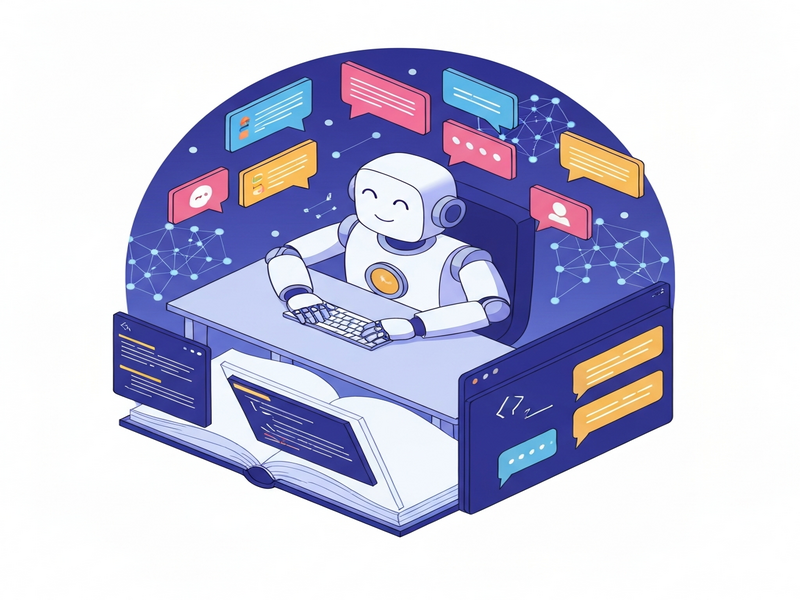
Figure 1: How a personality layer guides a base LLM toward safe, useful behavior.
UBOS resources that put personality to work
UBOS provides a suite of integrations and templates that illustrate how a well‑crafted persona can be leveraged across domains:
- Chroma DB integration – adds a memory‑like layer for context‑aware assistants.
- ElevenLabs AI voice integration – gives spoken personality to chatbots.
- AI insights – a knowledge hub on responsible AI design.
- AI marketing agents – use a brand‑aligned persona to generate copy that feels human yet stays on message.
- UBOS partner program – collaborate on building persona‑driven solutions.
- Enterprise AI platform by UBOS – scale persona‑enabled assistants across the organization.
- Web app editor on UBOS – drag‑and‑drop UI for persona‑based bots.
- Workflow automation studio – embed personality into automated processes.
- UBOS pricing plans – choose a tier that matches your persona‑complexity needs.
- UBOS portfolio examples – see real‑world deployments of personality‑driven AI.
- UBOS templates for quick start – jump‑start projects with pre‑built persona frameworks.
From the AI SEO Analyzer to the AI Article Copywriter, each template embeds a purposeful voice that guides the model toward the intended outcome.
Creative templates that showcase personality in action
Explore these community‑crafted templates that illustrate the spectrum of LLM personas:
- AI Video Generator – a cinematic director persona that scripts and narrates video content.
- AI Chatbot template – a friendly support agent that handles FAQs with empathy.
- GPT-Powered Telegram Bot – combines the Telegram integration on UBOS with a concise, task‑focused persona.
- AI Email Marketing – a persuasive copywriter persona that respects brand voice.
Conclusion: Personality as the bridge between tool and companion
Giving LLMs a personality is not about pretending they are humans; it is about shaping a statistical engine into a reliable, safe, and user‑friendly tool. By defining clear behavioral guidelines, developers can harness the power of large language models while mitigating the ethical risks of anthropomorphism.
Ready to experiment with persona‑driven AI? Visit the UBOS homepage to explore our platform, or dive straight into a template like the AI SEO Analyzer and see how a well‑crafted voice can boost performance.
Take the next step: Learn more about UBOS and start building AI tools that are both powerful and responsibly human‑like.
Andrii Bidochko
CTO UBOS
Andrii Bidochko is an AI entrepreneur and researcher focused on AI agents, reinforcement learning, and autonomous systems. He writes about the technologies shaping the future of machine intelligence, from frontier models and agent architectures to real-world AI applications.