

- Updated: January 30, 2026
- 7 min read
Boot PC from Vinyl: Record Boot Hack Revives Retro Computing DIY
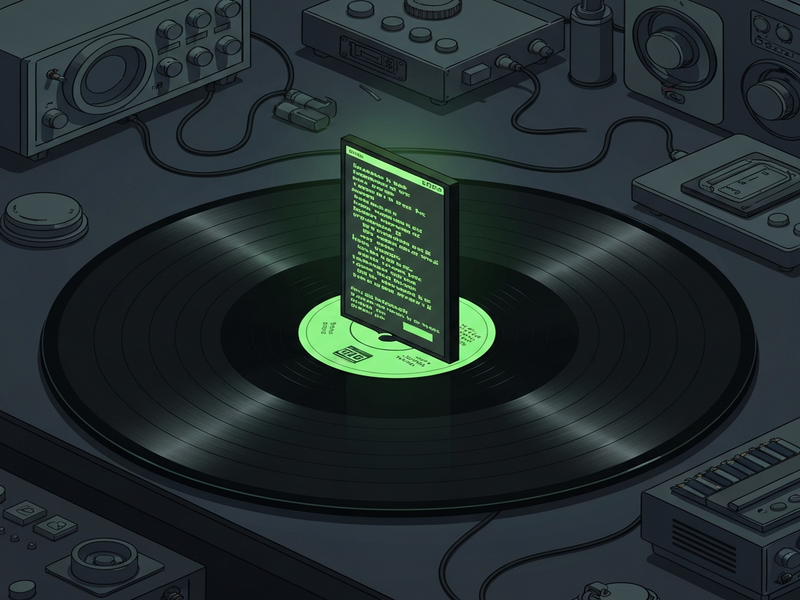
Booting a PC from a vinyl record is possible by using a custom ROM bootloader that reads the analog audio signal from a turntable, demodulates it into binary data, and loads a 64 KB RAM‑disk containing a FreeDOS kernel directly into memory.
Why Spin a Record When You Can Boot a PC?
Most computers start from solid‑state drives, hard disks, USB sticks, or even network PXE servers. Those methods work, but they lack the theatrical flair that a boot‑from‑vinyl hack delivers. For retro‑computing enthusiasts, the idea of loading an operating system from a grooved disc merges the nostalgia of analog audio with the raw power of early IBM PCs. This article walks you through the concept, the hardware wiring, the ROM bootloader design, and the lessons that make this stunt a milestone for the retro computing community.
Background: The Concept of Booting a PC from Vinyl
In the early 1980s, IBM PCs featured a rarely used cassette interface that allowed data to be stored on magnetic tape. The same electrical pathway can be repurposed to accept any analog audio signal, including the high‑frequency bursts encoded on a vinyl record. By cutting a 64 KB “ramdisk” onto a 10‑inch 45 rpm record, the audio waveform becomes a carrier for binary data. When the turntable spins, the PC’s cassette input demodulates the tones back into bytes, which a tiny bootloader then copies into RAM and hands off to a minimal FreeDOS kernel.
This approach is a modern reinterpretation of the classic BootLPT/86 project, but instead of a tape or a floppy, the data lives in the grooves of a record. The result is a fully functional PC that boots without any magnetic or solid‑state media – just a stylus, an amplifier, and a custom ROM.
Technical Steps: From Turntable to Running OS
1. Hardware Setup
The hardware chain is deliberately simple, yet each link must be calibrated for clean data transmission.
- Turntable & Cartridge: A standard 33 ⅓ or 45 rpm turntable provides a stable rotation speed. The cartridge’s output is fed into a vintage hardware hacks pre‑amp that can be tuned for the required frequency response.
- Amplifier Adjustments: Because vinyl records are cut with an RIAA equalization curve, the pre‑amp must flatten the response (e.g., –10 dB at 10 kHz, +6 dB at 50 Hz) and limit the peak voltage to ~0.7 V to avoid clipping.
- Cassette Interface Wiring: The PC’s cassette port uses the 8255A‑5 PPI port C, bit 4 (I/O 0x62) for input and the speaker timer channel 2 for output. A simple 3‑wire cable connects the amplifier’s line‑out to the cassette input pins.
- Power & Grounding: Proper grounding eliminates hum and pop‑click artifacts that would corrupt the data stream.
2. ROM Bootloader Design
The bootloader resides in a 2364 EPROM (or a 2764 with an adapter) plugged into the BIOS expansion socket. Its responsibilities are:
- Intercept the BIOS INT 19h call after floppy and hard‑disk attempts fail.
- Allocate a 64 KB memory segment at the top of RAM for the incoming image.
- Initialize the cassette input routine (INT 15h) to start demodulating the audio.
- Read the entire 64 KB audio stream, verify checksum, and copy the first 512 bytes to 0x0000:7C00 (the traditional boot sector location).
- Jump to the loaded boot sector, handing control to the FreeDOS kernel.
The loader is deliberately tiny—under 8 KB—so it fits comfortably in the EPROM while leaving room for a small INT 13h handler that emulates floppy reads from the RAM‑disk.
3. Audio Signal Processing & Demodulation
The vinyl‑encoded data uses a simple FSK (frequency‑shift keying) scheme:
- Mark tone: 1200 Hz represents binary “1”.
- Space tone: 2400 Hz represents binary “0”.
The BIOS INT 15h routine samples the incoming waveform at ~8 kHz, runs a zero‑crossing detector, and translates the timing between edges into bits. Because vinyl introduces minor speed variations (±2 %), the decoder tolerates timing drift by using a sliding window algorithm.
After demodulation, the bootloader writes the raw bytes into the pre‑allocated RAM segment. A CRC‑16 checksum at the end of the stream confirms integrity before the OS is launched.
Challenges Faced and How They Were Solved
Turning an analog medium into a reliable boot source is fraught with obstacles. Below is a MECE‑structured list of the major challenges and the engineering fixes applied.
- Signal Distortion from RIAA Equalization: The pre‑amp’s tone‑control was manually set to flatten the curve, and a passive high‑pass filter removed residual bass rumble that could be misinterpreted as data.
- Pop‑and‑Click Noise: A high‑quality cleaning brush and anti‑static sleeve reduced surface contaminants. Additionally, the bootloader ignores isolated spikes shorter than 0.5 ms, treating them as noise.
- Speed Variance (Wow/Flutter): The decoder’s timing window adapts dynamically based on the measured period of the first 100 ms of audio, allowing up to ±3 % speed deviation without data loss.
- Limited ROM Space: By writing the bootloader in pure assembly and sharing code between the INT 19h hook and the INT 13h floppy emulator, the final binary fits within a 2 KB EPROM, leaving room for future extensions.
- Compatibility with Different IBM Models: The solution relies only on the cassette port, which exists on the original IBM 5150, PC jr, and JX. For models lacking the port, a simple USB‑to‑cassette adapter can be built using a cheap USB audio interface.
Significance: Impact on Retro Computing and DIY Culture
The vinyl‑boot hack is more than a novelty; it demonstrates the timeless flexibility of early PC architectures and inspires a new wave of innovative tech projects. Its implications include:
- Preservation of Software Artifacts: By encoding software onto a physical medium that can survive decades, archivists gain a durable backup that is immune to magnetic decay.
- Educational Value: Building the system forces learners to understand low‑level BIOS calls, assembly programming, and analog signal processing—all core skills for hardware hackers.
- Community Collaboration: The project sparked discussions on forums, leading to open‑source releases of the ROM image, the audio file, and even a web‑based emulator that visualizes the waveform.
- Cross‑Disciplinary Inspiration: Musicians see a new canvas for “code‑as‑music,” while engineers appreciate the clever reuse of legacy ports.
For startups and SMBs exploring the intersection of AI and hardware, the same principles can be applied to create low‑cost data ingestion pipelines—think of feeding sensor streams through audio channels to ultra‑cheap microcontrollers. UBOS’s UBOS for startups and UBOS solutions for SMBs already provide a no‑code environment to prototype such pipelines, while the Enterprise AI platform by UBOS scales them to production.
Conclusion – Spin the Vinyl, Boot the Future
Booting a PC from a vinyl record proves that even the oldest media can be repurposed for modern computing challenges. The project blends analog charm with digital precision, offering a fresh perspective on data storage, firmware design, and community‑driven innovation.
If you’re inspired to try this yourself, start by exploring the UBOS platform overview for rapid prototyping tools, or dive into the Web app editor on UBOS to build a UI that visualizes the boot process in real time. Need help wiring the hardware? Check out our Workflow automation studio for step‑by‑step guides.
Ready to join the conversation? Share your own vinyl‑boot experiments on social media, tag @UBOSTech, and let’s keep the analog spirit alive in the age of AI.
Explore more projects, pricing, and templates on the UBOS homepage. Whether you’re a hobbyist, a startup founder, or an enterprise architect, there’s a place for you in this growing ecosystem.