

- Updated: January 31, 2026
- 5 min read
Are We All Plagiarists Now? AI‑Generated Text Blurs the Line
AI‑generated text is blurring the line between original writing and plagiarism, prompting media ethicists, publishers, and technologists to rethink what “original content” really means in the age of generative AI.
Why the Economist’s Question Matters
The recent Economist article “Are we all plagiarists now?” raises a provocative challenge: as large language models (LLMs) can reproduce fragments of existing text with uncanny fluency, does every piece of AI‑generated writing count as plagiarism? This question sits at the intersection of media ethics, digital publishing, and the evolving landscape of copyright law. For content marketers, SEO specialists, journalists, and anyone who relies on original content, the stakes are high.
Key Takeaways from the Economist Story
The Economist’s investigation can be broken down into three core observations:
- AI‑generated content is now mainstream. Tools such as OpenAI’s ChatGPT, Claude, and a growing ecosystem of niche generators are being embedded directly into newsroom workflows.
- Plagiarism detection is losing its footing. Traditional similarity‑checking software struggles to differentiate between genuine copying and the statistical recombination of public data that LLMs perform.
- Industry reaction is mixed. Publishers are scrambling to update policies, while legal scholars debate whether existing copyright frameworks can accommodate machine‑produced text.
AI‑Generated Content: From Novelty to Norm
In 2023, the OpenAI ChatGPT integration on platforms like UBOS made it possible for non‑technical users to generate articles, product descriptions, and even code snippets with a single prompt. Today, the technology is so refined that the output often mirrors the style of seasoned journalists, making it difficult for readers—and editors—to spot the machine’s hand.
Plagiarism Concerns: A Shifting Definition
Traditional plagiarism is defined as the unattributed copying of another’s work. However, LLMs are trained on billions of words scraped from the web, and they can reproduce exact phrases without “knowing” the source. This raises two dilemmas:
- Attribution ambiguity: When a model reproduces a sentence that appears verbatim in a source, who is responsible—the user, the model, or the data provider?
- Detection limits: Services like AI SEO Analyzer can flag duplicate content, but they often flag legitimate AI‑generated text as “suspect,” leading to false positives.
Industry Reactions: Policies, Tools, and Legal Uncertainty
Publishers are responding in three main ways:
- Policy revisions: Major newsrooms now require explicit disclosure when AI tools are used, as seen in the About UBOS transparency guidelines.
- Technical safeguards: Companies are integrating Chroma DB integration to store vector embeddings of original content, enabling more precise similarity checks.
- Legal lobbying: Lawmakers are debating amendments to the Copyright Act that would explicitly address AI‑generated works, but consensus remains distant.
What This Means for Creators and Platforms
Both content creators and the platforms that host their work must adapt. Below is a MECE‑structured breakdown of the implications.
Implications for Creators
- Authenticity pressure: Audiences increasingly demand proof of human authorship. Creators may need to embed digital signatures or use blockchain‑based provenance tools.
- Attribution hygiene: When leveraging AI, writers should maintain a clear audit trail—e.g., “Generated with ChatGPT and Telegram integration and edited manually.”
- Skill shift: The role of the writer is evolving from pure author to “prompt engineer,” requiring new competencies in prompt design and AI‑output curation.
- Risk management: Freelancers and agencies must update contracts to address ownership of AI‑generated drafts and potential infringement claims.
Implications for Platforms
- Policy enforcement: Platforms like UBOS must embed clear usage policies. The UBOS partner program now includes a compliance checklist for AI‑generated content.
- Detection technology: Investing in vector‑based similarity engines (e.g., Chroma DB integration) can help differentiate between genuine plagiarism and benign AI reuse.
- Liability shielding: By providing transparent attribution tools—such as the Web app editor on UBOS—platforms can reduce legal exposure.
- Monetization opportunities: Offering premium AI‑assisted writing suites (e.g., AI Article Copywriter) creates new revenue streams while enforcing attribution standards.
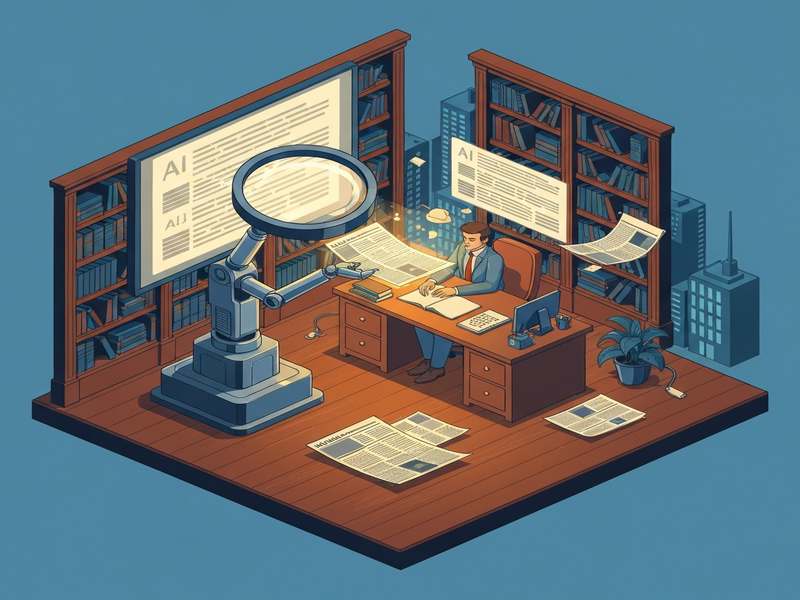
Visualizing the Plagiarism Paradox
How UBOS Helps You Navigate the New Landscape
UBOS offers a suite of tools designed to keep your content both innovative and compliant:
- UBOS homepage – Central hub for AI‑enhanced publishing.
- UBOS platform overview – Learn how the platform integrates AI, workflow automation, and compliance.
- Workflow automation studio – Automate content creation, review, and attribution steps.
- AI marketing agents – Deploy agents that respect copyright while generating SEO‑friendly copy.
- UBOS pricing plans – Flexible tiers for startups, SMBs, and enterprises.
- UBOS templates for quick start – Jump‑start projects with pre‑built AI‑ready templates.
- UBOS portfolio examples – Real‑world case studies of AI‑driven publishing.
- Enterprise AI platform by UBOS – Scalable solutions for large media houses.
- UBOS for startups – Tailored tools for lean teams needing rapid content output.
- UBOS solutions for SMBs – Affordable compliance and AI generation.
- AI SEO Analyzer – Ensure your AI‑generated pages rank without triggering duplicate‑content penalties.
- AI Article Copywriter – Generate drafts that are automatically tagged for provenance.
- AI YouTube Comment Analysis tool – Leverage AI insights while respecting user‑generated content rights.
- Talk with Claude AI app – Experiment with alternative LLMs to compare attribution footprints.
- Your Speaking Avatar template – Combine voice synthesis (e.g., ElevenLabs AI voice integration) with text to create fully attributed multimedia content.
Conclusion: Embrace Transparency, Not Fear
The Economist’s provocative question forces the entire digital publishing ecosystem to confront a new reality: AI can produce text that is both original and derivative at the same time. Rather than treating every AI‑generated sentence as a potential infringement, creators and platforms should adopt transparent workflows, robust attribution mechanisms, and smart detection tools.
By leveraging solutions like UBOS’s Workflow automation studio and the AI Article Copywriter, you can stay ahead of the plagiarism debate while still reaping the productivity benefits of generative AI.
Ready to future‑proof your content strategy? Explore the UBOS SEO guide for actionable steps, and join the conversation on media ethics to help shape the next generation of publishing standards.