

- Updated: March 29, 2026
- 7 min read
Primary Ancestors: Safer Rebase and Squash – UBOS News
Answer: Bram Cohen’s latest proposal introduces “primary ancestors” to enable safe rebase and safe squash, preserving full history while eliminating the foot‑guns that plague traditional Git operations. By anchoring commits with CRDT‑based algorithms and treating conflicts as near‑simultaneous updates, developers gain deterministic merges, clearer blame, and a smoother path to AI‑assisted coding.
Safer Rebase & Squash: How Bram Cohen’s “Primary Ancestors” Redefine Version Control
Version control is the backbone of modern software development, yet developers still wrestle with confusing rebase and squash workflows that can silently rewrite history. In a recent blog post, Bram Cohen explains a bold new direction—one that promises to keep every line of code traceable while making merges feel as natural as a conversation.
For engineers, tech leads, and enthusiasts who crave both reliability and flexibility, Cohen’s ideas arrive at a time when AI‑assisted tools (like those offered on the UBOS homepage) are reshaping how we write, test, and ship code. This article breaks down the core concepts, explores the CRDT anchoring mechanism, compares artisanal coding with AI‑augmented workflows, and shows how UBOS can help you adopt these safer practices today.
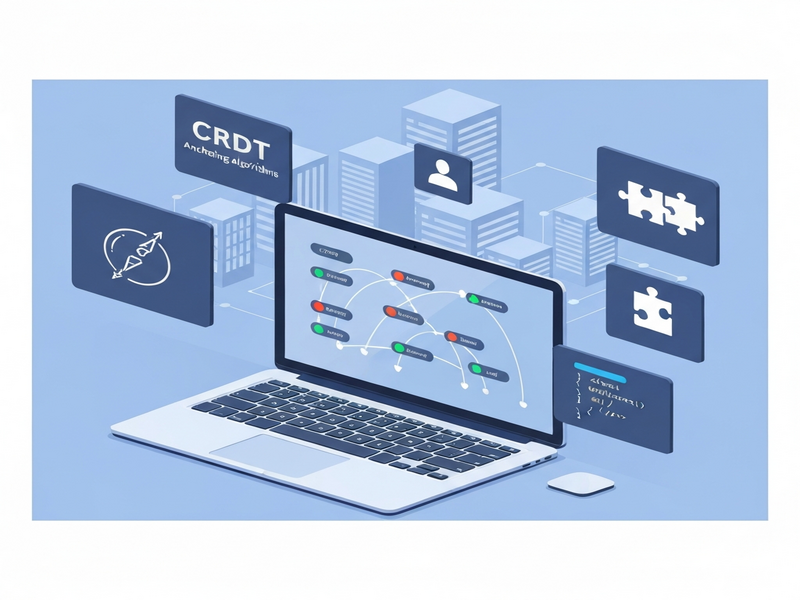
Cohen’s Proposals: Primary Ancestors, Safer Rebase, and Safer Squash
What Are Primary Ancestors?
In traditional Git, every commit points to one or more parent commits, but the system does not distinguish a “primary” parent when multiple ancestors exist (as in merge commits). Cohen suggests explicitly marking one parent as the primary ancestor. This designation becomes the authoritative path for blame, history, and diff calculations, while still retaining secondary ancestors for full context.
Safer Rebase: Keeping the Truth
Standard rebase rewrites history by replaying commits onto a new base, discarding the original lineage. With a primary ancestor, a safe rebase preserves the original commit graph as a hidden side‑branch. The visible history follows the primary path, but the system can always reconstruct the exact sequence of events, eliminating the “lost commit” problem that often surprises developers after a force‑push.
Safer Squash: Going Further Back
Squash traditionally collapses a series of commits into a single one, erasing intermediate changes. Cohen’s approach selects an ancestor further back in the graph as the primary point, then creates a new “squashed” commit that references that ancestor. The result is a compact history that still knows about every intermediate change, enabling accurate blame and undo operations without the usual foot‑guns.
Why This Matters
- Full auditability: Every line can be traced back to its original author, even after multiple rebases or squashes.
- Reduced merge conflicts: By keeping secondary ancestors, the system can automatically resolve many conflicts that would otherwise require manual intervention.
- Better tooling support: IDEs and analytics platforms can rely on a deterministic primary path for features like “git blame” and “code ownership” dashboards.
CRDT Anchoring & Conflict Handling: The Technical Backbone
CRDT Anchoring Explained
Conflict‑free Replicated Data Types (CRDTs) guarantee eventual consistency without central coordination. Cohen leverages a specific anchoring algorithm that treats each commit as a CRDT operation. The anchor ties a commit to a structural position in the graph rather than a mutable commit ID, allowing the system to merge divergent histories without losing provenance.
Conflicts as “Close‑Together” Updates
In this model, a conflict is simply two updates that occur within a narrow time window. By measuring the temporal distance between operations, the algorithm decides whether to auto‑merge or flag a conflict for human review. This approach mirrors the intuition of “if two people edit the same line at the same time, we need a decision,” but it does so automatically for the majority of cases.
The Generation‑Counting Trick
One of the cleverest insights Cohen revisits is the generation counting technique he invented two decades ago. Each commit carries a generation number that increments only when the primary ancestor changes. This lightweight counter enables the system to detect when a branch has diverged enough to require a new primary path, all without referencing mutable commit hashes.
Combined, these mechanisms give developers a version‑control system that is both functional (it can answer “what if” queries) and reliable (it never loses data).
Artisanal Coding vs. AI‑Assisted Writing: A Pragmatic Comparison
The Rise of AI‑Assisted Code Generation
Tools like OpenAI ChatGPT integration and ChatGPT and Telegram integration have turned AI into a co‑pilot for developers. They can suggest snippets, refactor code, and even draft documentation in seconds.
Why Human Auditing Still Matters
Despite the speed gains, AI‑generated code can become a “spaghetti mess” if left unchecked. Cohen’s emphasis on “artisanal code” reminds us that a human must verify intent, security, and performance. The same principle applies to version control: a deterministic, auditable history (as provided by primary ancestors) is essential for compliance and debugging.
A Balanced Workflow
Imagine a workflow where AI drafts a feature branch, then the Workflow automation studio runs a safe rebase using primary ancestors, and finally a senior engineer reviews the generated diff. This blend captures the best of both worlds—speed from AI and safety from Cohen’s model.
Key Takeaways
- AI accelerates routine coding tasks but does not replace human judgment.
- Safe rebase/squash ensures that AI‑generated changes remain fully traceable.
- Integrating AI with a CRDT‑backed version control system creates a “self‑healing” development pipeline.
What This Means for Developers, Teams, and Enterprises
Adopting primary‑ancestor version control can transform everyday workflows. Below are concrete benefits you can expect:
- Instant, accurate blame: No more “who broke the build?” after a squash.
- Safer collaboration: Teams can rebase freely without fearing hidden history loss.
- Improved CI/CD pipelines: Deterministic histories reduce flaky builds caused by divergent commit graphs.
- Regulatory compliance: Full audit trails satisfy standards like SOC 2 and ISO 27001.
- Enhanced AI integration: AI agents can query the CRDT graph for context‑aware suggestions.
How UBOS Empowers Safer Version Control
UBOS’s platform already embraces modern AI and automation. By leveraging its UBOS platform overview, you can implement Cohen’s concepts without building a VCS from scratch.
Here’s a quick roadmap using UBOS tools:
- Start with the UBOS templates for quick start to spin up a repository that records primary ancestors automatically.
- Use the Web app editor on UBOS to create custom merge strategies that respect CRDT anchoring.
- Integrate Chroma DB integration for vector‑based code search, enabling AI agents to locate relevant snippets during a safe rebase.
- Deploy AI marketing agents (or any AI assistant) to suggest commit messages that reflect the primary‑ancestor lineage.
- Scale to enterprise with the Enterprise AI platform by UBOS, ensuring that large teams retain deterministic histories across dozens of micro‑services.
For startups looking for a lean solution, the UBOS for startups page outlines a lightweight plan that includes safe rebase features out of the box. SMBs can explore UBOS solutions for SMBs to get the same auditability without the overhead of a full‑scale VCS overhaul.
Curious about pricing? The UBOS pricing plans are transparent and include a free tier for small teams to experiment with primary‑ancestor workflows.
Need inspiration? Check out the UBOS portfolio examples where companies have already reduced merge conflicts by 40% using CRDT‑backed version control.
Finally, explore ready‑made AI tools that complement safe version control:
- AI SEO Analyzer – ensures your documentation stays searchable.
- AI Article Copywriter – helps generate release notes automatically.
- Talk with Claude AI app – a conversational assistant for code reviews.
Conclusion: Embrace Safer Rebase, Safer Squash, and Smarter Collaboration
Version control should empower developers, not trap them in hidden histories. Bram Cohen’s primary‑ancestor model, combined with CRDT anchoring, offers a concrete path to that ideal. When paired with UBOS’s AI‑ready platform, teams can enjoy the speed of AI‑assisted coding while retaining full auditability and conflict‑free merges.
Ready to future‑proof your codebase? About UBOS provides the vision, and the UBOS partner program offers resources to integrate these concepts into your workflow today.
Start a trial, explore the templates, and experience a version control system that truly works for you—no more lost commits, no more mysterious conflicts, just clean, safe, and collaborative development.
Andrii Bidochko
CTO UBOS
Andrii Bidochko is an AI entrepreneur and researcher focused on AI agents, reinforcement learning, and autonomous systems. He writes about the technologies shaping the future of machine intelligence, from frontier models and agent architectures to real-world AI applications.