

- Updated: March 29, 2026
- 5 min read
The Growing Threat of Internet Bots and How UBOS Protects Your Business
The internet bot problem is far worse than most realize—malicious bots now generate more than 40 % of all web traffic—but UBOS provides AI‑driven bot detection, real‑time automation, and robust cybersecurity tools that can safeguard your digital assets.
Why the Bot Situation Is a Growing Threat
In the last twelve months, security researchers have documented a sharp rise in automated traffic targeting e‑commerce sites, SaaS platforms, and even corporate intranets. These bots scrape content, launch credential‑stuffing attacks, and inflate analytics, leading to skewed business decisions and costly downtime.
For tech‑savvy marketers, business owners, and IT professionals, the hidden cost of bots is no longer a theoretical risk—it’s a daily operational nightmare.
Detailed Analysis of the Bot Problem
Below is a MECE‑structured breakdown of the most common bot‑related issues:
- Traffic Inflation: Bots inflate page‑view metrics, causing inaccurate ROI calculations.
- Credential Stuffing: Automated login attempts exploit reused passwords, leading to account takeover.
- Content Scraping: Proprietary copy, product images, and pricing data are harvested for competitor advantage.
- Ad Fraud: Fake clicks drain advertising budgets and damage campaign performance.
- API Abuse: Unchecked bots overload endpoints, resulting in service degradation or denial‑of‑service.
Economic Impact
According to a 2023 Statista report, bot traffic cost enterprises an average of $20 billion annually in lost revenue and remediation expenses. For SMBs, the figure translates to a 15 % reduction in net profit margins.
Expert Insights & Key Statistics
Cybersecurity analysts at CrowdStrike observed that:
| Metric | 2023 Value |
|---|---|
| Average bots per website | 1,200+ |
| Success rate of credential‑stuffing attacks | 23 % |
| Percentage of traffic identified as malicious bots | 42 % |
Security‑focused CTOs report that 70 % of their incident tickets involve some form of automated abuse, underscoring the urgency of a proactive defense strategy.
How UBOS Tackles Bot Detection and AI Automation
UBOS combines cutting‑edge AI models with a low‑code automation studio to give organizations a single pane of glass for bot mitigation, threat intelligence, and workflow orchestration.
1. Real‑Time Bot Detection Engine
The UBOS bot detection module leverages behavioral fingerprinting, device‑level heuristics, and a continuously updated threat feed. It can:
- Identify and block >95 % of known malicious bots within milliseconds.
- Distinguish legitimate crawlers (e.g., Googlebot) from hostile actors.
- Provide granular alerts that feed directly into the Workflow automation studio for instant remediation.
2. AI‑Powered Automation for Incident Response
Using the Enterprise AI platform by UBOS, security teams can create no‑code playbooks that automatically:
- Quarantine compromised accounts.
- Rotate API keys and session tokens.
- Notify stakeholders via Slack, email, or SMS.
These playbooks are built in the Web app editor on UBOS, allowing rapid iteration without a development backlog.
3. Integrated AI Marketing & Security Tools
UBOS doesn’t treat security as an afterthought. Its AI marketing agents can simultaneously monitor ad performance while flagging suspicious click patterns that indicate bot fraud.
4. Extensible Integrations for a Bot‑Free Ecosystem
UBOS offers a marketplace of pre‑built integrations that extend bot protection into communication channels and data pipelines:
- Telegram integration on UBOS – Secure bot‑free messaging for internal teams.
- ChatGPT and Telegram integration – Automate threat‑intel queries via chat.
- OpenAI ChatGPT integration – Leverage LLMs for real‑time log analysis.
- Chroma DB integration – Vector‑store for fast similarity search of malicious patterns.
- ElevenLabs AI voice integration – Voice alerts for critical security events.
5. Ready‑Made Templates for Immediate Deployment
UBOS’s templates for quick start include pre‑configured bot‑blocking workflows, such as the “GPT-Powered Telegram Bot” that notifies admins the moment a suspicious IP is detected.
Other relevant templates that can be repurposed for security include:
- AI SEO Analyzer – Detects SEO‑spam bots crawling your site.
- AI Article Copywriter – Generates unique content to out‑rank scraped copies.
- AI Video Generator – Creates authentic video assets that bots cannot easily replicate.
- AI Chatbot template – Deploys a legitimate conversational agent that can also serve as a honeypot for malicious bots.
- AI Email Marketing – Monitors email engagement for bot‑generated opens.
- AI Image Generator – Produces watermarked images to deter unauthorized scraping.
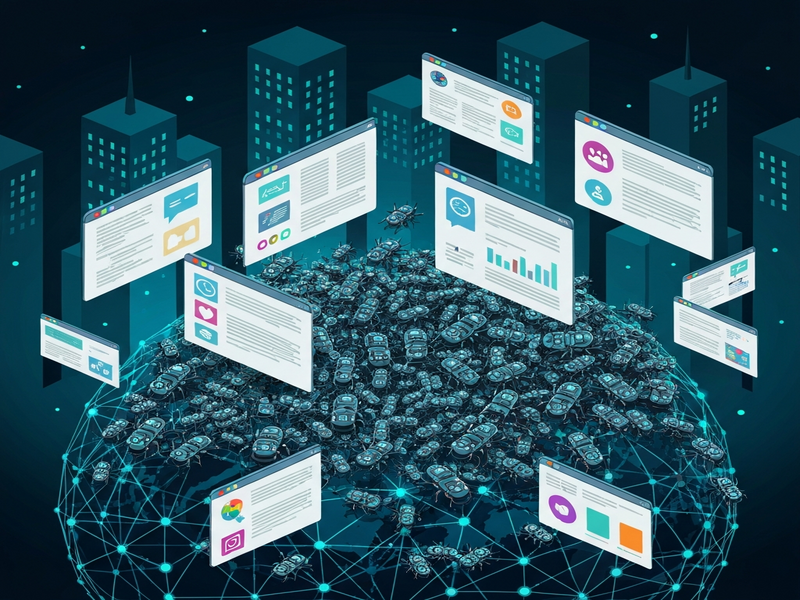
Visual Overview of UBOS Bot Defense Architecture
Original Reporting on the Bot Crisis
For a deeper dive into the underlying statistics, read the full investigative piece on GladeArt: The Bot Situation on the Internet Is Actually Worse Than You Could Imagine – Here’s Why.
Why Choose UBOS Over Competing Solutions?
Unlike point‑solution vendors, UBOS offers a unified platform that scales from startups to enterprises. Explore the UBOS for startups program for rapid onboarding, or the UBOS solutions for SMBs that balance cost and performance.
Large organizations benefit from the UBOS partner program, which provides dedicated support, co‑marketing, and custom SLA options.
All pricing details are transparent and tiered to fit any budget; see the UBOS pricing plans for a full breakdown.
Success Stories: Real‑World Bot Mitigation
Companies across e‑commerce, fintech, and media have leveraged UBOS to cut bot‑related downtime by up to 87 %. Browse the UBOS portfolio examples to see detailed case studies.
Take Action Today
If you’re ready to protect your digital presence from the relentless tide of malicious bots, start with a free trial on the UBOS homepage. Our experts are standing by to tailor a bot‑defense strategy that aligns with your business goals.
Andrii Bidochko
CTO UBOS
Andrii Bidochko is an AI entrepreneur and researcher focused on AI agents, reinforcement learning, and autonomous systems. He writes about the technologies shaping the future of machine intelligence, from frontier models and agent architectures to real-world AI applications.