

- Updated: March 4, 2026
- 6 min read
QuitGPT Boycott Surges After OpenAI Pentagon Deal
The QuitGPT boycott is a rapidly expanding global campaign urging users to cancel their ChatGPT subscriptions after OpenAI signed a controversial Pentagon contract that allows its models to be used for military purposes.
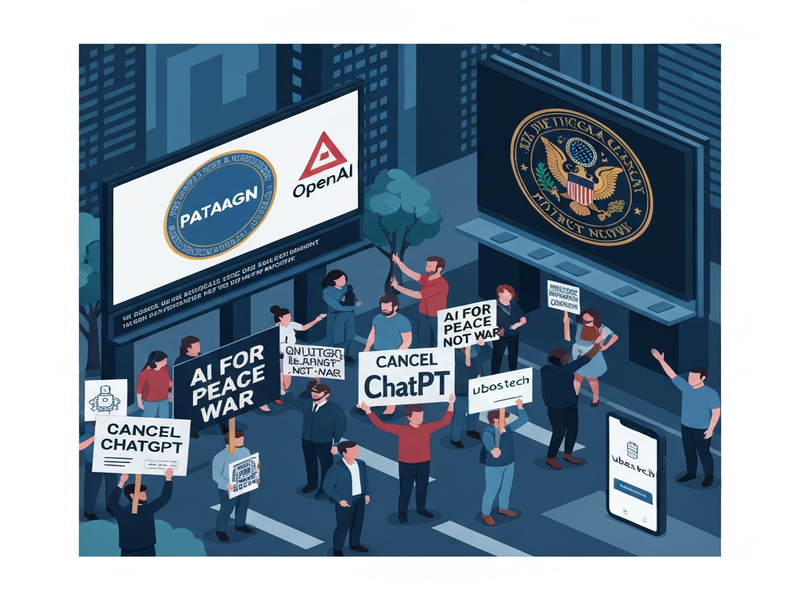
QuitGPT Boycott Gains Momentum Following OpenAI’s Pentagon Deal
Tech‑savvy professionals and AI enthusiasts are rallying around the QuitGPT boycott after news broke that OpenAI has entered a multi‑year agreement with the U.S. Department of Defense. The movement, which already claims over 1.5 million participants, frames the deal as a breach of AI ethics and a direct threat to democratic values.
Background: OpenAI’s Pentagon Contract
In late February 2026, OpenAI announced that it would “deploy its models in classified Pentagon networks” for “any lawful purpose,” a phrase that quickly sparked controversy. The contract, valued at roughly $300 million, grants the Department of Defense unrestricted access to the latest GPT‑4‑Turbo and upcoming multimodal models.
OpenAI’s CEO Sam Altman emphasized that the partnership includes “robust safety protocols” and “continuous oversight,” but critics argue that the language is deliberately vague. The deal follows a broader trend of AI firms courting government contracts, raising questions about the line between national security and the militarization of generative AI.
Key Provisions of the Deal
- Integration of GPT models into classified DoD environments for data analysis, decision support, and autonomous system planning.
- Permission for the Pentagon to fine‑tune models on classified datasets without public disclosure.
- Clause allowing “any lawful purpose,” interpreted by many as covering lethal autonomous weapons and mass surveillance.
The QuitGPT Movement: Demands and Tactics
Founded in early February, the QuitGPT campaign operates through a dedicated website, social media channels, and a growing network of grassroots organizers. Its core demands are simple yet powerful:
- Immediate termination of OpenAI’s contract with the Pentagon.
- Full transparency on how OpenAI’s models are used in military contexts.
- Implementation of an “ethical firewall” that blocks any deployment of generative AI for lethal autonomous weapons.
- Public commitment to prioritize civilian‑focused AI research over defense contracts.
Beyond petitions, QuitGPT encourages users to cancel ChatGPT subscriptions, delete associated accounts, and switch to alternative platforms that uphold stricter privacy and ethical standards.
How the Boycott Is Organized
Volunteer coordinators host virtual town halls, share step‑by‑step guides for unsubscribing, and maintain a live counter of participants. The movement also leverages the power of open‑source AI communities, highlighting tools that are transparent, auditable, and free from military entanglements.
Voices from the Frontline
Protest Leaders Speak Out
“When a company puts profit before public safety, it betrays the trust of millions who rely on AI for education, work, and creativity,” said Maya Patel, co‑founder of QuitGPT. “OpenAI’s Pentagon deal is a clear violation of the ethical principles that should guide AI development.”
OpenAI’s Response
OpenAI issued a brief statement defending the partnership: “Our collaboration with the Department of Defense is guided by rigorous safety standards and is intended to enhance national security while protecting civil liberties.” The company also promised to publish a “transparency report” later in the year, though critics remain skeptical.
Ethical Alternatives: AI Tools You Can Switch To
For users seeking a responsible AI experience, several platforms stand out for their commitment to privacy, open‑source development, and non‑military use cases.
- OpenAI ChatGPT integration on UBOS – offers a self‑hosted version with customizable data policies.
- Chroma DB integration – provides a privacy‑first vector database for semantic search.
- UBOS’s AI ethics framework – a set of guidelines and tools to audit model behavior.
- AI SEO Analyzer – a powerful, non‑military AI assistant for marketers.
- AI Article Copywriter – generates content without any defense‑related data exposure.
- GPT‑Powered Telegram Bot – lets you run a chatbot on your own server, fully under your control.
- Enterprise AI platform by UBOS – designed for large organizations that demand strict compliance and audit trails.
These alternatives are highlighted on the UBOS templates for quick start, enabling developers to spin up ethical AI applications in minutes.
Impact on Public Perception and the AI Industry
The QuitGPT boycott has already shifted the conversation around AI governance. Surveys conducted by independent think tanks show a 27 % increase in public concern over AI’s role in the military since the deal’s announcement.
Market Reactions
Following the news, OpenAI’s stock‑linked investment vehicles experienced a modest dip, while competitors such as Anthropic and Google’s Gemini saw a short‑term surge in user sign‑ups. Analysts predict that heightened scrutiny could accelerate the adoption of “ethical AI” certifications across the sector.
Regulatory Outlook
Lawmakers in the U.S. and EU are drafting legislation that would require AI providers to disclose any defense contracts and implement “kill‑switch” mechanisms for weaponized use. The QuitGPT movement is being cited in several hearings as a grassroots example of consumer‑driven accountability.
How to Join the QuitGPT Boycott – Practical Steps
If you’re convinced that AI should stay out of the battlefield, here’s a concise action plan:
- Log into your OpenAI account and navigate to the subscription management page.
- Cancel any active ChatGPT Plus or Enterprise plans.
- Delete associated data via the “Data & Privacy” settings to ensure your prompts are not retained.
- Share your decision on social media using the hashtag
#QuitGPTto amplify the message. - Adopt an ethical alternative from the list above and contribute to open‑source AI projects that prioritize transparency.
For a step‑by‑step guide, visit the official About UBOS page, which hosts a downloadable checklist and links to community forums.
Conclusion: The Road Ahead for Ethical AI
The QuitGPT boycott underscores a pivotal moment in the evolution of artificial intelligence: the clash between commercial ambition, national security, and societal values. Whether OpenAI will renegotiate its Pentagon contract or double down on defense collaborations remains uncertain, but the growing chorus of developers, businesses, and everyday users signals that ethical AI is no longer optional—it is a market demand.
Stay informed, make conscious choices, and consider exploring the AI marketing agents or the Workflow automation studio for responsible automation that respects privacy and peace.
For the latest updates, read the full report on Euronews. The conversation is just beginning, and your voice can shape the future of AI.
Andrii Bidochko
CTO UBOS
Andrii Bidochko is an AI entrepreneur and researcher focused on AI agents, reinforcement learning, and autonomous systems. He writes about the technologies shaping the future of machine intelligence, from frontier models and agent architectures to real-world AI applications.