

- Updated: February 19, 2026
- 6 min read
Measuring AI Agent Autonomy: Insights from Anthropic’s Latest Research
Measuring AI Agent Autonomy: What Anthropic’s New Research Reveals for Developers and Policymakers
AI agent autonomy is the degree to which an artificial‑intelligence system can act, make decisions, and invoke tools without direct human instruction, while still remaining under effective oversight.
When autonomous agents move from experimental labs to real‑world products, the line between helpful automation and uncontrolled risk can blur in an instant. A fresh Anthropic study shines a light on exactly how much freedom users grant to AI agents today, what domains they trust them in, and where hidden dangers may still lurk. This article distills the key findings, translates them into actionable guidance for technology enthusiasts, AI researchers, and product leaders, and shows how the UBOS platform overview can help you navigate the emerging autonomy landscape.
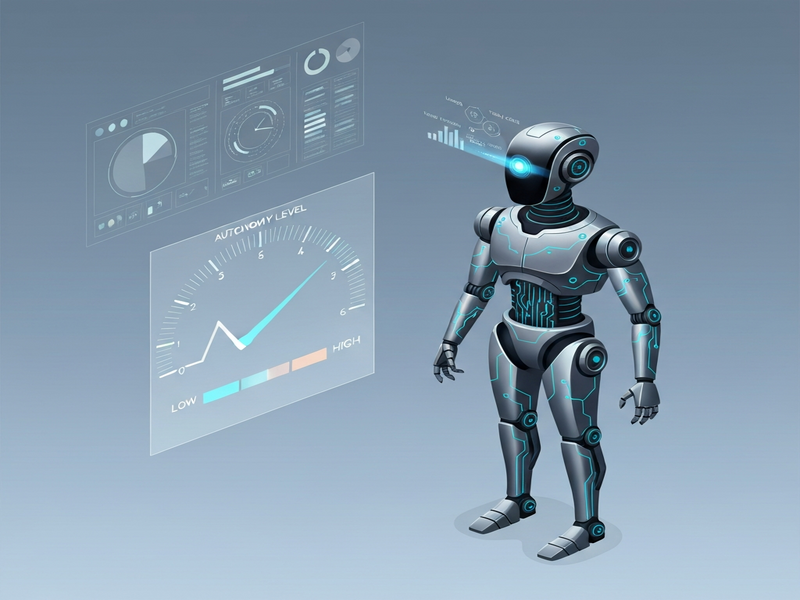
1. Core Takeaways from Anthropic’s Measurement of AI Autonomy
Anthropic examined millions of interactions across two data streams – the public API and its own Claude Code product – to answer four pivotal questions:
- How long do agents run without human interruption?
- How does user experience affect the balance between auto‑approval and manual oversight?
- Which tool calls signal higher risk or higher autonomy?
- What domains are agents most active in, and how risky are those deployments?
The study’s headline numbers are striking:
- The 99.9th‑percentile turn duration in Claude Code doubled from 45 minutes within three months.
- Experienced users auto‑approve actions in > 40 % of sessions, up from ~20 % for newcomers.
- Interrupt rates rise with experience, indicating a shift from “approve‑everything” to “monitor‑and‑step‑in when needed.”
- Agents are predominantly used in software engineering (≈ 50 % of tool calls) but are beginning to appear in finance, healthcare, and cybersecurity.
- Only 0.8 % of observed actions are irreversible, yet high‑risk clusters (e.g., financial trades, medical data) are present, albeit sparsely.
These data points suggest that autonomy is not a static property of a model; it is co‑constructed by the model, the user, and the product interface.
2. How Users Interact with Agents: Patterns, Tool Calls, and Risk Signals
Anthropic’s methodology separates two complementary lenses:
- Public API view: Broad, anonymized snapshots of individual tool calls across thousands of customers.
- Claude Code view: Deep, session‑level traces that reveal the full workflow of a single agent.
2.1 Autonomy vs. Human Oversight
When users become familiar with an agent, they tend to:
- Enable auto‑approval for routine actions, trusting the model’s consistency.
- Increase interrupt frequency, stepping in only when the agent’s output deviates from expectations.
This dual trend creates a “monitor‑and‑intervene” paradigm that balances efficiency with safety.
2.2 Tool Call Taxonomy
Anthropic scored each tool call on two axes – risk (1 = no consequence, 10 = potentially catastrophic) and autonomy (1 = strictly human‑directed, 10 = highly independent). The resulting heat map shows a dense cluster of low‑risk, low‑autonomy actions (e.g., code linting, simple data extraction) and a thin but growing tail of high‑risk, high‑autonomy tasks (e.g., automated financial reporting).
| Risk Level | Typical Tool Calls | Autonomy Score |
|---|---|---|
| 1‑3 (Low) | Code formatting, email draft generation | 2‑4 |
| 4‑6 (Medium) | API integration testing, data‑pipeline orchestration | 5‑7 |
| 7‑10 (High) | Automated trading, patient‑record updates | 8‑10 |
2.3 Domain Distribution
Software engineering dominates, but the Enterprise AI platform by UBOS is already seeing early adopters in finance and healthcare. The shift toward higher‑stakes domains underscores the need for robust governance.
3. What This Means for Developers, Policymakers, and the AI Community
Anthropic’s data translate into three practical implications:
3.1 Developers – Build for Adaptive Oversight
- Incorporate self‑pausing mechanisms that let agents ask clarifying questions before proceeding (see the “clarification” pattern in the study).
- Expose real‑time telemetry (e.g., via Workflow automation studio) so users can monitor long‑running sessions.
- Offer granular permission scopes that limit irreversible actions – a principle already baked into the Chroma DB integration for secure vector storage.
3.2 Policymakers – Target the Autonomy‑Risk Frontier
Regulatory focus should prioritize the sparse but high‑impact quadrant where autonomy and risk intersect. Suggested actions:
- Mandate post‑deployment monitoring for agents operating above a risk score of 7.
- Require transparent logging of tool calls, similar to the data collection approach described by Anthropic.
- Encourage standards for model‑driven uncertainty detection, a safety feature highlighted by the study’s “agent‑initiated stops.”
3.3 The AI Community – Share Metrics, Not Just Benchmarks
Traditional capability benchmarks (e.g., METR) capture what models can do in isolation. Anthropic’s field data reveal the gap between capability and deployed autonomy. Community‑wide repositories of real‑world autonomy metrics would help align research with practice.
4. Recommendations and the Road Ahead
Based on the findings, we propose a three‑pronged roadmap for anyone building or governing AI agents.
4.1 Immediate Actions for Product Teams
- Integrate an “clarify before act” toggle in the UI – a feature already present in the ChatGPT and Telegram integration where agents ask for user confirmation before sending messages.
- Deploy session‑level dashboards that surface turn duration, auto‑approve ratio, and interrupt frequency (leveraging the Web app editor on UBOS for rapid prototyping).
- Offer template bundles for high‑risk domains that embed safety checks – for example, the AI SEO Analyzer includes a built‑in content‑policy filter.
4.2 Mid‑Term Strategies for Organizations
- Adopt a tiered oversight model – low‑risk tasks stay fully automated, medium‑risk tasks require human sign‑off, and high‑risk tasks demand dual‑approval.
- Invest in continuous learning loops where agent‑generated logs feed back into model fine‑tuning, reducing the need for frequent clarifications.
- Leverage the UBOS partner program to access pre‑vetted compliance modules for finance and healthcare.
4.3 Long‑Term Vision for the Ecosystem
As autonomy climbs, we anticipate three macro trends:
- Standardized Autonomy Scores: Industry bodies may publish “autonomy grades” akin to energy‑efficiency labels.
- Hybrid Human‑AI Governance Platforms: Solutions that blend real‑time human dashboards with automated risk mitigation (think UBOS AI agent autonomy tools).
- Domain‑Specific Regulation: Healthcare and finance will likely see the first mandatory autonomy‑risk reporting requirements.
5. Take the Next Step with UBOS
Whether you are a startup eager to prototype safe agents or an enterprise looking to scale responsibly, UBOS provides the building blocks you need.
- Explore ready‑made UBOS templates for quick start, including the AI Article Copywriter and AI Video Generator.
- Check out the UBOS portfolio examples to see how other companies balance autonomy and oversight.
- Review the UBOS pricing plans that include built‑in monitoring and compliance modules.
- For early‑stage innovators, the UBOS for startups program offers credits and mentorship on responsible AI deployment.
- SMBs can benefit from the UBOS solutions for SMBs, which bundle autonomy controls with affordable pricing.
- Enterprise leaders should explore the Enterprise AI platform by UBOS for centralized governance across multiple agent deployments.
Ready to build agents that are both powerful and responsibly governed? Visit the UBOS homepage and start a free trial today.