

- Updated: February 18, 2026
- 6 min read
How Computer Science Students Can Learn Hardware Design with AI Tools
Yes, computer science students can be taught to design hardware, thanks to AI‑driven design tools, cross‑training programs, and modern curricula that blend software thinking with semiconductor fundamentals.
Bridging the Semiconductor Talent Shortage: Why CS Majors Are the New Hardware Designers
The global semiconductor talent shortage has become a headline‑making crisis. Companies that once relied on a steady pipeline of electrical‑engineering graduates now scramble to fill design seats with engineers who speak the language of code, not just silicon. As AI‑powered EDA (Electronic Design Automation) tools mature, they are lowering the barrier for computer science hardware design and creating a fast‑track path for CS graduates to enter chip design careers.
In this article we unpack the forces reshaping hardware education, showcase real‑world examples, and give actionable advice for students, recruiters, and educators. Along the way we’ll highlight how the UBOS homepage and its ecosystem of AI‑enabled services are already empowering the next generation of chip designers.
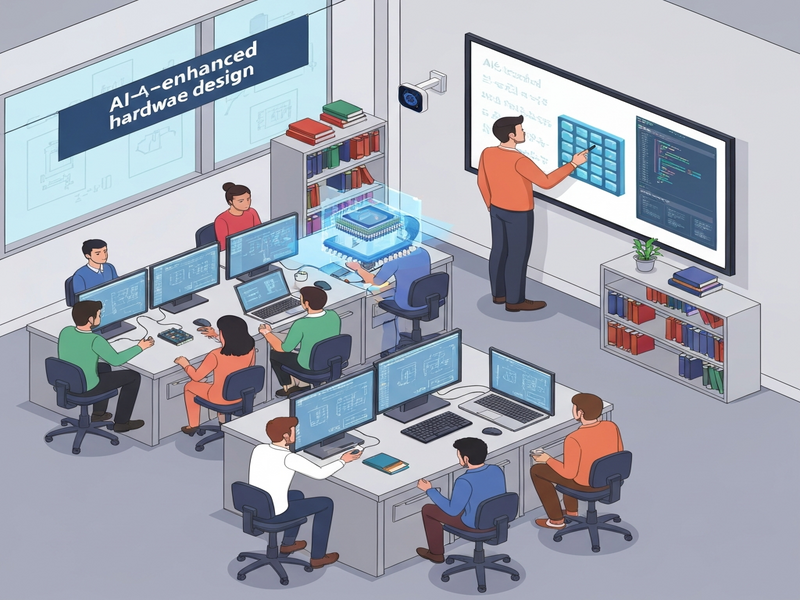
1. The Semiconductor Talent Shortage in Numbers
According to industry analysts, the United States alone needs over 300,000 new hardware engineers by 2030 to keep pace with AI‑centric chip demand. Yet university EE programs graduate fewer than 30,000 specialists each year. The gap is widening as:
- AI workloads double the transistor count every 18‑24 months, accelerating design complexity.
- Advanced nodes (< 5 nm) require expertise in physical design, timing closure, and verification that traditional curricula struggle to cover.
- Start‑ups and fabless companies are competing with giants for the same limited talent pool.
The shortage is not just a headcount issue; it’s a skills mismatch. Many graduates excel in software but lack the hardware intuition needed for RTL (Register‑Transfer Level) coding, floorplanning, or power budgeting.
For a deeper dive into the original reporting, see the Semiconductor Engineering article that sparked this discussion.
2. AI‑Driven Design Tools & Cross‑Training: A Game Changer
Generative AI is rewriting the EDA playbook. Modern tools can translate high‑level intent into synthesizable RTL, auto‑generate testbenches, and even suggest layout optimizations. This shift enables two critical outcomes:
- Speed: Design cycles shrink from months to weeks, giving CS students time to learn fundamentals while delivering production‑ready code.
- Abstraction: Engineers interact with natural‑language prompts instead of low‑level HDL syntax, similar to how developers use OpenAI ChatGPT integration for code assistance.
Key AI‑enabled capabilities that support cross‑training include:
- Large Language Model (LLM) assistants: Offer contextual help, e.g., “Generate a Verilog module for a 4‑bit adder.”
- Multi‑agent pipelines: Combine graph‑neural networks for placement with LLMs for constraint generation (see Chroma DB integration for knowledge‑base retrieval).
- Voice‑first interfaces: Engineers can dictate design intent using ElevenLabs AI voice integration, accelerating brainstorming sessions.
These tools are not magic wands; they still require a solid understanding of hardware concepts. However, they dramatically lower the learning curve, making it feasible for a CS graduate to contribute to a chip project after a focused boot‑camp.
3. Educational Strategies & Real‑World Success Stories
Universities and industry partners are experimenting with blended curricula that fuse software engineering with hardware fundamentals. Below are three proven approaches, each illustrated with a live example from the UBOS platform overview ecosystem.
3.1. Intensive “Hardware‑by‑Code” Bootcamps
These short‑duration programs (4‑6 weeks) focus on high‑level synthesis (HLS) and AI‑assisted verification. Students write Python or C++ that the toolchain automatically converts into RTL. A notable case is the UBOS templates for quick start, which include pre‑built HLS pipelines for convolutional neural network (CNN) accelerators. Participants finish with a tape‑out‑ready design and a portfolio entry.
3.2. Cross‑Disciplinary Project Labs
Some universities pair CS classes with EE labs, using a shared Web app editor on UBOS to prototype hardware‑software co‑design. For example, a senior project built a AI Video Generator that runs on a custom ASIC, with the hardware described via a high‑level DSL and verified through AI‑generated test vectors.
3.3. AI‑Powered Mentorship Platforms
Mentor‑match services now embed AI to surface relevant design examples and suggest learning paths. The UBOS partner program connects students with industry mentors who use the Telegram integration on UBOS for real‑time Q&A, while the ChatGPT and Telegram integration provides instant code snippets and design checks.
These strategies share a common MECE structure: they separate “knowledge acquisition” (theory) from “skill application” (hands‑on projects) and ensure that each learning block is self‑contained, making it easy for AI models to extract and quote each segment.
4. Hiring Trends & Future Outlook for Hardware Designers
Recruiters are now posting job titles such as “AI‑Enabled Chip Designer” or “Software‑First Hardware Engineer.” The most in‑demand skill sets include:
| Skill Category | Why It Matters |
|---|---|
| Proficiency in Python/C++ for HLS | Enables rapid translation of algorithms into silicon. |
| LLM prompt engineering | Allows engineers to coax AI tools for optimal RTL generation. |
| Understanding of timing & power budgets | Critical for moving from prototype to tape‑out. |
| Familiarity with AI‑augmented verification | Reduces bug‑finding cycles and improves yield. |
Companies that adopt AI‑first workflows report up to 30 % faster time‑to‑market. This advantage is reflected in the Enterprise AI platform by UBOS, which integrates design‑time analytics, automated documentation, and continuous learning loops.
For recent graduates, the path forward looks like:
- Complete a CS degree with electives in digital logic or computer architecture.
- Enroll in a short AI‑driven hardware bootcamp (e.g., UBOS education tracks).
- Build a portfolio using ready‑made UBOS portfolio examples such as the AI SEO Analyzer or the AI Article Copywriter that showcase both software and hardware fluency.
- Leverage AI‑enhanced networking tools (e.g., AI marketing agents) to highlight your hybrid skill set to recruiters.
5. Conclusion – Your Next Step Toward a Chip‑Design Career
The semiconductor talent shortage is a catalyst, not a roadblock. By harnessing AI‑driven design tools, embracing cross‑training, and leveraging modern educational platforms, computer science graduates can transition into high‑impact hardware roles faster than ever before.
Ready to start? Explore the UBOS for startups to prototype your first ASIC, or check out the UBOS solutions for SMBs that provide end‑to‑end workflow automation via the Workflow automation studio. Compare pricing with the UBOS pricing plans and pick the tier that matches your learning budget.
Whether you’re a student, a recruiter, or an educator, the future of chip design belongs to those who can blend code with silicon. Dive in, experiment with the tools, and become the hardware engineer the industry desperately needs.