

- Updated: February 3, 2026
- 7 min read
Google’s Aluminium OS: Android‑for‑PC Set to Launch Amid Compatibility and Antitrust Hurdles
Aluminium OS is Google’s upcoming unified Android‑for‑PC operating system, designed to blend Android apps with ChromeOS features and expected to begin a limited rollout in late 2026, with a broader consumer release projected for 2028.
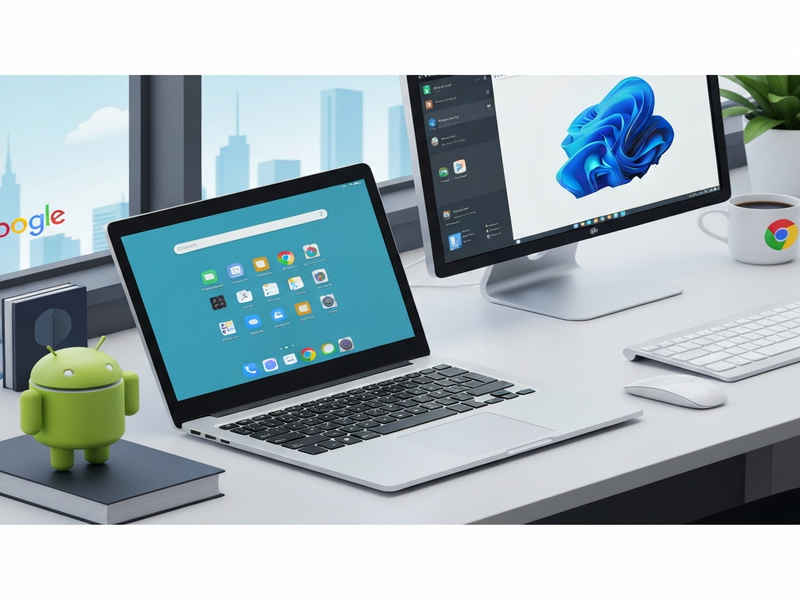
Google’s Aluminium OS: A New Chapter for Android on the Desktop
Tech‑savvy professionals have long awaited a seamless bridge between Android’s massive app ecosystem and the productivity‑focused world of PCs. Google’s answer, codenamed Aluminium, promises exactly that—a single operating system that runs Android apps natively on laptops and desktops while retaining ChromeOS’s cloud‑first management tools.
The announcement, first reported by The Verge, reveals a roadmap that is both ambitious and legally complex. Below we break down the timeline, hardware requirements, antitrust implications, and the potential ripple effects for developers and end‑users.
Overview of Aluminium OS and Launch Timeline
Aluminium OS is positioned as a “convergence layer” that merges the Android runtime with ChromeOS’s security sandbox, update cadence, and multi‑window UI. Google’s Android head, Sameer Samat, hinted at a 2026 debut during a September 2025 interview, describing the project as “something we’re super excited about for next year.”
However, court filings from the ongoing U.S. antitrust case paint a more cautious picture. According to documents submitted in August 2025, the “fastest path” to market involves a commercial trusted‑tester program launching in late 2026, followed by a full consumer rollout in 2028. This staggered approach mirrors Google’s historical strategy of “soft‑launch → feedback → broader release.”
- Late 2026: Limited beta on select Intel “Panther Lake” laptops (code‑named “Ruby”).
- Early 2027: Expansion to high‑end tablets (code‑named “Sapphire”).
- 2028: General availability for enterprise and education sectors.
The phased schedule also aligns with Google’s promise to support existing ChromeOS devices for at least ten years, meaning many current Chromebooks will continue receiving updates until roughly 2034.
Hardware Compatibility and ChromeOS Support
Aluminium OS will not be a universal drop‑in for every existing Chromebook or Android device. Professor Jason Nieh, testifying for the U.S. government, noted that “some of the hardware will not support Project Aluminium.” The primary constraints are:
- CPU Architecture: Only newer Intel and ARM platforms with integrated graphics that meet Google’s performance thresholds will be eligible.
- Secure Boot & TPM: Devices must support Google’s verified boot chain to guarantee the integrity of the combined OS.
- Display Scaling: The UI must handle both high‑DPI laptop screens and larger tablet displays without distortion.
For devices that cannot be upgraded, Google has pledged to maintain ChromeOS updates through 2033, honoring its “10‑year support commitment.” This dual‑track strategy ensures that legacy hardware remains functional while newer machines enjoy the full Aluminium experience.
Developers will also benefit from the Web app editor on UBOS, which simplifies the creation of responsive web‑based front‑ends that adapt to both Android and ChromeOS environments.
Legal and Antitrust Considerations
Aluminium OS arrives amid heightened scrutiny of Google’s market dominance. The U.S. Department of Justice’s antitrust case, which already forced Google to modify certain search‑related practices, now includes evidence that the company may be using Aluminium to sidestep restrictions on self‑preferencing.
Key points from the court filings:
- Judge Amit Mehta’s ruling exempts ChromeOS (and by extension Aluminium) from the self‑preferencing injunction that bars Google from forcing carriers or OEMs to pre‑install its apps.
- The “successor to ChromeOS” language could allow Google to bundle its own services—Chrome browser, Google Search, and Play Store—more tightly into Aluminium, potentially limiting competition.
- Epic Games v. Google settlement currently restricts Google’s Play Store practices on smartphones and tablets, but the language specifically mentions “Android operating system,” leaving a loophole for an Android‑based PC platform.
If Google leverages Aluminium to lock users into its ecosystem on the desktop, regulators may view it as a continuation of the same anticompetitive patterns that prompted the original case. Conversely, the company argues that a unified OS simplifies security updates and reduces fragmentation, a claim that could sway future rulings.
Potential Impact and User Experience
From a user perspective, Aluminium OS could reshape how professionals interact with their devices:
Unified App Ecosystem
Imagine launching a mobile‑only productivity app—like a note‑taking tool built with the AI Article Copywriter—directly on a laptop without an emulator. The OS will translate touch‑centric UI elements into mouse‑friendly interactions, while preserving the original Android experience.
Enhanced Multitasking
ChromeOS’s multi‑window management will be inherited, allowing users to snap Android apps side‑by‑side with native Linux or web apps. This could be a game‑changer for developers using the Workflow automation studio to orchestrate cross‑platform workflows.
AI‑Powered Features
Google plans to embed its AI stack directly into Aluminium. For example, the OpenAI ChatGPT integration could power contextual help within any Android app, while the Chroma DB integration would enable fast, vector‑based search across local files.
Voice Interaction
With the ElevenLabs AI voice integration, users could dictate emails, generate code snippets, or control the OS entirely via voice—mirroring the capabilities of Google Assistant on smartphones.
Developer Opportunities
The UBOS ecosystem offers a ready‑made marketplace for developers to showcase Aluminium‑compatible templates. Notable examples include:
- AI SEO Analyzer – a tool that can now run on desktop browsers and Android side‑by‑side.
- AI Video Generator – leveraging GPU acceleration on laptops.
- AI Chatbot template – instantly deployable on both mobile and PC.
- GPT‑Powered Telegram Bot – integrates messaging with desktop notifications.
These templates illustrate how developers can repurpose existing Android‑centric solutions for a broader audience without rewriting codebases, dramatically reducing time‑to‑market.
Conclusion: What This Means for You
Aluminium OS is more than a technical curiosity; it is a strategic move that could redefine the PC landscape for the next decade. Early adopters—especially enterprises and educational institutions—will gain a unified platform that simplifies device management while unlocking the vast Android app library.
For SaaS founders, the timing aligns perfectly with the UBOS partner program, offering co‑marketing, technical support, and revenue‑share models to accelerate your launch on the new OS.
Ready to explore how your product can thrive on Aluminium? Dive into the Enterprise AI platform by UBOS for scalable infrastructure, or start with a ready‑made UBOS templates for quick start. Whether you’re building a chatbot, an analytics dashboard, or a voice‑driven assistant, the tools are already waiting.
Stay informed as Google rolls out the beta later this year, and keep an eye on the evolving legal landscape that could shape the final product. For the full original reporting, read the Verge article on Aluminium OS.
Take the next step: visit the UBOS homepage and discover how you can future‑proof your applications for the era of Android on the desktop.
Explore More UBOS Resources
If you’re curious about how AI can boost your marketing, check out our AI marketing agents. For startups looking for a low‑code launchpad, the UBOS for startups page outlines pricing, support, and community benefits.
SMBs can leverage UBOS solutions for SMBs to automate workflows, while larger enterprises may find the Enterprise AI platform by UBOS aligns with their security and compliance needs.
Need a visual showcase? Browse the UBOS portfolio examples for real‑world case studies, or experiment with the AI YouTube Comment Analysis tool to gauge audience sentiment.
From voice synthesis with AI Voice Assistant to data parsing via Unstructured Data AI Parser, the UBOS marketplace offers a breadth of capabilities that can be instantly integrated into Aluminium OS.