

- Updated: January 18, 2026
- 6 min read
AI Scrapers Fuel Content Theft: Generative AI Threatens Digital Publishing
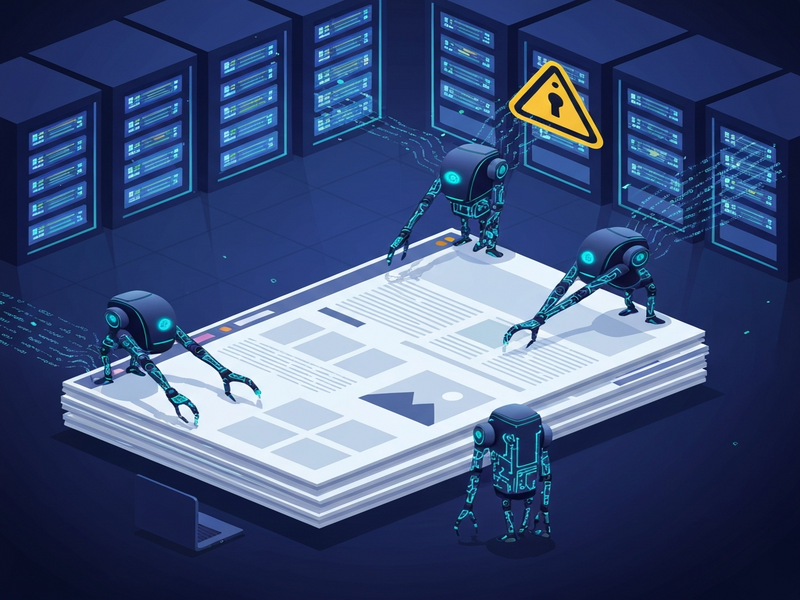
AI scrapers are automated tools that harvest and repurpose online content, often resulting in content theft by generative AI systems and posing a serious threat to digital publishing.
<!– Headline (styled as Tailwind component, not an
) –>
AI Scrapers, Content Theft, and Generative AI: What Digital Publishing Must Know
The Rise of AI Scrapers – A New Frontier of Content Theft
In the past year, the proliferation of AI scrapers has turned the internet into a hunting ground for automated bots that crawl, copy, and redistribute copyrighted material. Unlike traditional web crawlers that index pages for search engines, these scrapers are purpose‑built to feed large language models (LLMs) with fresh data, often without the consent of the original creators. The result is a cascade of content theft that undermines the value of original work and destabilizes the economics of digital publishing.
Why AI scrapers matter now
- They operate at scale, harvesting millions of articles per day.
- Generated text from LLMs can be indistinguishable from human‑written content, making detection difficult.
- Publishers lose traffic, ad revenue, and brand authority when their work is repurposed without attribution.
How Generative AI Bots Turn Scraped Data into Content Theft
Generative AI models such as ChatGPT, Claude, and other LLMs rely on massive, diverse datasets to produce coherent, context‑aware text. When AI scrapers feed these models with copyrighted articles, blog posts, and multimedia transcripts, the models can inadvertently reproduce large verbatim passages—a practice known as content theft. Below is a step‑by‑step breakdown of the process:
- Discovery: Scraper bots locate publicly accessible URLs using sitemap files, RSS feeds, or keyword‑based searches.
- Extraction: The bots download HTML, strip away formatting, and store raw text in massive corpora.
- Training ingestion: Developers upload these corpora to fine‑tune or pre‑train generative models.
- Generation: When prompted, the model may reproduce sections of the original text, sometimes verbatim, because it has “learned” the phrasing.
- Distribution: The generated output is published on new platforms, chatbots, or SaaS tools, often without any link back to the source.
Because LLMs are statistical predictors, they do not “know” copyright law. They simply output the most likely continuation of a prompt, which can include protected material if that material dominates the training set. This creates a legal gray area that regulators are only beginning to explore.
Impact on Creators, Publishers, and the Digital Publishing Ecosystem
For content creators and digital publishers, the consequences are both immediate and long‑term:
Revenue Erosion
When articles are scraped and republished by AI‑driven services, original sites lose page views, ad impressions, and subscription conversions.
Brand Dilution
Duplicate or low‑quality reproductions can damage a publisher’s reputation, especially if the scraped content is presented out of context.
Legal Exposure
Publishers may be drawn into copyright infringement lawsuits, either as plaintiffs seeking damages or as defendants accused of hosting scraped content.
SEO Penalties
Search engines may penalize sites that host duplicated content, causing rankings to drop and further reducing organic traffic.
Beyond financial loss, the creative ecosystem suffers. Writers, journalists, and educators invest time and expertise to produce original material. When AI scrapers siphon that work, the incentive to create diminishes, potentially leading to a slowdown in high‑quality content production.
Case Study: Metabrainz’s Warning on AI Scrapers
In December 2025, Metabrainz published a stark warning about the unchecked growth of AI scrapers. The article highlighted how music metadata platforms were being targeted, resulting in inaccurate data feeds for downstream AI applications. While the focus was on music, the underlying mechanics mirror the broader publishing crisis:
- Scrapers harvested millions of song descriptions and lyrics.
- Generative models reproduced these lyrics verbatim in user‑generated content.
- Original rights holders reported loss of royalties and brand control.
The Metabrainz case underscores that content theft is not limited to text; audio, video, and structured data are equally vulnerable. It also illustrates the urgency for industry‑wide safeguards.
Industry Response: Toward Ethical AI and Robust Content Protection
Publishers, AI developers, and policy makers are converging on a set of best practices to curb the abuse of AI scrapers:
Technical Countermeasures
- Robots.txt enhancements: Explicitly disallow AI scraper user‑agents.
- Watermarking & fingerprinting: Embed invisible markers in text that can be detected downstream.
- Rate limiting & CAPTCHAs: Thwart high‑volume automated requests.
Policy & Legal Frameworks
- Updating copyright statutes to address AI‑generated reproductions.
- Creating industry‑wide AI ethics guidelines that define acceptable data usage.
- Establishing clear takedown procedures for scraped content.
Collaborative Platforms
Several SaaS providers are building tools that empower publishers to monitor, detect, and block unauthorized scraping. These platforms combine real‑time analytics with AI‑driven anomaly detection, offering a proactive defense line.
How UBOS Helps Publishers Fight AI Scrapers and Protect Their Content
UBOS (Unified Business Operating System) delivers a suite of AI‑centric solutions designed to safeguard digital assets while enabling creators to leverage generative technology responsibly.
AI Ethics Framework
Our AI ethics page outlines a transparent governance model that ensures any data used to train or fine‑tune models respects copyright and consent. By integrating these guidelines into your workflow, you can avoid inadvertent content theft and demonstrate compliance to regulators.
Digital Content Protection Engine
UBOS offers a digital content protection service that combines watermarking, fingerprinting, and automated takedown requests. The system continuously scans the web for duplicate passages and alerts you the moment a scraper reproduces your material.
Integrated Platform Features
- UBOS platform overview – a low‑code environment that lets you embed protection modules without writing code.
- Workflow automation studio – automate detection, reporting, and response to scraper activity.
- Web app editor on UBOS – quickly create custom dashboards for monitoring content integrity.
- Enterprise AI platform by UBOS – scale protection across thousands of assets with centralized policy enforcement.
- UBOS partner program – collaborate with security firms and legal experts to stay ahead of emerging scraper tactics.
For startups and SMBs, UBOS provides tailored packages that balance cost and capability. Explore the UBOS for startups and UBOS solutions for SMBs to see how you can protect your content without breaking the bank.
Pricing Transparency
Our UBOS pricing plans are designed for flexibility—pay per protected asset, per API call, or via a flat‑rate subscription. This ensures you only pay for the protection you need.
Future Outlook: A Safer Digital Publishing Landscape
As generative AI continues to mature, the battle against AI scrapers and content theft will intensify. However, with proactive technical safeguards, clear ethical standards, and platforms like UBOS that embed protection at the core, publishers can reclaim control over their intellectual property.
Stakeholders are urged to:
- Audit existing content for vulnerable exposure.
- Adopt AI‑ethics guidelines and embed them into development pipelines.
- Leverage automated detection tools to monitor the web for unauthorized reproductions.
- Participate in industry coalitions that lobby for updated copyright legislation.
By taking these steps today, digital publishers can ensure that tomorrow’s AI‑driven innovations enhance, rather than erode, the value of original content.
Ready to protect your content? Visit the UBOS homepage and start a free trial of our AI‑powered protection suite.