

- Updated: April 25, 2025
- 5 min read
A Comprehensive Guide to Agentic AI Architectures: From Basic Prompts to Autonomous Systems
Mastering Agentic AI Architectures: A Step-by-Step Guide from Basic to Autonomous Systems
In the rapidly evolving landscape of artificial intelligence, agentic AI architectures are emerging as a transformative force in modern technology. These architectures, characterized by their ability to perform tasks autonomously, are redefining how we interact with machines. This article delves into the five levels of AI agents, offering insights into their implementation and potential impacts on various industries.
Introduction to Agentic AI Architectures
Agentic AI architectures represent a new frontier in AI technology, where systems are designed to operate with varying degrees of autonomy. These architectures enable AI agents to perform tasks ranging from simple language processing to complex decision-making processes without human intervention. The significance of these architectures lies in their ability to enhance efficiency, reduce human error, and provide scalable solutions across multiple domains.
Platforms like UBOS play a pivotal role in facilitating the development and management of these advanced AI systems. With robust tools and integrations, such as the Telegram integration on UBOS and OpenAI ChatGPT integration, developers can create sophisticated agentic AI systems with ease.
Overview of the Five Levels of AI Agents
The journey of agentic AI architectures can be understood through five distinct levels, each representing a step towards full autonomy:
- Level 1: Basic Language Processing – At this foundational level, AI agents function as simple processors, capable of generating text based on input prompts.
- Level 2: Intermediate Interaction – Agents advance to routing logic, classifying queries and directing them to appropriate handlers.
- Level 3: Advanced Decision-Making – This level introduces tool-calling capabilities, allowing agents to choose and execute functions based on user queries.
- Level 4: Proactive Agents – Agents begin managing workflows, maintaining state, and orchestrating multi-step processes.
- Level 5: Fully Autonomous Systems – The pinnacle of agentic AI, where agents plan, generate, validate, and execute code independently.
In-depth Analysis of Each Level
Level 1: Basic Language Processing
At the simplest level, AI agents serve as language processors. They generate responses based on input prompts, with no impact on program flow. This level is ideal for applications requiring straightforward text generation, such as chatbots and content creation tools. For instance, the AI Article Copywriter available on UBOS leverages this capability to produce high-quality written content.
Level 2: Intermediate Interaction
In this stage, agents gain the ability to classify user queries and route them to specialized handlers. This logic-based approach allows for more nuanced interactions, enhancing the user experience. For example, the AI Chatbot template utilizes intermediate interaction to provide tailored responses based on query type.
Level 3: Advanced Decision-Making
Advanced decision-making introduces tool-calling, where agents select and execute functions to answer user queries. This capability bridges AI reasoning with practical execution, making it invaluable for applications like Web Scraping with Generative AI, where data retrieval and processing are automated.
Level 4: Proactive Agents
Proactive agents manage workflows, maintain memory, and iterate on tasks until completion. This level showcases the dynamic nature of agentic AI, allowing systems to adapt and refine their processes over time. The AI Audio Transcription and Analysis tool exemplifies this capability by continuously improving transcription accuracy through iterative processing.
Level 5: Fully Autonomous Systems
At the highest level, fully autonomous agents plan, generate, and execute code independently. These systems are capable of solving complex problems without human intervention, paving the way for innovations in fields like finance, healthcare, and autonomous vehicles. The Enterprise AI platform by UBOS offers a robust framework for developing such autonomous systems, enabling organizations to harness the full potential of AI.
Implementation Code Examples
Implementing agentic AI architectures requires a blend of programming expertise and platform-specific knowledge. Below are simplified code snippets demonstrating the progression from basic language processing to fully autonomous systems:
def simple_processor(prompt):
    response = generate_text(prompt)
    return response

def router_agent(user_query):
    category = classify_query(user_query)
    if category == "technical":
        return handle_technical_query(user_query)
    elif category == "creative":
        return handle_creative_query(user_query)
    else:
        return handle_factual_query(user_query)

def tool_calling_agent(user_query):
    tool_selection = select_tool(user_query)
    tool_result = execute_tool(tool_selection)
    return integrate_tool_result(user_query, tool_result)
SEO Optimization Techniques
To ensure the visibility of content related to agentic AI architectures, it is crucial to employ SEO best practices. This includes:
- Keyword Integration: Use relevant keywords like “Agentic AI,” “AI architectures,” and “autonomous AI” strategically throughout the article.
- Meta Tags and Descriptions: Craft compelling meta titles and descriptions to enhance search engine snippets.
- Internal Linking: Incorporate links to related content, such as AI-powered chatbot solutions and Training ChatGPT with your own data, to boost authority and user engagement.
- External Linking: Reference authoritative sources and research papers to build credibility, ensuring links open in a new tab using
rel="noopener".
Visual Content and Image Integration
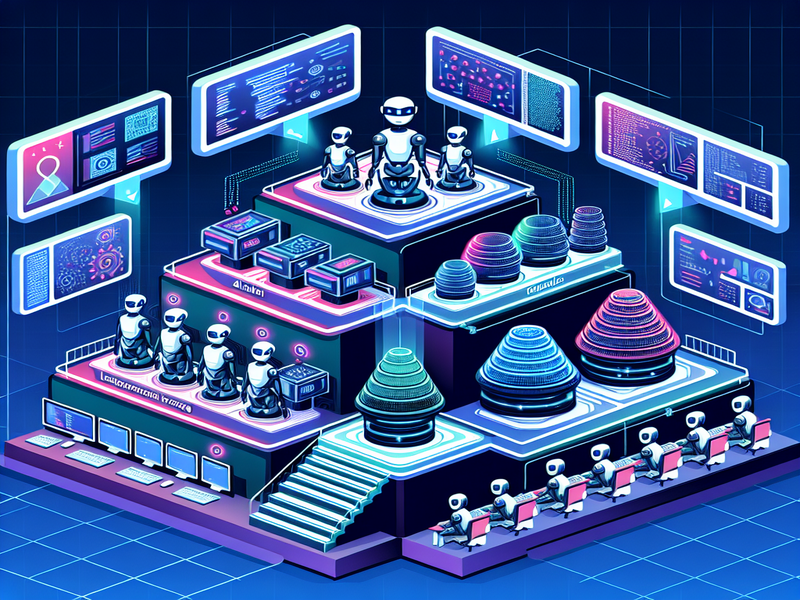
Visual aids are essential for illustrating complex concepts in agentic AI architectures. Diagrams, flowcharts, and code screenshots can enhance comprehension and engagement. For instance, the image below exemplifies a visual representation of AI architecture levels:
Internal and External Linking Strategy
To maximize the article’s reach and authority, a strategic linking approach is necessary. Internally, link to relevant UBOS resources, such as AI marketing agents and Comprehensive guide to API design. Externally, reference reputable sources like academic journals and industry reports to substantiate claims and provide additional reading.
Conclusion and Future Prospects
Agentic AI architectures are set to revolutionize industries by enabling systems to operate autonomously, reducing the need for human intervention. As these technologies continue to evolve, platforms like UBOS will be instrumental in driving innovation and adoption. By exploring the capabilities of agentic AI, organizations can unlock new efficiencies and opportunities for growth.
For those interested in developing agentic AI systems, the UBOS solutions for SMBs and February product update on UBOS offer valuable resources and insights. As we look to the future, the potential for AI to transform our
Andrii Bidochko
CTO UBOS
Andrii Bidochko is an AI entrepreneur and researcher focused on AI agents, reinforcement learning, and autonomous systems. He writes about the technologies shaping the future of machine intelligence, from frontier models and agent architectures to real-world AI applications.