

- Updated: February 20, 2026
- 6 min read
Prediction Markets Enter Journalism: Polymarket and Kalshi Sponsorships
Prediction markets are online platforms where users trade contracts based on the outcome of future events, and they are now being embedded in newsrooms as sponsorship tools, blurring the line between journalism and betting.
Prediction Markets Go Mainstream: Polymarket, Kalshi, and the New Era of Journalism Sponsorship
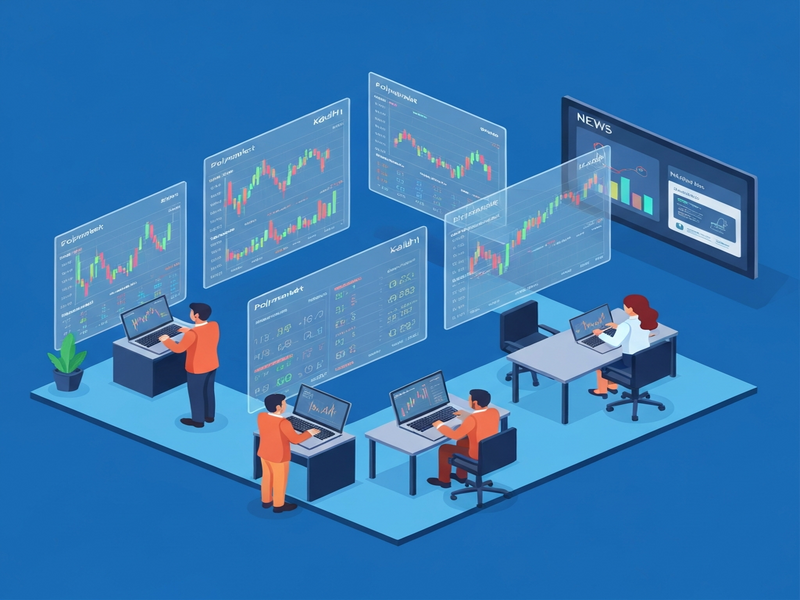
A recent Verge investigation reveals that leading prediction‑market platforms Polymarket and Kalshi have struck sponsorship deals with major media outlets, from Substack to the Wall Street Journal. The move signals a seismic shift in how digital finance, betting, and news content intersect.
What Are Prediction Markets?
Prediction markets let participants buy and sell outcome‑based contracts, effectively turning collective wisdom into a market price that reflects the probability of an event occurring. Two of the most prominent platforms are:
- Polymarket – a decentralized market focused on political, social, and crypto‑related events.
- Kalshi – a regulated U.S. exchange that offers contracts on everything from economic indicators to entertainment awards.
Both platforms charge a small transaction fee, but unlike traditional sportsbooks, the “house” does not take a position; instead, traders on opposite sides settle the contract based on the actual outcome.
Recent Sponsorship Deals with Media Outlets
In the past six months, Polymarket and Kalshi have woven their data streams directly into editorial content:
- Substack introduced native tools that let creators embed live market data, paying top writers like Matt Yglesias to showcase predictions in newsletters.
- The Wall Street Journal (via Dow Jones) now displays Polymarket odds alongside its financial analysis.
- CNN and CNBC have integrated Kalshi’s odds for political races and major award shows.
These partnerships are marketed as “enhancing reader insight,” but they also serve as a subtle advertising channel for the betting platforms.
Implications for Journalism and News Integrity
Blurring the Line Between News and Betting
Traditional journalism reports on events that have already happened. By embedding prediction markets, outlets are effectively monetizing future speculation as part of their content. As About UBOS notes, “information should empower, not profit from uncertainty.” The new model risks turning readers into bettors, shifting the editorial focus from factual reporting to probability‑driven hype.
Regulatory Landscape
U.S. regulators are still deciding whether prediction markets fall under sports‑betting statutes or should be treated as securities. The Commodity Futures Trading Commission (CFTC) has signaled resistance to state‑level attempts to regulate them as gambling, creating a patchwork of legal uncertainty. This ambiguity makes it difficult for newsrooms to ensure compliance while still leveraging the data.
Industry Reactions and Expert Opinions
Vlad Tenev, CEO of Robinhood, famously called prediction markets “the next generation of the news,” arguing that “if you get the news before it happens, that should be even more economically valuable.” Critics counter that this mindset conflates information with speculation, eroding public trust.
“These markets have changed the way people consume news,” said CFTC Chair Mike Selig, highlighting both the disruptive potential and the regulatory headaches that follow.
Journalists like Elizabeth Lopato (The Verge) warn that “embedding betting odds in newsrooms is a concerted effort to confuse people about what news is and does.” The concern is that audiences may start treating editorial content as a betting tip sheet rather than an objective report.
What This Means for Digital Finance Enthusiasts
For investors and tech‑savvy traders, the integration offers new data sources to inform strategies. Real‑time odds can serve as leading indicators for market sentiment, especially around macro events like elections or earnings releases.
Opportunities
- Access to granular betting data via APIs from Polymarket and Kalshi.
- Potential to build custom dashboards that combine news sentiment with market probabilities.
- Leveraging AI tools (e.g., OpenAI ChatGPT integration) to parse and summarize market movements.
Risks and Compliance
Because many prediction contracts are classified as gambling, users must be aware of jurisdictional restrictions. Moreover, insider‑information allegations have already surfaced, with high‑profile wins tied to geopolitical events. Compliance teams should monitor prediction markets for potential legal exposure.
How UBOS Helps Companies Navigate This New Terrain
UBOS offers a suite of AI‑powered tools that let businesses build, automate, and monitor data‑driven applications without writing code. Below are key components that can be leveraged to create compliant, transparent prediction‑market integrations:
UBOS platform overview
Provides a low‑code environment to ingest market data, apply AI analytics, and publish results directly to web portals.
AI marketing agents
Automate personalized content that explains market odds while staying within advertising guidelines.
Web app editor on UBOS
Easily design dashboards that blend news articles with live prediction data, using drag‑and‑drop components.
Workflow automation studio
Set up triggers that alert editors when market odds shift dramatically, ensuring timely updates.
Startups can accelerate time‑to‑market with UBOS for startups, while SMBs benefit from pre‑built templates such as the UBOS templates for quick start. For enterprises, the Enterprise AI platform by UBOS offers robust governance, audit trails, and role‑based access controls—critical for meeting gambling‑regulation compliance.
Examples of ready‑made solutions include the AI SEO Analyzer for optimizing market‑related content, and the AI Article Copywriter to generate balanced editorial pieces that disclose sponsorships transparently.
Why Prediction Markets Matter for Digital Finance and Betting
From a digital finance perspective, prediction markets act as a real‑time barometer of collective expectations, offering a complementary data set to traditional market indicators. Their rise in the betting ecosystem is prompting regulators to revisit definitions of “financial instruments” versus “gambling.” As media outlets adopt these tools, the convergence of journalism sponsorship and predictive analytics creates a hybrid content model that could redefine revenue streams for publishers.
Take the Next Step with UBOS
If you’re a tech‑savvy investor or a media executive looking to harness prediction‑market data responsibly, explore the following resources:
- UBOS pricing plans – flexible tiers for startups to enterprises.
- UBOS portfolio examples – see how other companies integrated AI and market data.
- UBOS partner program – collaborate on building compliant prediction‑market solutions.
Conclusion
The partnership between prediction‑market platforms and major newsrooms marks a pivotal moment for both digital finance and the future of journalism. While the potential for richer, data‑driven storytelling is exciting, the ethical and regulatory challenges cannot be ignored. Stakeholders must balance innovation with transparency to preserve the core mission of the Fourth Estate.
Read the full investigative piece on The Verge for a deeper dive: Everything is gambling now: the latest news on prediction markets like Polymarket and Kalshi.
Andrii Bidochko
CTO UBOS
Andrii Bidochko is an AI entrepreneur and researcher focused on AI agents, reinforcement learning, and autonomous systems. He writes about the technologies shaping the future of machine intelligence, from frontier models and agent architectures to real-world AI applications.