

- Updated: March 11, 2026
- 6 min read
Xbox Project Helix Unveiled at GDC 2026: New Console Specs, Xbox Mode on Windows, and Game Preservation Plans
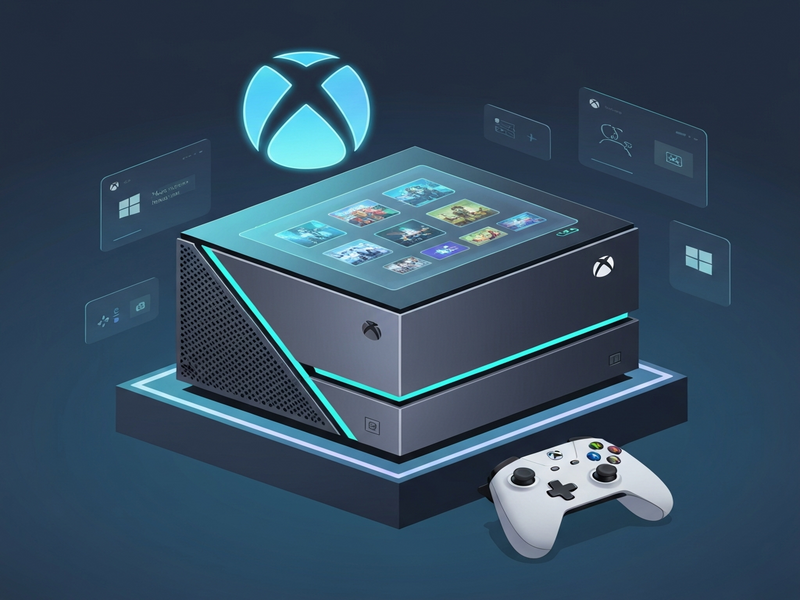
Microsoft announced Project Helix at GDC 2026, a next‑generation Xbox console slated for an alpha release in 2027 that will feature a custom AMD processor with unprecedented ray‑tracing performance, AI‑enhanced upscaling, and a tighter Xbox‑Windows integration.
Project Helix: The headline from GDC 2026
At the Game Developers Conference’s Festival of Gaming, Microsoft’s VP of Next Generation Jason Ronald unveiled the core vision behind the upcoming console, codenamed Project Helix. The announcement confirmed that the new hardware will not ship until after a developer‑focused alpha in 2027, but the details shared already reshape expectations for the future of console and PC gaming.
For a deeper dive into the original reporting, see the Verge article.
Hardware specs that push the envelope
Project Helix will be powered by a bespoke AMD “Zen 5‑X” CPU paired with a next‑gen RDNA 3‑based GPU. Microsoft highlighted three headline metrics:
- An order‑of‑magnitude increase in ray‑tracing throughput, enabling real‑time path tracing for the first time on a console.
- Integration of FSR Diamond, a machine‑learning‑driven upscaling solution that adds frame generation to smooth gameplay at 120 fps or higher.
- Support for PCIe 5.0 storage, delivering sub‑millisecond load times when paired with NVMe 4 TB SSDs.
The chip also includes a dedicated AI accelerator, a move that mirrors the trend seen in high‑end PCs and cloud gaming services. This accelerator will power on‑device inference for features like voice‑controlled UI, real‑time translation, and dynamic difficulty adjustment.
Xbox mode on Windows: A unified ecosystem
Beyond raw hardware, Microsoft announced that the “Xbox mode” first introduced on the Xbox Ally handheld will roll out to select Windows 11 PCs starting in April. This mode will bring the console’s low‑latency input stack, controller profile, and Xbox Live services directly to the desktop.
The rollout will also include Advanced Shader Delivery, a system that pre‑compiles shaders on the cloud and streams them alongside game updates, eliminating the dreaded “shader stutter” that has plagued gamers for years.
For developers, the promise is simple: write once, run everywhere. The same codebase that powers a Helix title will compile for Windows, Xbox, and the cloud with minimal changes, thanks to the unified UBOS platform overview that abstracts hardware differences.
Game preservation: Bringing classics to the future
In celebration of Xbox’s 25th anniversary, Microsoft’s Game Preservation team pledged to re‑release a “significant” catalog of legacy titles. While the exact number remains undisclosed, the initiative will leverage the new hardware’s emulation layer and cloud streaming to make classic Xbox, Xbox 360, and even early Windows Games accessible on Project Helix.
The preservation effort aligns with Microsoft’s broader “Play Anywhere” philosophy: buy once, play on any screen. As of the announcement, the Play Anywhere catalog already exceeds 1,500 titles, and the upcoming releases will expand that library further.
Developers interested in preserving their IP can use the Workflow automation studio to automate build pipelines that target both legacy and next‑gen platforms.
Leadership shifts at Xbox
The Helix reveal also marked a leadership transition. Asha Sharma took over as Xbox CEO in February, succeeding Phil Spencer, who announced his retirement. Sharma’s first public statements emphasized a “renewed commitment to Xbox starting with console,” positioning Helix as the flagship of that vision.
Former Xbox president Sarah Bond also departed, signaling a fresh strategic direction. Sharma hinted that “some of our most iconic first‑party franchises are returning this year,” a tease that could translate into exclusive titles optimized for Helix’s AI‑driven graphics pipeline.
Related ecosystem news
Microsoft’s broader AI push continues across its product suite. The company recently announced tighter integration between OpenAI ChatGPT integration and its cloud services, a move that will likely feed into Helix’s on‑device AI accelerator.
Meanwhile, developers can experiment with voice‑enabled experiences using the ElevenLabs AI voice integration, which pairs well with Helix’s low‑latency audio pipeline.
For those building data‑intensive games, the Chroma DB integration offers a vector‑search database that can power in‑game recommendation engines and dynamic content generation.
What Project Helix means for developers and gamers
For developers: A unified codebase, AI‑accelerated rendering, and cloud‑first shader delivery reduce time‑to‑market and lower the cost of supporting multiple platforms.
For gamers: Expect smoother frame rates, richer visual fidelity, and the ability to play legacy titles alongside brand‑new experiences—all under a single subscription model.
The convergence of console and PC also opens doors for indie studios to leverage the UBOS templates for quick start, accelerating prototyping and reducing overhead.
Explore more AI‑powered tools for your next project
If you’re looking to harness AI in your own games or SaaS products, UBOS offers a suite of services that complement the Helix ecosystem:
- UBOS homepage – your gateway to AI‑enhanced development.
- About UBOS – learn how the team builds enterprise‑grade AI platforms.
- AI marketing agents – automate campaign creation with generative AI.
- UBOS pricing plans – flexible tiers for startups and SMBs.
- UBOS for startups – accelerate product‑market fit with low‑code tools.
- UBOS solutions for SMBs – scale operations without heavy IT overhead.
- Enterprise AI platform by UBOS – secure, compliant AI for large organizations.
- Web app editor on UBOS – drag‑and‑drop UI builder for rapid prototyping.
- UBOS partner program – collaborate and co‑sell AI solutions.
- UBOS portfolio examples – see real‑world deployments across industries.
- AI SEO Analyzer – boost your site’s visibility with AI‑driven insights.
- AI Article Copywriter – generate high‑quality content at scale.
- AI Video Generator – create marketing videos without a studio.
- AI Chatbot template – embed conversational AI in minutes.
- GPT-Powered Telegram Bot – extend Helix’s community reach via messaging.
Whether you’re a game studio aiming to leverage Helix’s AI accelerator or a SaaS founder seeking rapid AI integration, UBOS provides the building blocks to turn vision into reality.
Conclusion
Project Helix signals a decisive shift toward a unified, AI‑first gaming future. By marrying a powerful custom AMD chip with cloud‑enabled services, Microsoft is setting a new performance baseline while simplifying the developer experience. The upcoming alpha in 2027 will be a crucial testing ground, and the broader ecosystem—including Xbox mode on Windows and the Game Preservation program—will ensure that both new and classic titles thrive.
Stay ahead of the curve: follow the latest updates on Project Helix and explore how UBOS’s AI platform can accelerate your own innovations.
Andrii Bidochko
CTO UBOS
Andrii Bidochko is an AI entrepreneur and researcher focused on AI agents, reinforcement learning, and autonomous systems. He writes about the technologies shaping the future of machine intelligence, from frontier models and agent architectures to real-world AI applications.