

- Updated: January 24, 2026
- 6 min read
West Midlands Police Chief Resigns After AI Hallucination Sparks Ban on Israeli Fans
The chief constable of West Midlands Police resigned after an AI‑generated hallucination from Microsoft Copilot led the force to mistakenly ban Israeli football fans based on a fictitious match report.
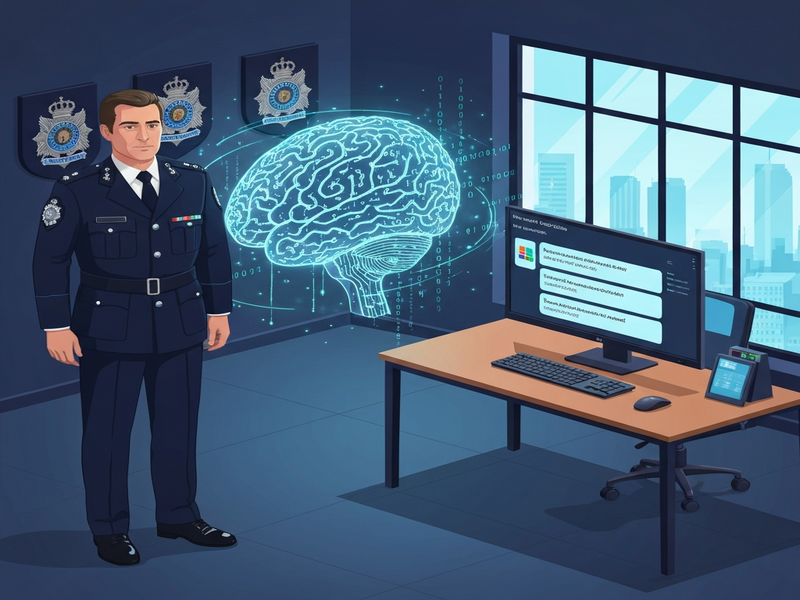
West Midlands Police Chief Resigns Over AI Hallucination That Misguided Fan Ban Decision
On 16 January 2026, Chief Constable Craig Guildford stepped down from England’s third‑largest police force after it emerged that a decision to block Israeli supporters from an Aston Villa Europa League match was based on a fabricated report produced by Microsoft Copilot, the generative‑AI add‑on for Microsoft 365. The incident has ignited a heated debate about the reliability of AI tools in law‑enforcement contexts and the ethical safeguards required to prevent similar mishaps.
In this article
AI hallucinations and Microsoft Copilot
Generative‑AI models, including large language models (LLMs) like the one powering Microsoft Copilot, are designed to predict text based on patterns in massive datasets. While they excel at drafting emails, summarising reports, and even writing code, they can also produce hallucinations—confident‑sounding statements that have no factual basis.
These hallucinations arise because the model does not “know” truth; it merely stitches together statistically likely phrases. In high‑stakes environments such as policing, a single fabricated piece of information can cascade into policy decisions, legal challenges, and reputational damage.
Microsoft introduced Copilot in 2023 as an AI‑enhanced productivity layer for Office apps. By early 2026, the company had bundled the tool into its Microsoft 365 suite, promising “AI‑first” assistance for everything from spreadsheet analysis to legal research. However, the technology’s rapid rollout has outpaced the development of robust verification protocols, especially in sectors that traditionally rely on human‑verified intelligence.
UBOS AI news regularly highlights how emerging AI capabilities intersect with public‑sector responsibilities, underscoring the need for transparent validation pipelines.
Details of the West Midlands police chief resignation
Chief Constable Guildford, 52, announced his retirement on 16 January after a parliamentary committee hearing revealed that officers had relied on a non‑existent match report generated by Copilot. The report claimed a “high‑risk” scenario involving a Europa League fixture between Aston Villa and Maccabi Tel Aviv, citing a prior clash with West Ham that never occurred.
Initially, Guildford told the Home Affairs Committee that the force’s research had been conducted via a standard Google search, explicitly stating, “We do not use AI.” A subsequent internal memo dated 12 January corrected this claim, acknowledging that the erroneous data originated from Microsoft Copilot.
The decision to ban the Israeli supporters was made on 6 November 2025, just days before the match. The ban sparked diplomatic friction, with the Home Secretary Shabana Mahmood publicly questioning Guildford’s judgment and demanding accountability.
Policing technology insights from UBOS explore how AI can be safely integrated into law‑enforcement workflows, emphasizing audit trails and human‑in‑the‑loop safeguards.
Reactions from officials and the public
Following the revelation, the Police and Crime Commissioner Simon Foster issued a brief statement: “The integrity of our force depends on accurate intelligence. We will review all AI‑assisted processes to ensure they meet the highest standards of verification.”
Human‑rights organisations, including Amnesty International, condemned the ban as “discriminatory” and called for an independent inquiry into the use of AI in operational decisions. Social media erupted with #AIHallucination trending on X (formerly Twitter), where users debated whether the fault lay with the technology, the officers, or the chain of command.
Legal experts warned that reliance on unverified AI output could expose police forces to civil liability. “If a court finds that an AI‑generated falsehood directly influenced a policy that infringed on civil liberties, the force could face substantial damages,” noted solicitor Rebecca Hale of the firm Hale & Partners.
UBOS’s partner program has recently added a compliance module that helps organisations embed verification checkpoints before AI‑driven recommendations are acted upon.
Wider implications for AI use in policing
The West Midlands episode is a cautionary tale for any public agency considering generative AI. Key takeaways include:
- Human‑in‑the‑loop (HITL) must be mandatory: Every AI‑generated insight should be cross‑checked by a qualified officer before influencing policy.
- Auditability: Systems need immutable logs that record the source, timestamp, and confidence level of each AI output.
- Transparency to the public: Agencies should disclose when AI tools are used in decision‑making, fostering trust and accountability.
- Vendor responsibility: Providers like Microsoft must improve model interpretability and offer built‑in fact‑checking APIs.
UBOS’s Enterprise AI platform already incorporates these principles, allowing law‑enforcement teams to integrate third‑party models while enforcing verification workflows.
Paraphrased key quotes from the inquiry
“We trusted a piece of information that, in hindsight, was a product of an AI hallucination. That trust was misplaced, and the consequences were avoidable.” – Chief Constable Craig Guildford (paraphrased)
“The technology itself is not at fault; it is the lack of rigorous validation that led to a policy error.” – Home Secretary Shabana Mahmood (paraphrased)
“AI can be a force multiplier for policing, but only if we embed safeguards that prevent hallucinations from becoming operational directives.” – Professor Alan Keen, Centre for Digital Policing (paraphrased)
Original reporting
The full story was initially covered by The Register, which detailed the parliamentary hearing and the subsequent resignation.
Conclusion and future outlook
As AI becomes embedded in public‑sector workflows, the West Midlands case underscores a pivotal lesson: technology must be paired with robust governance. Agencies that adopt generative AI without clear verification layers risk not only operational failures but also erosion of public trust.
Looking ahead, several trends are likely to shape the intersection of AI and policing:
- Regulatory frameworks: The UK government is drafting AI‑specific legislation that will mandate risk‑assessment procedures for law‑enforcement use.
- Specialised AI models: Vendors are developing domain‑specific LLMs trained on verified legal and policing corpora, reducing hallucination rates.
- Cross‑agency data sharing: Secure, auditable data pipelines will enable multiple forces to benefit from shared AI insights while maintaining accountability.
For organisations seeking a responsible AI journey, UBOS offers a suite of tools that embed verification, provenance tracking, and compliance reporting—all essential for avoiding the pitfalls that befell West Midlands Police.
Explore how UBOS can help your organization navigate AI safely:
- UBOS platform overview
- Workflow automation studio
- Web app editor on UBOS
- UBOS templates for quick start
- AI marketing agents
- UBOS pricing plans
- AI SEO Analyzer
- AI Video Generator
- AI Chatbot template
- GPT‑Powered Telegram Bot
- ChatGPT and Telegram integration
- OpenAI ChatGPT integration
- Chroma DB integration
- ElevenLabs AI voice integration
- AI Image Generator
- AI Email Marketing
- AI YouTube Comment Analysis tool
- AI Survey Generator
- AI Article Copywriter
- AI LinkedIn Post Optimization
- AI for Turn‑by‑Turn Directions