

- Updated: February 22, 2026
- 6 min read
Understanding Database Transactions: A Deep Dive
A database transaction is an atomic, all‑or‑nothing unit of work that guarantees data integrity and consistency even when many users read and write concurrently.
Why Modern Developers Care About Transactions
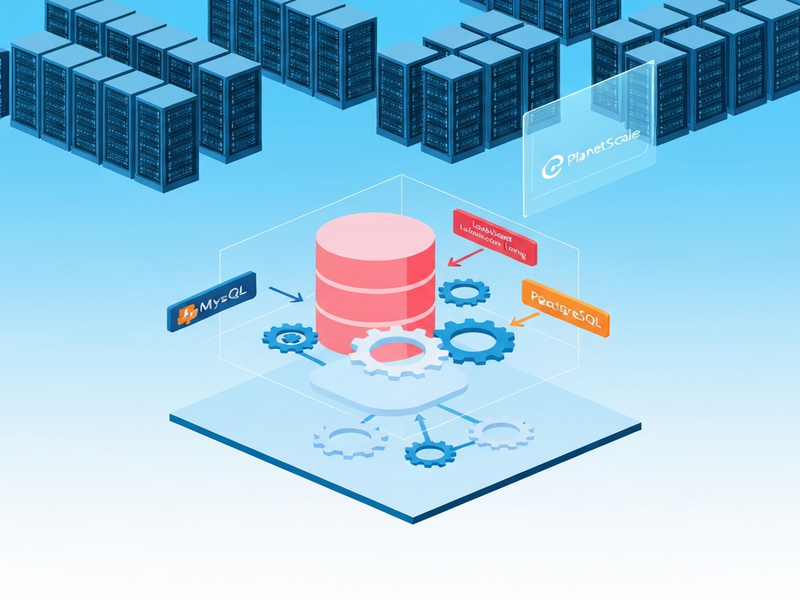
Every second, thousands of micro‑services, SaaS platforms, and mobile apps fire off SQL statements that must either all succeed or all fail. Without reliable database transactions, a single power outage or a race condition could corrupt critical business data, leading to revenue loss, compliance breaches, and damaged reputation. This article unpacks the fundamentals of transactions, dives deep into isolation levels, compares MySQL and PostgreSQL implementations, and explains why PlanetScale’s cloud‑native transaction model is reshaping the landscape for scalable databases in the cloud.
Database Transaction Fundamentals
At its core, a transaction groups a series of SQL statements between BEGIN; and COMMIT;. If any statement fails, a ROLLBACK; restores the database to its pre‑transaction state. This ACID guarantee—Atomicity, Consistency, Isolation, Durability—ensures that:
- Atomicity: All statements succeed together or none at all.
- Consistency: Business rules (e.g., account balances) remain valid.
- Isolation: Concurrent transactions do not interfere with each other.
- Durability: Once committed, data survives crashes.
Developers often use transactions to implement critical workflows such as order processing, financial transfers, and inventory updates. In a UBOS platform overview, the same principles apply when orchestrating multi‑step AI pipelines—each step can be wrapped in a transaction to guarantee end‑to‑end correctness.
Isolation Levels & Concurrency Control
Isolation levels define how visible the intermediate state of a transaction is to others. The SQL standard defines four levels, each balancing data safety against performance:
| Isolation Level | Phenomena Prevented | Typical Use‑Case |
|---|---|---|
| Serializable | Dirty reads, non‑repeatable reads, phantom reads | Financial ledgers, strict compliance |
| Repeatable Read | Dirty reads, non‑repeatable reads | Reporting dashboards |
| Read Committed | Dirty reads | High‑throughput web services |
| Read Uncommitted | None (allows all anomalies) | Analytics on stale data |
Both MySQL and PostgreSQL implement these levels, but they differ in the underlying mechanisms that enforce them.
MySQL: Row‑Level Locking & Undo Log
MySQL relies on row‑level locks and an undo log. When a transaction updates a row, MySQL writes the new value to the page and records the previous value in the undo log. If another transaction needs the old version (e.g., under REPEATABLE READ), it reconstructs it from the log. This approach minimizes storage overhead because only one physical copy of the row exists at any time.
PostgreSQL: Multi‑Version Concurrency Control (MVCC)
PostgreSQL uses MVCC. Every change creates a new row version with metadata fields xmin (creator transaction ID) and xmax (deleter transaction ID). Readers see the version whose xmin is less than or equal to their snapshot and whose xmax is either zero or greater than the snapshot. This design enables lock‑free reads, at the cost of periodic VACUUM operations to reclaim dead tuples.
For developers building AI‑enhanced workflows on Workflow automation studio, understanding these mechanisms helps you decide whether to favor MySQL’s simpler undo‑log model or PostgreSQL’s MVCC when designing high‑throughput pipelines.
MySQL vs. PostgreSQL: A Pragmatic Comparison
Below is a concise, MECE‑styled comparison that highlights the trade‑offs relevant to cloud database users.
- Performance under heavy write contention: MySQL’s row locks can cause deadlocks, requiring retry logic. PostgreSQL’s optimistic MVCC avoids deadlocks but may abort transactions under SERIALIZABLE isolation.
- Storage efficiency: MySQL stores a single copy plus undo entries; PostgreSQL stores multiple row versions until vacuumed.
- Ease of scaling horizontally: Both support sharding, but PlanetScale’s Vitess‑based architecture (built on MySQL) offers seamless horizontal scaling with minimal application changes.
- Tooling & ecosystem: PostgreSQL shines with extensions (e.g., PostGIS, pg_partman). MySQL benefits from a larger pool of managed services.
When you need a cloud‑native, auto‑scaling solution, PlanetScale’s MySQL‑compatible engine often provides the best of both worlds—MySQL’s familiar syntax with Vitess‑driven distribution.
PlanetScale’s Cloud‑Native Transaction Model
PlanetScale extends the classic MySQL transaction model with three cloud‑first innovations:
- Branch‑Based Development: Similar to Git, you can create database branches, run migrations, and test transactions in isolation before merging to production.
- Non‑Blocking Schema Changes: Online schema migrations avoid downtime, letting you add columns or indexes without locking tables.
- Automatic Horizontal Scaling: Vitess shards data transparently, preserving ACID guarantees across shards via distributed two‑phase commit.
These capabilities translate into concrete benefits for developers and decision‑makers:
- Faster release cycles: Test new transaction logic on a branch without affecting live traffic.
- Zero‑downtime migrations: Keep SLA commitments while evolving the schema.
- Predictable cost model: Scale out only when needed, aligning spend with usage.
For startups looking for a frictionless path to production, the UBOS for startups program offers similar branch‑based workflows for AI‑driven apps, illustrating how the same principles apply across platforms.
Real‑World Use Cases: Transaction‑Heavy Templates on UBOS
UBOS’s marketplace showcases dozens of AI‑powered templates that rely on robust transaction handling. A few notable examples:
- AI SEO Analyzer – stores crawl results and ranking histories in a transactional table to guarantee consistency across concurrent analysis jobs.
- AI Article Copywriter – uses transactions to lock draft versions while multiple editors collaborate.
- Web Scraping with Generative AI – batches scraped records in a single transaction to avoid partial imports.
- GPT‑Powered Telegram Bot – ensures message state updates are atomic, preventing duplicate responses.
These templates demonstrate that whether you’re building a content generator or a real‑time chatbot, reliable transactions are the invisible safety net.
Why PlanetScale Is a Smart Choice for Postgres Users
PlanetScale now offers a seamless migration path for PostgreSQL workloads. The key advantages include:
- Unified API surface: Continue using
psqlcommands while the backend runs on Vitess‑powered MySQL, preserving your existing client libraries. - Zero‑downtime cut‑over: Use branch‑based migration to sync data, then promote the branch with a single click.
- Cost‑effective scaling: Plans start at UBOS pricing plans comparable to PlanetScale’s $5‑per‑month tier, making it viable for SMBs and enterprises alike.
Enterprises that need a hybrid approach can also explore the Enterprise AI platform by UBOS, which integrates with both MySQL‑compatible and PostgreSQL‑compatible services, offering a single pane of glass for data governance.
Take the Next Step
If you’re ready to future‑proof your data layer, consider trying PlanetScale’s cloud‑native transaction engine or leveraging UBOS’s low‑code Web app editor on UBOS to prototype transaction‑aware AI services in minutes.
Explore the full UBOS portfolio examples for inspiration, or join the UBOS partner program to co‑build solutions that leverage PlanetScale‑style scaling.
For a deeper technical dive, read the original PlanetScale announcement here. Stay ahead of the curve, and let robust transactions be the foundation of your next high‑performance application.
Andrii Bidochko
CTO UBOS
Andrii Bidochko is an AI entrepreneur and researcher focused on AI agents, reinforcement learning, and autonomous systems. He writes about the technologies shaping the future of machine intelligence, from frontier models and agent architectures to real-world AI applications.