

- Updated: February 3, 2026
- 6 min read
Tesla Model S Era Ends: A Look Back at the Iconic EV
Tesla has officially announced the discontinuation of the Model S after a 14‑year run, marking the end of an era for the luxury electric sedan that reshaped the automotive industry.
Tesla Model S Discontinuation: What It Means for EV Enthusiasts and the Industry
When Tesla unveiled the Model S in 2012, it didn’t just launch a new car—it sparked a cultural shift. Fourteen years later, the decision to retire the flagship sedan has sent ripples through the electric‑vehicle (EV) community, investors, and competitors alike. This article breaks down the history, the reasons behind the shutdown, and the broader implications for the EV market, while weaving in insights from the original Verge report and relevant resources from the UBOS homepage.
A Brief History of the Tesla Model S and Its Cultural Footprint
The Model S debuted at the Fremont factory in June 2012, coinciding with a wave of tech milestones—from the launch of the iPhone 5 to the rise of social media platforms. Priced at $49,900 (including the $7,500 federal tax credit), it quickly became the poster child for a clean‑energy future.
- First mass‑produced EV with a range exceeding 300 miles per charge.
- Introduced over‑the‑air software updates, turning the car into a “software‑defined vehicle.”
- Earned MotorTrend’s Car of the Year in 2012, cementing its status as an industry disruptor.
- Inspired a generation of designers; Franz von Holzhausen’s minimalist interior set a new benchmark.
Beyond specs, the Model S infiltrated pop culture—appearing in rap lyrics, movies, and tech conferences. Its sleek silhouette and instant torque made it a status symbol for early adopters and a proof point for the viability of premium EVs.
Why Tesla Is Pulling the Plug on the Model S
Elon Musk announced the discontinuation during a Verge interview (Feb 3, 2026). The key reasons, as outlined by Tesla executives and industry analysts, include:
- Strategic Shift Toward Robotics & AI: Musk emphasized that Tesla is evolving into a “robotics and AI company,” reallocating resources from legacy sedan production to autonomous hardware and the Optimus robot line.
- Intensifying Competition: Premium EV rivals such as Lucid, Porsche, and Rivian now match or exceed the Model S’s performance, eroding its market share.
- Production Efficiency: Consolidating manufacturing around the Model 3/Y platform reduces complexity and cost, allowing faster iteration on newer models.
- Regulatory & Incentive Landscape: The phase‑out of the federal EV tax credit in the U.S. has dampened demand for high‑priced luxury EVs.
In Musk’s own words, “The future of Tesla is not about selling more sedans; it’s about building a full‑stack AI‑driven transportation ecosystem.”
What the Discontinuation Means for the EV Market and Consumers
The ripple effects are already visible across the industry:
For Existing Owners
Current Model S owners will continue receiving software updates for the foreseeable future, but new feature rollouts may prioritize newer platforms. Resale values are expected to stabilize as the model becomes a collector’s item.
For Competitors
Brands like Lucid and Rivian can now target former Model S buyers with comparable performance and luxury, potentially accelerating their market penetration.
For Tesla’s Roadmap
The freed‑up production capacity will accelerate the rollout of the Enterprise AI platform by UBOS, which many analysts see as a blueprint for Tesla’s upcoming AI‑driven vehicles and robotics.
For the Broader EV Ecosystem
Policy makers may reassess incentives, focusing more on affordable mass‑market EVs rather than high‑end sedans, reshaping the subsidy landscape for the next decade.
Key Quotes from the Verge Report and Expert Analysis
“The Model S made electric cars desirable; now Tesla is betting on robots to keep that desirability alive.” – The Verge
Automotive analyst Paul Snyder added, “Tesla’s decision reflects a broader industry pivot—software and AI are becoming the primary differentiators, not just battery range.”
From a technology perspective, the shift aligns with the rise of AI‑powered platforms like the AI marketing agents that automate customer engagement, a capability Tesla plans to embed in its future autonomous fleet.
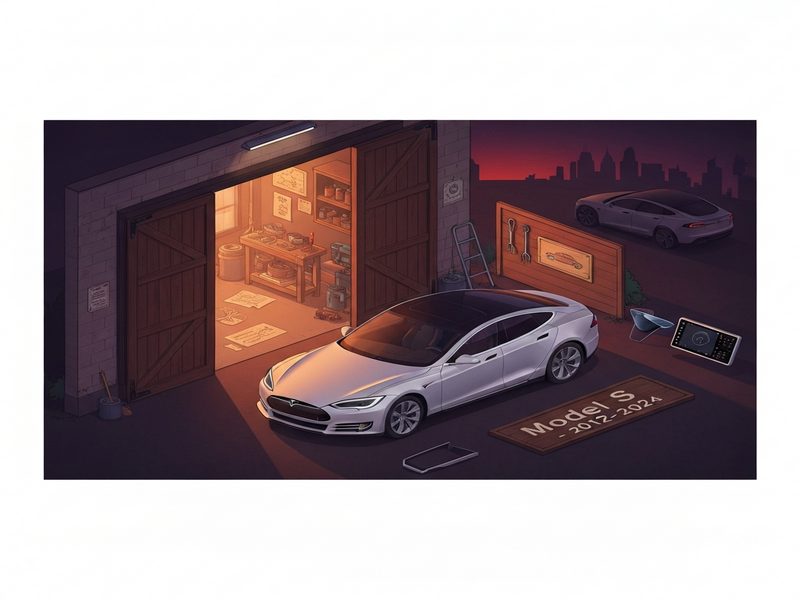
Figure 1: The iconic Tesla Model S silhouette reimagined with AI-driven design elements.
How AI Platforms Like UBOS Are Shaping the Future of Mobility
While Tesla pivots, companies across the tech spectrum are building the infrastructure that will power the next generation of autonomous vehicles. UBOS offers a suite of tools that can accelerate this transition:
- UBOS platform overview – a low‑code environment for rapid AI model deployment.
- Web app editor on UBOS – lets developers create custom dashboards for fleet management.
- Workflow automation studio – automates data pipelines from vehicle telemetry to predictive maintenance.
- UBOS for startups – empowers new mobility ventures with scalable AI services.
- UBOS solutions for SMBs – affordable AI stacks for regional EV dealers.
- UBOS pricing plans – transparent, usage‑based pricing that fits any budget.
These capabilities are especially relevant for companies looking to replace legacy vehicle platforms with AI‑enhanced, software‑first solutions.
UBOS Template Marketplace: Ready‑Made AI Apps for the EV Era
Developers can accelerate their projects using pre‑built templates that align with the new AI‑centric automotive landscape:
- AI SEO Analyzer – optimize your EV‑related content for search engines.
- AI Video Generator – create promotional videos for autonomous vehicle launches.
- Talk with Claude AI app – integrate advanced conversational AI into in‑car assistants.
- AI YouTube Comment Analysis tool – gauge consumer sentiment on new EV releases.
- AI Article Copywriter – generate blog posts about EV trends at scale.
These templates reduce time‑to‑market, allowing innovators to focus on differentiation rather than infrastructure.
Conclusion: The End of an Icon, the Dawn of AI‑Driven Mobility
The Tesla Model S will be remembered as the vehicle that proved luxury EVs could be both desirable and technologically superior. Its discontinuation signals a strategic pivot for Tesla toward robotics, AI, and a new generation of autonomous platforms. For the broader EV ecosystem, this move accelerates competition, pushes manufacturers to double down on software, and opens opportunities for AI‑focused companies like UBOS to provide the underlying intelligence that will power tomorrow’s vehicles.
Whether you’re an EV enthusiast, a startup founder, or a seasoned automotive analyst, staying informed about these shifts is essential. Leverage the resources above to keep your finger on the pulse of the evolving electric‑mobility landscape.