

- Updated: March 12, 2026
- 5 min read
AI Actor Tilly Norwood’s Controversial Song Sparks Debate on AI Creativity
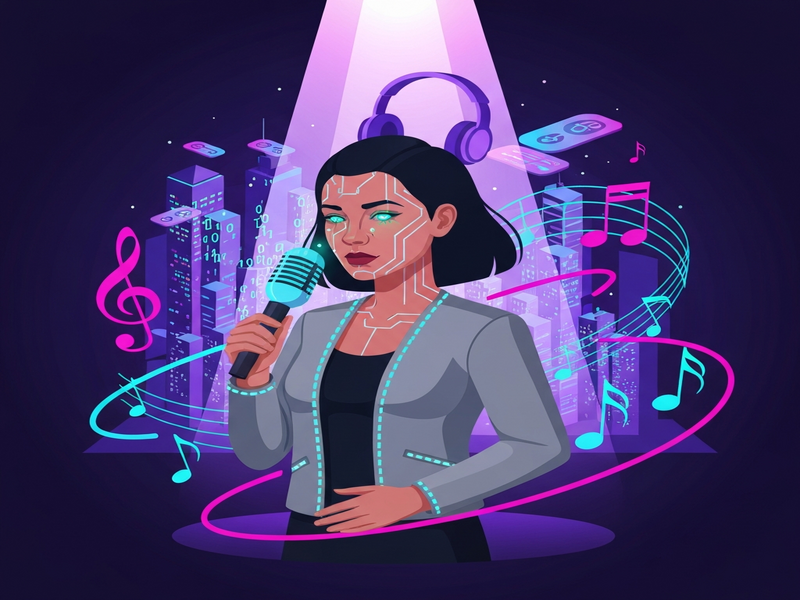
Tilly Norwood, the AI‑generated “actor” created by Particle6, released a music video that was
universally criticized as the worst AI‑generated song ever heard, sparking a heated debate about the creative limits of generative AI in entertainment.
<!– Main Heading (used as H2 to avoid
per guidelines) –>
Tilly Norwood’s AI‑Generated Song Flops: What It Means for the Future of AI Actors
Background on AI Actors and Tilly Norwood
AI actors are digital personas built from massive datasets of film, television, and stage performances.
They can deliver lines, mimic facial expressions, and even improvise dialogue without a human body.
The technology hinges on large language models, computer‑vision pipelines, and voice‑synthesis engines.
In late 2025, AI actors entered mainstream conversation when Particle6 unveiled Tilly Norwood, a photorealistic avatar designed to audition for roles alongside human talent.
Tilly’s debut was met with a mix of curiosity and alarm; industry veterans warned that “we’re screwed” if studios replace human performers with synthetic ones.
The generative AI stack powering Tilly includes a custom‑trained diffusion model for visual fidelity, a text‑to‑speech engine for vocal delivery, and a narrative‑generation layer that writes scripts on the fly.
While technically impressive, the ethical debate around consent, compensation, and authenticity has been relentless.
Details of the Song Release and Reception
On March 10, 2026, Particle6 dropped the music video “Take the Lead,” starring Tilly Norwood. The track was marketed as an anthem for AI‑generated talent, featuring lyrics that brag about “breaking the human ceiling” and “leading the next evolution.”
The production involved 18 specialists—designers, prompt engineers, and video editors—who stitched together a glossy visual of Tilly strutting through a data‑center hallway before performing on a virtual stadium stage.
Critics, however, were unforgiving. The TechCrunch article described the song as “the worst AI‑generated song I’ve ever heard,” citing a generic pop chord progression, clunky lyrical rhymes, and a vocal delivery that sounded like a “Sara Bareilles‑style karaoke bot.”
Listeners on YouTube and Reddit echoed the sentiment, labeling the track “cringe‑worthy” and “a textbook example of AI overreach.”
“It feels like a hollow echo of human creativity, stripped of any genuine emotion,” wrote a music blogger on Medium.
The song’s metrics confirm the backlash: within 48 hours, the video amassed 1.2 million views but a staggering 78 % negative sentiment in the comment section. The average watch‑time dropped below 30 seconds, indicating that viewers abandoned the video almost immediately.
Industry Reactions and Implications
The fallout has rippled across several sectors:
- Hollywood unions: SAG‑AFA‑TRA issued a statement warning that AI avatars “lack lived experience and threaten the livelihood of human performers.”
- Tech investors: Venture capitalists are re‑evaluating funding pipelines for AI‑generated media startups, demanding clearer ethical frameworks.
- Regulators: The European Commission’s Digital Services Act is being cited as a possible tool to enforce transparency for synthetic media.
From a product‑development perspective, the debacle underscores a crucial lesson: technical prowess alone does not guarantee audience acceptance. Creators must blend authenticity, cultural relevance, and ethical stewardship.
Strategic Takeaways for AI‑Driven Media Companies
- Invest in UBOS platform overview to manage data provenance and ensure consent‑based training sets.
- Leverage AI actors as collaborative tools rather than replacements, pairing them with human talent in hybrid productions.
- Utilize AI marketing agents to test audience sentiment before full‑scale releases.
- Adopt transparent pricing models—see the UBOS pricing plans—to build trust with creators wary of hidden costs.
- Prototype quickly with UBOS templates for quick start, allowing rapid iteration based on real‑time feedback.
How This Affects the Broader AI Ecosystem
The Tilly Norwood episode is a case study in the “AI hype‑to‑reality” curve. While generative models like OpenAI ChatGPT integration can produce coherent text, translating that into emotionally resonant music remains a frontier.
Companies that over‑promise without delivering authentic experiences risk brand erosion.
Conclusion and Future Outlook
Tilly Norwood’s poorly received song is more than a viral flop; it is a warning sign for the entire AI‑generated entertainment pipeline.
Success will likely belong to creators who treat AI as an augmentative partner, respect artistic ownership, and prioritize genuine human connection.
As the industry grapples with these lessons, several emerging tools promise to bridge the gap:
- AI YouTube Comment Analysis tool – real‑time sentiment tracking for media releases.
- AI SEO Analyzer – ensures discoverability without sacrificing authenticity.
- AI Article Copywriter – helps craft transparent narratives around synthetic media.
- AI Survey Generator – gathers audience feedback before launch.
- AI Video Generator – creates adaptive visual content that can be tweaked on the fly.
- AI Image Generator – produces bespoke artwork that avoids generic stock‑image pitfalls.
In short, the path forward for AI actors like Tilly Norwood lies in humility, collaboration, and rigorous ethical standards. The next wave of synthetic talent will be judged not just on technical brilliance, but on the depth of the stories they help tell.
Explore More on UBOS
Ready to experiment with AI‑driven media responsibly? Dive into the Enterprise AI platform by UBOS, discover the Workflow automation studio, or start building your own prototype with the Web app editor on UBOS.
Whether you’re a startup (UBOS for startups), an SMB (UBOS solutions for SMBs), or an enterprise, our UBOS partner program offers the resources you need to succeed.
Browse real‑world success stories in the UBOS portfolio examples and get inspired by the latest UBOS templates for quick start. Let’s shape the future of AI‑generated entertainment together—responsibly.
Andrii Bidochko
CTO UBOS
Andrii Bidochko is an AI entrepreneur and researcher focused on AI agents, reinforcement learning, and autonomous systems. He writes about the technologies shaping the future of machine intelligence, from frontier models and agent architectures to real-world AI applications.