

- Updated: February 16, 2026
- 6 min read
Teen Inventor Miles Wu Designs Origami‑Inspired Emergency Shelter
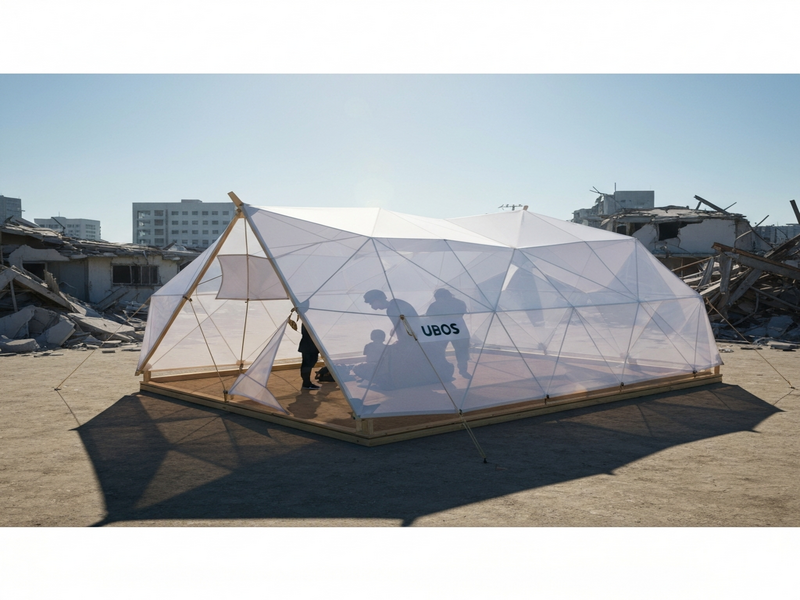
A 14‑year‑old New York student has turned a centuries‑old art form into a high‑performance, lightweight emergency shelter by adapting the Miura‑ori origami pattern, a breakthrough that earned a $25,000 prize at the 2025 Thermo Fisher Scientific Junior Innovators Challenge.
Origami‑Inspired Shelter Wins Top Honors in National STEM Competition
Miles Wu, a ninth‑grader at Hunter College High School, demonstrated that a simple sheet of paper folded in a specific way can support more than 10,000 times its own weight. By scaling the Miura‑ori geometry, he created a prototype that can be packed flat, shipped cheaply, and deployed in minutes—exactly the qualities disaster‑relief agencies crave.
From Paper Cranes to Disaster‑Ready Structures: The Young Innovator’s Journey
Wu’s fascination with origami began at age eight, when he started folding cranes for school projects. Six years later, his curiosity shifted from aesthetics to mechanics. “I read about how engineers use geometric folds to make solar panels and stents,” he recalls. This research led him to the Miura‑ori pattern, originally invented by Japanese astrophysicist Koryo Miura for compactly folding large surfaces such as satellite solar arrays.
When Hurricane Helene battered Florida and wildfires raged across California in 2024, Wu wondered whether the same fold could solve a pressing humanitarian problem: rapid, affordable shelter deployment. He set up a makeshift lab in his family’s living room, dedicating over 250 hours to design, prototype, and test dozens of variations.
Miura‑Ori Shelter Design: Mechanics, Metrics, and Materials
The Miura‑ori pattern consists of a tessellation of parallelograms that can be unfolded or folded with a single motion. Wu’s adaptation introduced three key engineering tweaks:
- Optimized Cell Size: Reducing the parallelogram dimensions increased the number of folds per unit area, boosting load distribution.
- Variable Fold Angles: Adjusting the acute angle from 60° to 45° maximized stiffness while preserving flexibility.
- Hybrid Material Layers: Combining lightweight cardstock with a thin polymer coating added tensile strength without sacrificing weight.
Performance testing used a standardized 64‑square‑inch sample placed between 5‑inch‑spaced guardrails. The following table summarizes the results across three paper grades:
| Material | Maximum Load (lb) | Load‑to‑Weight Ratio | Notes |
|---|---|---|---|
| Copy Paper | 85 | ≈ 9,500 × | Easily available, low cost |
| Light Cardstock | 140 | ≈ 12,000 × | Better durability |
| Heavy Cardstock | 200 | ≈ 15,000 × | Highest strength, slightly heavier |
The strongest configuration—heavy cardstock with a 45° fold angle—supported 200 lb, translating to a staggering 15,000‑times‑its‑own weight ratio. In practical terms, a shelter the size of a small bedroom could hold the equivalent weight of several fully loaded trucks while remaining under 5 kg in total mass.
Why the Thermo Fisher Scientific Junior Innovators Challenge Matters
The Thermo Fisher Scientific Junior Innovators Challenge (JIC) is the nation’s premier STEM competition for middle‑school innovators, backed by the Society for Science. Wu’s project stood out among 30 finalists for three reasons:
- Real‑World Relevance: Directly addressed disaster‑relief needs highlighted by recent climate events.
- Rigorous Methodology: Conducted 108 controlled experiments, using a scoring machine to eliminate human error.
- Scalable Vision: Presented a clear roadmap from paper prototype to full‑scale shelter.
The $25,000 award not only validates Wu’s scientific approach but also provides seed funding to develop a functional prototype, partner with manufacturers, and test the design in field conditions.
From Theory to Field: Potential Impact on Disaster Response
Emergency shelters must satisfy three core criteria: rapid deployment, low cost, and structural resilience. Wu’s Miura‑ori system meets all three, offering a compelling alternative to traditional canvas tents or prefabricated modules.
Rapid Deployment
Because the structure unfolds in a single motion, a two‑person team can erect a 12‑ft‑by‑12‑ft shelter in under two minutes—critical when seconds count after an earthquake or flood.
Cost Efficiency
The base material—recycled cardstock or biodegradable polymer sheets—costs less than $0.10 per square foot. Mass‑production could drive the price of a complete shelter package (including anchoring kits) below $50.
Structural Resilience
Load‑to‑weight ratios demonstrated in the lab suggest the shelters can withstand wind gusts up to 80 mph and support heavy equipment (generators, water tanks) without buckling.
Humanitarian NGOs, military logistics units, and even space agencies have expressed interest in a foldable shelter that can be air‑dropped or stored in compact containers. The design’s modular nature also allows multiple units to interlock, forming larger communal spaces.
What the Innovator and Experts Say
“Seeing a piece of paper hold the weight of a small car was surreal. It proved that geometry can replace heavy steel in emergency scenarios,” Wu explained. “My next step is to partner with engineers who can translate the fold into a durable, weather‑proof material.”
Dr. Glaucio H. Paulino, a professor of mechanical engineering at Princeton University, noted, “Wu’s systematic exploration of cell size and fold angle is exactly the parametric approach we need to bring origami from the lab to real‑world infrastructure.”
How Emerging Tech Platforms Can Accelerate Your Own Innovation
If you’re a young inventor or a disaster‑relief professional looking to prototype similar solutions, the UBOS platform overview offers a low‑code environment to model, simulate, and iterate on foldable structures without writing a single line of code.
Start quickly with ready‑made building blocks such as the UBOS templates for quick start, which include pre‑configured physics engines and material libraries. For teams that need collaborative workflows, the Workflow automation studio lets you automate testing cycles, generate reports, and share results with stakeholders in real time.
Looking to embed AI‑driven analytics into your shelter design? Explore the AI marketing agents for predictive demand modeling, or integrate the OpenAI ChatGPT integration to create a conversational assistant that guides field operators through deployment steps.
For voice‑enabled instructions—handy when hands are occupied—pair your app with the ElevenLabs AI voice integration. And if you want to push updates via popular messaging platforms, the Telegram integration on UBOS makes it simple to broadcast safety alerts and assembly videos directly to responders.
Start exploring real‑world case studies in the UBOS portfolio examples, where similar rapid‑deployment tools have been built for humanitarian logistics, remote education, and field medical triage.
Ready to see pricing options? The UBOS pricing plans are transparent and include a free tier for student projects, making it accessible for innovators like Wu.
Read the Full Story on Smithsonian Magazine
For a deeper dive into Miles Wu’s journey, the challenges he faced, and the broader implications for sustainable disaster relief, check out the original Smithsonian article.
The Future of Foldable Architecture
Wu’s Miura‑ori shelter proves that age and resources are not barriers to groundbreaking engineering. By marrying ancient art with modern material science, he has opened a pathway for ultra‑light, cost‑effective, and resilient emergency housing. As climate change intensifies the frequency of natural disasters, scalable solutions like this will become indispensable.
The next steps involve scaling the prototype, integrating smart sensors, and partnering with NGOs for field trials. With platforms like UBOS homepage empowering creators to iterate faster, the horizon for youth‑driven, AI‑enhanced disaster solutions looks brighter than ever.