

- Updated: February 24, 2026
- 5 min read
SNKV Key-Value Store: High‑Performance Open‑Source Solution
SNKV: High‑Performance Open‑Source Key‑Value Store Built on SQLite B‑Tree Engine
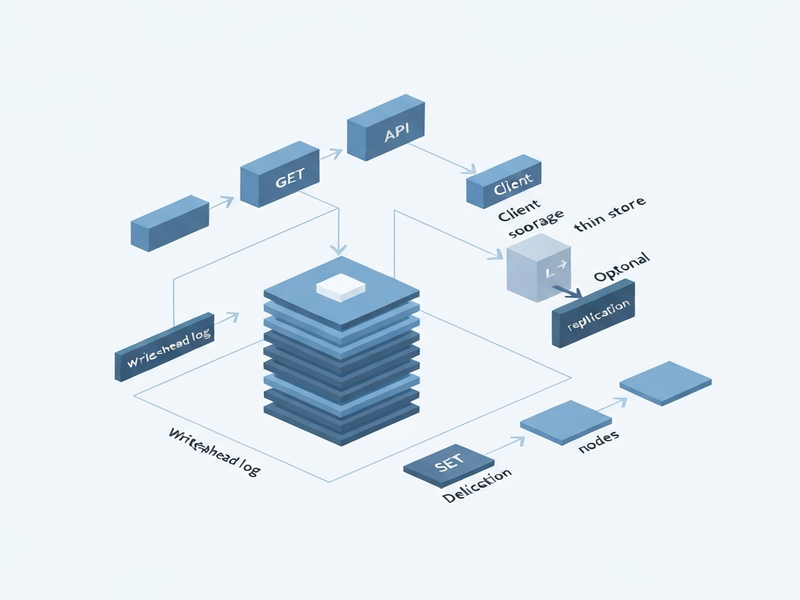
SNKV is a lightweight, ACID‑compliant embedded key‑value store that leverages SQLite’s battle‑tested B‑Tree storage engine to deliver high‑performance, crash‑safe data operations without the overhead of SQL.
Project Overview
The SNKV GitHub repository introduces a novel approach to key‑value storage: it bypasses SQLite’s SQL parser, query planner, and virtual machine, communicating directly with the underlying B‑Tree layer. This design yields a KV‑first API that inherits SQLite’s reliability while shedding unnecessary processing steps, making it ideal for embedded, low‑latency, and read‑heavy workloads.
Since its launch, SNKV has attracted attention from developers seeking a single‑header C library with zero external dependencies, as well as Python enthusiasts who benefit from ready‑made bindings on PyPI. Its open‑source Apache‑2.0 license encourages community contributions and easy integration into commercial products.
Key Features & Performance Highlights
- ACID Transactions: Full commit/rollback safety with WAL (Write‑Ahead Logging) support.
- Single‑Header Integration: Drop
snkv.hinto any C/C++ project – no build system changes required. - Python Bindings: Install via
pip install snkvfor idiomatic dict‑style access. - Column Families: Logical namespaces within a single database file.
- Thread‑Safe API: Built‑in synchronization for concurrent readers.
- SSD‑Friendly WAL Writes: Sequential appends minimise random I/O.
- Backup Compatibility: Works with SQLite’s Online Backup API, LiteFS, and any WAL‑aware tool.
Benchmark Summary (1 M records, Linux, WAL mode)
| Operation | SQLite | SNKV | Speed‑up |
|---|---|---|---|
| Sequential writes | 140 K ops/s | 146 K ops/s | +5 % |
| Random reads | 87 K ops/s | 139 K ops/s | +60 % |
| Sequential scan | 1.61 M ops/s | 3.16 M ops/s | ×2 |
| Random updates | 17 K ops/s | 24 K ops/s | +40 % |
| Exists checks | 87 K ops/s | 149 K ops/s | +70 % |
The performance edge stems from two core optimisations: (1) eliminating the SQL parsing/plan/execution layers, and (2) caching a per‑column‑family read cursor, which removes the overhead of repeatedly opening cursors on hot read paths.
Use‑Cases & Target Audience
SNKV’s design makes it a natural fit for several real‑world scenarios:
- Edge & IoT devices: Minimal binary size and no external runtime dependencies.
- Micro‑services caching layer: Fast reads with predictable latency, ideal for API gateways.
- Embedded analytics: Column families enable logical separation of time‑series data.
- Developer tooling: The single‑header approach simplifies distribution via package managers.
- AI‑augmented pipelines: Pair with Telegram integration on UBOS for real‑time alerts, or combine with OpenAI ChatGPT integration to expose KV data through conversational bots.
Quick Start & Installation
Step 1 – Clone & Build (C library)
git clone https://github.com/hash-anu/snkv.git
cd snkv
make          # builds libsnkv.a
make snkv.h   # generates the single‑header file
Step 2 – Use the Header in Your Project
#define SNKV_IMPLEMENTATION
#include "snkv.h"

int main(void) {
    KVStore *db;
    kvstore_open("mydb.db", &db, KVSTORE_JOURNAL_WAL);
    kvstore_put(db, "hello", 5, "world", 5);
    void *val; int len;
    kvstore_get(db, "hello", 5, &val, &len);
    printf("%.*s\n", len, (char*)val);
    snkv_free(val);
    kvstore_close(db);
    return 0;
}
Step 3 – Python Bindings (optional)
pip install snkv
from snkv import KVStore

with KVStore("mydb.db") as db:
    db["greeting"] = "hello"
    print(db["greeting"].decode())  # → hello
For production deployments, customise the KVStoreConfig structure to tune journal mode, sync level, cache size, and busy‑timeout. Detailed configuration examples are available in the repository’s README.md.
SNKV vs. Popular Alternatives
While RocksDB, LMDB, and plain SQLite remain dominant, SNKV occupies a niche where simplicity, crash safety, and read‑heavy performance intersect.
| Criterion | SNKV | RocksDB (LSM‑tree) | LMDB (memory‑mapped) |
|---|---|---|---|
| Write Amplification | Low (WAL only) | Higher (compaction) | Very low (direct mmap) |
| Read‑Heavy Speed | +60 % vs SQLite | Comparable | Slightly faster |
| Embedded Footprint | Single header, < 50 KB | ~2 MB library | ~1 MB library |
| Backup Compatibility | SQLite tools (WAL, page‑level) | Custom tools required | Native mmap backup |
Choose SNKV when you need a **single‑header, zero‑dependency KV store** that can be backed up with existing SQLite utilities. Opt for RocksDB if write‑throughput is the primary metric, or LMDB when you can afford memory‑mapped files and need the absolute fastest reads.
Get Started with SNKV Today
Ready to experiment? Clone the repository, run the built‑in crash‑safety test (make test-crash-10gb), and integrate the header into your next C or Python project. For production support, consider pairing SNKV with UBOS’s AI‑enhanced ecosystem:
- Enterprise AI platform by UBOS – adds monitoring, scaling, and AI‑driven insights.
- Workflow automation studio – orchestrates data pipelines that read/write SNKV.
- Web app editor on UBOS – quickly prototype a UI that queries SNKV.
- AI marketing agents – use KV‑backed user profiles for personalised campaigns.
Explore More UBOS Resources
While SNKV handles the storage layer, UBOS offers a full stack of tools to accelerate your AI‑first products:
- UBOS homepage – overview of the platform.
- About UBOS – our mission and team.
- UBOS pricing plans – transparent subscription tiers.
- UBOS partner program – co‑sell and integrate.
- UBOS portfolio examples – real‑world deployments.
- UBOS templates for quick start – jump‑start your next AI app.
- UBOS for startups – fast‑track MVPs.
- UBOS solutions for SMBs – scalable, cost‑effective.
- Chroma DB integration – vector search on top of KV data.
- ElevenLabs AI voice integration – turn KV‑stored prompts into speech.
- ChatGPT and Telegram integration – conversational front‑ends for KV queries.
Conclusion
SNKV demonstrates that a focused, minimalist design can unlock substantial performance gains without sacrificing the robustness of a battle‑tested storage engine. Its single‑header C API, Python bindings, and seamless compatibility with SQLite backup tools make it a compelling choice for developers building high‑throughput, embedded, or AI‑augmented applications.
By coupling SNKV with the broader UBOS ecosystem—especially the UBOS platform overview and its AI‑centric services—teams can accelerate time‑to‑value while maintaining full control over data locality and reliability.
Dive into the code, run the benchmarks, and see how SNKV can become the backbone of your next high‑performance project.
Andrii Bidochko
CTO UBOS
Andrii Bidochko is an AI entrepreneur and researcher focused on AI agents, reinforcement learning, and autonomous systems. He writes about the technologies shaping the future of machine intelligence, from frontier models and agent architectures to real-world AI applications.