

- Updated: February 13, 2026
- 6 min read
Secure AI Agent Built on Blink‑Powered Mac Mini: A Safer Alternative to OpenClaw
A secure AI agent can be built on a Blink‑powered Mac Mini using Tailscale for private networking, delivering a privacy‑focused, cost‑effective personal assistant that runs entirely on your own hardware.
Secure AI Agent on Blink Mac Mini: The Ultimate Privacy‑First, Low‑Cost Solution
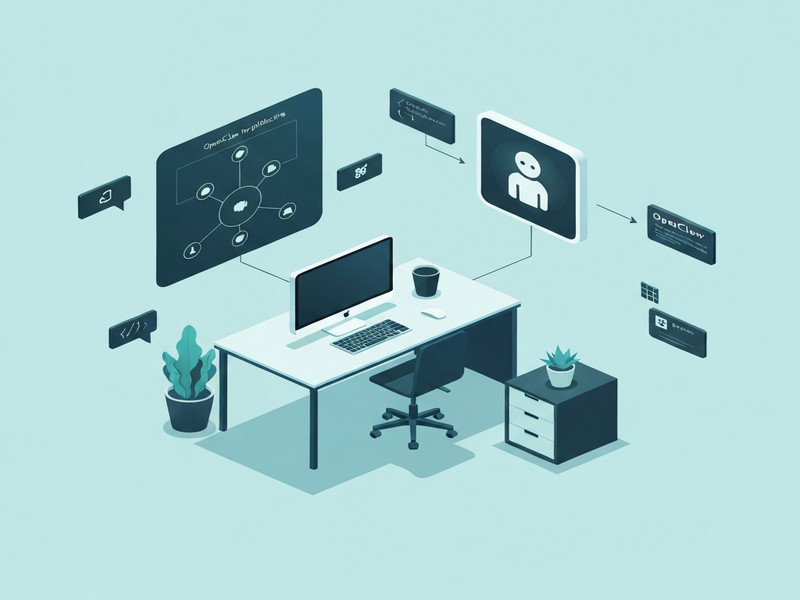
Why the original author ditched OpenClaw
OpenClaw promised a plug‑and‑play personal AI assistant, but its default configuration exposed the service to the public internet. Security researchers quickly uncovered thousands of installations that were unintentionally reachable, allowing anyone with the right network scan to hijack the agent, steal API keys, or execute arbitrary commands.
Those incidents forced developers to retrofit firewalls, reverse proxies, and VPN tunnels—patches that never fully mitigated the underlying design flaw: the main service listened on 0.0.0.0 by default. For privacy‑conscious professionals, that risk is unacceptable.
To avoid the endless cycle of “build‑then‑hardening,” the author turned to a stack where security is baked in from day one. The result is a ChatGPT and Telegram integration that runs behind a zero‑trust network, eliminating the need for ad‑hoc firewalls.
The new stack: Blink, Tailscale, and a Mac Mini
Blink – The Agent Runtime
Blink is an open‑source platform that treats each AI assistant as an isolated container. It provides a built‑in web UI, state management, and a typed integration registry. Because every agent lives in its own sandbox, a compromise in one container never reaches another.
Explore the UBOS platform overview to see how Blink’s architecture mirrors enterprise‑grade isolation while staying lightweight enough for a single‑board computer.
Tailscale – Private Networking
Tailscale builds a WireGuard‑based mesh that makes the Mac Mini invisible to the public internet. Devices join the same network using cryptographic identities, so only authorized peers can reach the Blink server.
This eliminates the need for manual firewall rules and ensures that every request is end‑to‑end encrypted.
Mac Mini – Quiet, Efficient Compute
The Apple M4‑based Mac Mini consumes ~10 W at idle, fits on a shelf, and delivers enough CPU/GPU headroom to run multiple agents, a local PostgreSQL instance, and the Tailscale daemon simultaneously.
Its small footprint and low power draw make it ideal for a UBOS solution for SMBs that needs 24/7 availability without a data‑center.
Security architecture and hardening measures
The combination of Blink’s container model and Tailscale’s zero‑trust mesh creates a defense‑in‑depth posture that satisfies even the most stringent AI security requirements.
- Network isolation: The Mac Mini never opens a public port. All traffic is tunneled through Tailscale, which authenticates each device with cryptographic keys.
- Container sandboxing: Each agent runs in its own Docker‑style container, preventing credential leakage between personal and business assistants.
- Encrypted credential store: Blink stores API keys in an encrypted vault that is only accessible to the owning container.
- Zero‑trust access control: Role‑based policies in Tailscale restrict which users can invoke which agents.
- Audit‑ready logging: All agent actions are logged to a local PostgreSQL database, enabling forensic analysis without external dependencies.
For enterprises that need additional governance, the Enterprise AI platform by UBOS adds centralized policy enforcement, SSO integration, and compliance dashboards.
Developers can also extend the security model with the Chroma DB integration for vector‑based data isolation, or the ElevenLabs AI voice integration to keep voice data on‑premise.
Cost, performance, and scalability analysis
Running a secure AI agent on a Blink‑enabled Mac Mini is dramatically cheaper than cloud‑hosted alternatives, while still delivering enterprise‑grade performance.
| Component | Monthly Cost (USD) | Performance Notes |
|---|---|---|
| Mac Mini (amortized 3‑yr) | $19 | M4 CPU handles 3‑4 concurrent agents with sub‑second latency. |
| Electricity (10 W 24/7) | $1.50 | Negligible power draw; silent operation. |
| Tailscale (Free tier) | $0 | Supports up to 100 devices; perfect for personal use. |
| AI model usage (OpenAI/Claude) | $5‑15 | Dynamic routing: lightweight model for simple queries, premium model for complex tasks. |
| Local PostgreSQL | $0 | Zero‑latency state storage; no external DB fees. |
In contrast, a comparable cloud deployment of OpenClaw typically costs $30‑$50 per month just for the server, plus additional expenses for firewalls, VPN services, and the time spent on security hardening.
Scalability is achieved by adding more Mac Minis to the same Tailscale mesh and letting Blink orchestrate agents across nodes. The Workflow automation studio can coordinate cross‑device tasks without manual scripting.
Lessons learned and future roadmap
Building a privacy‑first AI assistant taught several hard‑won lessons that shape the next iteration of the stack.
- Security first, code second. Installing Tailscale before any code guarantees that every development environment mirrors production.
- Specialize agents. Splitting personal and business assistants into separate containers improves response relevance and reduces context bleed.
- Leverage typed integrations. Using Blink’s integration registry (e.g., OpenAI ChatGPT integration) makes adding new tools as simple as dropping a JSON manifest.
- Iterate with hot‑reload. Blink’s live‑reload feature lets developers push prompt tweaks instantly, cutting iteration cycles from hours to seconds.
Looking ahead, the roadmap includes:
- Native Telegram integration on UBOS for push notifications without exposing webhooks.
- AI‑generated content templates such as the AI SEO Analyzer and AI Article Copywriter to empower the assistant with on‑demand writing capabilities.
- Multimodal extensions using the AI Video Generator and AI Image Generator for richer media responses.
- Enterprise‑grade policy dashboards via the UBOS partner program, enabling MSPs to offer managed AI agents.
Developers interested in rapid prototyping can start from the UBOS templates for quick start, such as the Talk with Claude AI app or the AI Video Generator template.
Conclusion
By uniting Blink’s containerized AI runtime, Tailscale’s zero‑trust networking, and the energy‑efficient Mac Mini, you get a secure AI agent that respects privacy, scales affordably, and stays under your direct control. The stack eliminates the “build‑then‑hardening” loop that plagued OpenClaw, delivering a ready‑to‑use personal assistant for developers, startups, and SMBs alike.
Ready to try it yourself? Visit the UBOS homepage for a step‑by‑step guide, explore the Web app editor on UBOS to customize prompts, and join the UBOS partner program for community support.
For a deeper dive into the original motivations and technical details, read the original article that sparked this implementation.
Start building your own privacy‑first AI assistant today and experience the freedom of owning your data.