

- Updated: January 27, 2026
- 5 min read
Rokid Unveils Next‑Generation AR Glasses in US – Software‑First, Edge AI, Sub‑$500
Rokid has officially launched its next‑generation AR glasses in the United States, and the company’s CEO revealed that the device’s success hinges on seamless software integration, a robust developer ecosystem, and affordable pricing for early adopters.
Rokid’s US Debut: A New Chapter for Wearable AR
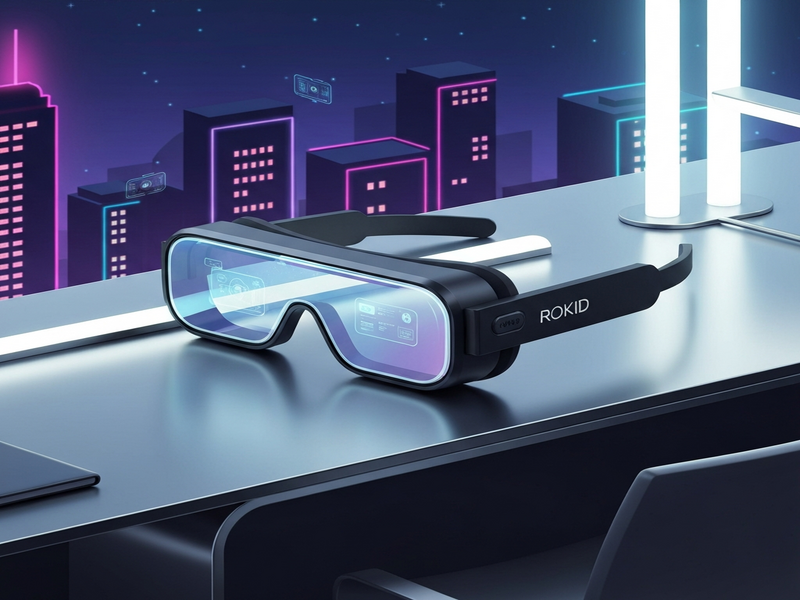
In a candid interview, Rokid’s chief executive outlined the strategic vision behind the U.S. rollout of the Rokid AR glasses. The conversation, originally featured on Android Police, highlighted the company’s focus on delivering a lightweight, high‑resolution headset that blends real‑world visuals with AI‑driven overlays. For tech enthusiasts and early adopters, this launch marks a pivotal moment in the evolution of wearable technology, promising a blend of practicality and immersive experiences.
Key Takeaways from the CEO Interview
The interview revealed several core insights that shape Rokid’s roadmap:
- Software‑first philosophy: Rokid is prioritizing an open SDK that encourages third‑party developers to create AR experiences, mirroring the success of mobile app ecosystems.
- AI integration at the edge: On‑device AI will power real‑time object recognition, language translation, and contextual notifications without relying on constant cloud connectivity.
- Affordability for early adopters: Pricing is positioned below $500 to lower the barrier for consumers and enterprises experimenting with AR.
- Strategic partnerships: Collaborations with AI platform providers will accelerate feature development and content creation.
Why Software Matters More Than Hardware
According to the CEO, “the hardware is only the canvas; the real value emerges when developers paint on it.” This mirrors trends seen in other emerging tech sectors where ecosystems drive adoption faster than raw specifications. Rokid’s commitment to an UBOS platform overview‑style approach—offering modular tools and APIs—underscores this philosophy.
Edge AI: The Engine Behind Real‑Time Interaction
Rokid’s glasses embed a custom AI chip capable of processing up to 15 TOPS (trillion operations per second). This enables features such as:
- Instant object labeling and translation.
- Gesture‑based navigation without hand controllers.
- Context‑aware notifications that adapt to the user’s environment.
Developers can tap into these capabilities via the OpenAI ChatGPT integration, allowing natural‑language queries directly from the headset.
US Launch Details & Product Specifications
The U.S. launch is scheduled for early Q2 2024, with pre‑orders opening next month. Below is a concise spec sheet:
| Specification | Detail |
|---|---|
| Display | 2 × 2.5 in micro‑OLED, 1440 × 1080 px per eye |
| Field of View | 52° diagonal |
| Processor | Custom AI‑accelerated SoC (15 TOPS) |
| Battery Life | Up to 6 hours active use |
| Connectivity | Wi‑Fi 6, Bluetooth 5.2, 5G optional module |
| Price (US) | Starting at $449 |
Beyond the hardware, Rokid is rolling out a suite of developer tools, including a Web app editor on UBOS that lets creators prototype AR experiences without deep coding knowledge.
Market Implications & Competitive Landscape
The AR wearables market is projected to exceed $30 billion by 2027, driven by enterprise use cases, gaming, and consumer entertainment. Rokid’s entry into the U.S. market positions it alongside competitors such as Meta Quest, Apple Vision Pro, and Nreal Light.
Differentiators That Could Shift the Balance
- Price‑to‑performance ratio: At $449, Rokid undercuts many premium headsets while offering comparable visual fidelity.
- Developer‑centric ecosystem: By leveraging integrations like Chroma DB integration and ElevenLabs AI voice integration, developers can embed rich, multimodal content.
- Cross‑platform messaging: The upcoming Telegram integration on UBOS and ChatGPT and Telegram integration illustrate Rokid’s commitment to seamless communication across devices.
Enterprise Opportunities
Large organizations are eyeing AR for remote assistance, training, and design visualization. Rokid’s Enterprise AI platform by UBOS offers secure device management, analytics, and custom AI pipelines, making the glasses attractive for sectors like manufacturing, healthcare, and logistics.
Direct Quote from Rokid’s CEO
“Our mission is to make augmented reality as intuitive as looking out a window. By delivering a lightweight device, an open developer ecosystem, and AI that works offline, we give users the freedom to create and consume AR experiences anywhere, anytime.” – Rokid CEO
What This Means for Early Adopters and Developers
For tech enthusiasts, the launch offers a tangible entry point into AR without the premium price tag of competing headsets. Developers can immediately start building with tools such as:
- AI SEO Analyzer – Optimize AR content discoverability.
- AI Article Copywriter – Generate documentation for AR apps.
- AI Video Generator – Produce promotional videos directly from AR scenes.
- AI Chatbot template – Add conversational agents to AR experiences.
- GPT-Powered Telegram Bot – Bridge AR notifications with instant messaging.
Explore More with UBOS: Your AR Development Hub
Whether you’re a startup, an SMB, or an enterprise, UBOS provides a comprehensive suite of resources to accelerate AR innovation:
- UBOS for startups – Fast‑track your prototype.
- UBOS solutions for SMBs – Scalable tools for growing teams.
- UBOS partner program – Co‑marketing and technical support.
- UBOS pricing plans – Transparent, usage‑based pricing.
- UBOS portfolio examples – Real‑world case studies.
- UBOS templates for quick start – Ready‑made AR app blueprints.
External Reference
For the full interview and additional context, read the original story on Android Police: Rokid CEO explains what the tech needs for success as new pair arrives in the US.
Conclusion: A New Era for Wearable AR
Rokid’s U.S. launch signals a shift toward more accessible, AI‑enhanced AR wearables. By marrying affordable hardware with a developer‑first ecosystem, the company is poised to capture a significant slice of the burgeoning AR market. Early adopters will benefit from a device that feels natural to wear, while developers gain a powerful platform enriched by integrations such as ChatGPT and Telegram integration and Telegram integration on UBOS. As the ecosystem matures, expect a surge in innovative applications—from real‑time translation to immersive training—propelling AR from novelty to necessity.