

- Updated: January 31, 2026
- 6 min read
PopWheels Powers NYC Food Carts with E‑Bike Battery Swaps, Cutting Generator Emissions
PopWheels is rolling out an e‑bike battery‑swapping system that powers New York City food carts, eliminating noisy generators, cutting fuel costs, and delivering a greener urban vending experience.
Why NYC Food Carts Need a Power Upgrade
Food carts are the culinary heartbeat of Manhattan, Queens, and the outer boroughs, serving everything from tacos to falafel on a daily basis. Yet, most of these mobile kitchens still rely on noisy, polluting gasoline generators to keep lights, fans, and point‑of‑sale devices running. A recent TechCrunch report highlighted the growing frustration among vendors and customers alike.
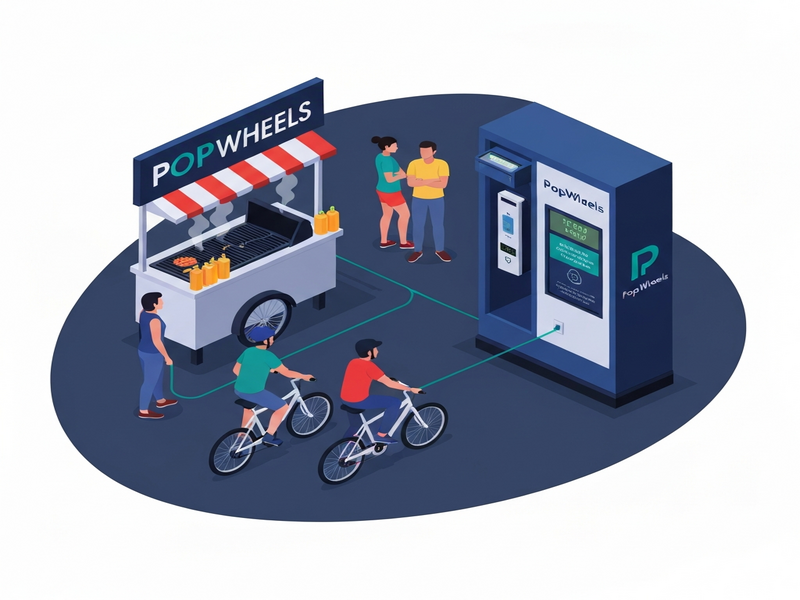
Enter PopWheels, a Brooklyn‑based startup that repurposes its fleet of e‑bike batteries to create a fast, safe, and cost‑effective swapping network for food‑cart operators. The solution promises to replace diesel fumes with clean electricity, reduce operating expenses, and free up valuable curbside space previously occupied by bulky generators.
PopWheels Initiative: From Delivery Bikes to Food‑Cart Power
Founded by former Google engineer David Hammer, PopWheels originally built a UBOS platform overview that supports a decentralized network of e‑bike charging cabinets across Manhattan. These cabinets, each capable of holding 16 batteries, were first designed for gig‑economy riders on Arrow and Whizz e‑bikes.
When Hammer noticed the parallel need for reliable, low‑emission power among street vendors, the team pivoted. By adapting the same high‑capacity lithium‑ion packs used on delivery bikes, PopWheels created a plug‑and‑play adapter that can feed a food cart’s electrical load for an entire day.
How the Battery‑Swapping System Works
The system follows a simple, MECE‑structured workflow:
- Subscription: Cart owners sign up for a $75‑per‑month plan that grants unlimited access to the swapping network.
- Battery Allocation: Each cart receives a set of four batteries (≈5 kWh total) that can power lights, refrigeration, and POS terminals.
- Mid‑Day Swap: When the charge dips below 20 %, the vendor visits the nearest swapping station—often a small fenced lot or a curbside kiosk—and exchanges depleted packs for fully charged ones in under two minutes.
- Safety Controls: Cabinets are equipped with fire‑suppression modules and draw power comparable to a Level 2 EV charger, keeping the grid impact minimal.
This model mirrors the “de‑facto decentralized fleet” described by PopWheels, allowing a single battery type to serve hundreds of vendors and riders alike.
Key Benefits for Vendors, Customers, and the City
- Cost Savings: Traditional gasoline generators cost roughly $10 per day in fuel. PopWheels’ subscription offsets this expense, delivering a break‑even point within the first month.
- Zero Emissions: By eliminating diesel fumes, carts improve air quality on busy sidewalks and reduce the city’s carbon footprint.
- Quiet Operation: No more roaring engines—vendors enjoy a peaceful cooking environment, which translates to a better customer experience.
- Scalability: The modular cabinet design can be expanded to new neighborhoods without major infrastructure upgrades.
- Regulatory Compliance: NYC’s upcoming decarbonization mandates for street vendors align perfectly with the battery‑swap model.
- Operational Flexibility: Vendors can swap batteries on‑the‑go, ensuring uninterrupted service during peak lunch hours.
- Data Insights: Integrated telemetry (via the OpenAI ChatGPT integration) provides real‑time usage stats, helping owners optimize energy consumption.
- Brand Differentiation: Green‑powered carts attract eco‑conscious diners, boosting sales and loyalty.
Funding Milestones and Expansion Roadmap
In 2025, PopWheels closed a $2.3 million seed round led by impact‑focused investors. The capital is earmarked for:
- Deploying an additional 50 swapping cabinets across Brooklyn, Queens, and the Bronx.
- Developing a mobile app powered by the Web app editor on UBOS that lets vendors track battery health and schedule swaps.
- Integrating AI‑driven demand forecasting via the AI marketing agents to predict peak sales periods and pre‑position batteries.
By summer 2026, PopWheels aims to have a city‑wide presence, covering over 1,000 food carts and reducing annual gasoline consumption by an estimated 300,000 liters.
Founder’s Vision
“We can make the economics work so that we’re actually saving vendors money right off the bat,” says David Hammer, co‑founder and CEO of PopWheels. “Our goal isn’t just to replace a generator; it’s to create an urban‑scale, fire‑safe battery‑swapping infrastructure that becomes the backbone of sustainable street commerce.”
How Your Business Can Join the Green Revolution
If you’re a food‑cart operator, city planner, or investor looking to accelerate sustainable urban mobility, explore the tools that make PopWheels’ model possible:
- Start with the UBOS homepage to learn about the low‑code platform that powers rapid deployment.
- Leverage the UBOS for startups program for early‑stage funding and technical mentorship.
- Check out the UBOS solutions for SMBs to scale your operations without heavy IT overhead.
- Explore the Enterprise AI platform by UBOS for advanced analytics and predictive maintenance.
- Automate battery‑swap scheduling with the Workflow automation studio.
- Build custom dashboards using the Web app editor on UBOS.
- Review the UBOS pricing plans to find a tier that matches your budget.
- Become a certified partner via the UBOS partner program and co‑create new swapping locations.
- Kick‑start your project with ready‑made templates like the UBOS templates for quick start, including the “AI Article Copywriter” for marketing copy.
- Boost your SEO with the AI SEO Analyzer and generate engaging visuals using the AI Image Generator.
- Enhance customer interaction with a AI Chatbot template that can answer menu questions in real time.
- Integrate voice prompts via the ElevenLabs AI voice integration for hands‑free operation.
- Connect your fleet to messaging platforms using the ChatGPT and Telegram integration for instant alerts.
- Leverage the Chroma DB integration to store and query historical energy usage.
- Explore real‑world success stories in the UBOS portfolio examples, including other urban mobility pilots.
- Read the full case study on PopWheels at UBOS blog for deeper technical details.
The Road Ahead for Sustainable Street Food
PopWheels’ e‑bike battery swapping solution is more than a clever hack; it’s a blueprint for how cities can retrofit existing micro‑businesses with clean energy without massive infrastructure overhauls. By marrying high‑density lithium packs with a robust, AI‑enhanced management layer—built on the versatile About UBOS ecosystem—vendors gain reliability, cost control, and a green brand story that resonates with today’s consumers.
As New York City pushes toward its 2030 carbon‑neutral goals, initiatives like PopWheels demonstrate that the path to a cleaner skyline can start at the curbside. For food‑cart owners, the message is clear: power up with batteries, not fumes, and join the next wave of urban entrepreneurship.