

- Updated: February 23, 2026
- 7 min read
Pinterest Struggles with AI Moderation Flood: Artists Speak Out
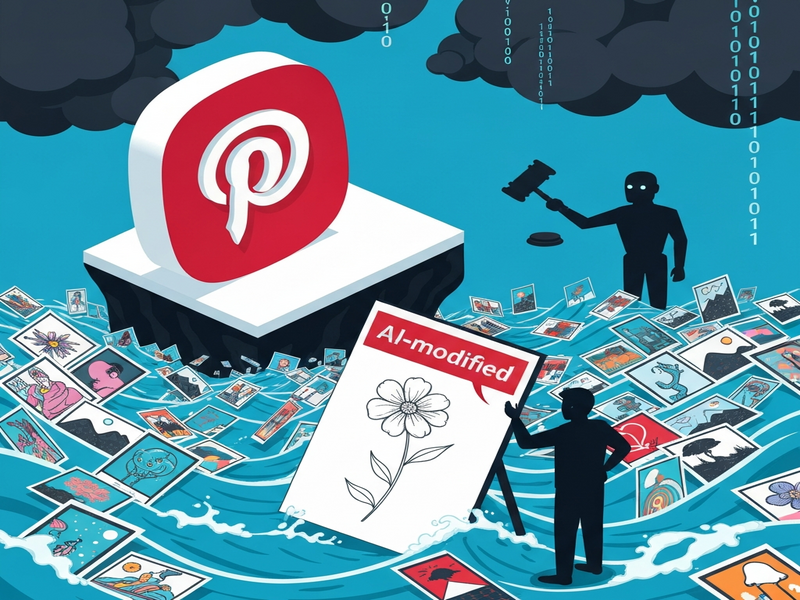
Answer: Pinterest’s aggressive AI‑driven moderation is mistakenly flagging genuine hand‑drawn artwork as “AI‑modified,” flooding feeds with low‑quality AI‑generated images, and threatening artists’ intellectual‑property rights, prompting a backlash that could reshape the platform’s AI‑first strategy.
Introduction – When AI Becomes the Gatekeeper
Pinterest, the visual discovery engine that has long served as a digital pinboard for creators, is now wrestling with an AI moderation nightmare. The platform’s recent push to embed artificial intelligence into every layer—from content curation to policy enforcement—has sparked a wave of frustration among digital marketers, tech enthusiasts, and especially artists who rely on Pinterest for inspiration and traffic.
In this deep‑dive we’ll unpack the core moderation challenges, showcase real‑world examples of mislabeling and bans, explore the ripple effects on creators’ IP, and examine how Pinterest’s AI‑first roadmap is responding to the uproar.
Summary of Pinterest AI Moderation Issues
Pinterest’s AI moderation engine was introduced to automate the detection of prohibited content, reduce manual review costs, and accelerate the removal of harmful material. However, the system’s over‑sensitivity has produced three major pain points:
- False positives: Hand‑drawn illustrations and vintage photographs are being tagged as “AI‑modified” or removed outright.
- Massive influx of AI‑generated art: Low‑quality synthetic images dominate users’ feeds, drowning out authentic creations.
- Intellectual‑property (IP) erosion: Pinterest’s proprietary AI, Pinterest Canvas, is trained on public pins without explicit creator consent, raising legal and ethical concerns.
Mislabeling Hand‑Drawn Art as “AI‑Modified”
Artists such as Tiana Oreglia and Min Zakuga report that even decades‑old sketches are automatically stamped with the “AI‑modified” badge. This mislabel not only confuses viewers but also undermines the creator’s brand narrative of “100 % hand‑drawn, no AI.”
Overzealous Bans and Time‑Consuming Appeals
When the AI flags a pin for “self‑harm,” “nudity,” or “spam,” the content is instantly removed and the account may be suspended. While Pinterest promises a human‑review fallback, the appeal process can take 24–48 hours, draining creators’ productivity.
Examples of Mislabeling and Bans
Below are concrete cases that illustrate the breadth of the problem:
- Female figure in a bikini: A fully clothed, high‑resolution photograph of a model holding knives was flagged for “adult content,” despite meeting Pinterest’s own guidelines.
- Intimate illustration: A painted scene of two women in a tender embrace received an “AI‑modified” label, forcing the artist to submit a lengthy proof of originality.
- Stock photo of a man with a gun: The image was removed for “self‑harm,” even though the subject was a neutral, non‑violent portrait.
- Legacy artwork from 2012: A digital illustration created before the rise of generative AI was automatically tagged as AI‑generated, prompting a multi‑step appeal that ultimately succeeded only after the artist provided source files.
Impact on Artists and IP Concerns
The fallout extends beyond inconvenience; it threatens the very livelihood of creators who depend on Pinterest for discovery and sales.
Brand Dilution and Loss of Trust
When a creator’s portfolio is mislabeled, the perceived authenticity of their work erodes. For artists like Eva Toorenent, the “AI‑modified” badge creates a credibility gap that can deter potential buyers on platforms such as Etsy.
Intellectual‑Property Theft via Canvas Training
Pinterest Canvas scrapes publicly available pins to train its text‑to‑image model. Artists who have not consented to this usage see their work re‑appearing in AI‑generated outputs, effectively turning their creations into data points for a commercial product.
Platform Exodus and Content Migration
Faced with relentless false flags, some creators are deleting their boards or moving to alternative platforms. This migration threatens Pinterest’s content diversity and could diminish its value proposition as a visual discovery engine.
Pinterest’s AI‑First Strategy Response
In response to the backlash, Pinterest has doubled down on its AI roadmap, citing long‑term efficiency gains and a vision of “AI‑enhanced well‑being.” The company’s recent actions include:
Organizational Realignment
In early 2026, Pinterest announced a 15 % workforce reduction, reallocating resources to AI‑focused teams. CEO Bill Ready emphasized that “AI will be the engine that powers every user interaction, from discovery to moderation.”
Technical Enhancements
Pinterest claims to be improving its moderation pipeline by combining machine learning classifiers with a “human‑in‑the‑loop” review for edge cases. The platform also introduced a “self‑serve appeal dashboard” that promises faster resolution times.
Transparency Initiatives
To address creator concerns, Pinterest has begun publishing monthly moderation statistics and is piloting a “creator‑consent” opt‑out for using public pins in Canvas training. However, the rollout is still in beta and adoption remains low.
What Can Creators Do? Leveraging AI Wisely
While the platform’s policies evolve, creators can adopt proactive measures to safeguard their work and streamline compliance.
Use AI‑Powered Content Tools for Audits
UBOS offers a suite of AI utilities that can help creators audit their pins before publishing:
- AI SEO Analyzer – Detects potential policy‑violating keywords and suggests optimizations.
- AI Article Copywriter – Generates compliant descriptions that avoid trigger phrases.
- AI Image Generator – Creates placeholder visuals for testing moderation outcomes before uploading originals.
Automate Workflows with UBOS
Integrate Pinterest uploads into UBOS’s Workflow automation studio to automatically tag, version‑control, and back up assets. This reduces the risk of losing content during appeal cycles.
Maintain a Private Backup Library
Store high‑resolution originals in a secure cloud bucket or on the Web app editor on UBOS. Should a pin be removed, you can quickly re‑upload without recreating the asset.
Leverage AI Marketing Agents for Outreach
UBOS’s AI marketing agents can help you promote verified, non‑AI‑modified content across other channels (e.g., Instagram, LinkedIn), diversifying traffic sources and reducing reliance on Pinterest’s algorithm.
Stay Informed via UBOS Resources
Explore the UBOS portfolio examples for case studies on how other creators have navigated platform policy changes. The UBOS templates for quick start also include pre‑built moderation checklists.
Future Outlook – Balancing Innovation with Creator Rights
Pinterest’s AI‑first ambition is unlikely to retreat; the company believes that AI can “flip the script on social media” by promoting well‑being rather than outrage. However, sustainable growth will depend on reconciling automation with transparent, creator‑centric governance.
Key indicators to watch in the coming months:
- Policy clarity: Will Pinterest publish a definitive list of AI‑related labeling criteria?
- Opt‑out adoption: How many creators will enable the Canvas consent toggle?
- Appeal efficiency: Will the new dashboard cut resolution times below 12 hours?
- Community sentiment: Will the backlash subside as AI moderation improves?
For digital marketers and tech enthusiasts, the evolving landscape offers a live case study of AI’s double‑edged nature: powerful efficiency gains paired with unforeseen human impact.
Conclusion
Pinterest’s AI moderation challenges underscore a broader industry truth—automation must be paired with robust human oversight, especially when creative expression is at stake. Artists, brands, and developers can mitigate risk by leveraging complementary AI tools (like those from UBOS) and maintaining independent backups of their work. As Pinterest refines its AI‑first strategy, the platform’s future will hinge on its ability to protect creators while delivering the promised AI‑enhanced experience.
“AI should amplify human creativity, not replace it.” – About UBOS
For a deeper dive into AI’s impact on social platforms, visit UBOS homepage and explore our Enterprise AI platform by UBOS. To see how AI can streamline your marketing workflows, check out the UBOS partner program.
Read the original reporting on this issue at 404 Media.
Keywords: Pinterest AI moderation, AI‑generated content, social media AI, content moderation challenges, AI impact on artists
Andrii Bidochko
CTO UBOS
Andrii Bidochko is an AI entrepreneur and researcher focused on AI agents, reinforcement learning, and autonomous systems. He writes about the technologies shaping the future of machine intelligence, from frontier models and agent architectures to real-world AI applications.