

- Updated: May 6, 2025
- 5 min read
Orca AI’s $72.5M Series B Funding: Transforming Autonomous Shipping with Starlink and Defense Partnerships
Orca AI: Sailing into the Future with Autonomous Shipping and Defense Opportunities
The world of maritime navigation is on the brink of a revolutionary transformation, thanks to the groundbreaking advancements in autonomous shipping technology. Leading the charge is Orca AI, a pioneering company that recently secured a substantial $72.5 million in Series B funding. This funding round, led by Brighton Park Capital, marks a significant milestone for Orca AI, positioning it as a key player in the autonomous shipping industry. With the integration of cutting-edge AI technology and strategic partnerships, Orca AI is set to redefine the future of maritime innovation.
Orca AI’s Autonomous Shipping Platform: A Game-Changer
Orca AI’s autonomous shipping platform is designed to enhance navigation safety and efficiency on the high seas. By leveraging a marine visual dataset of over 80 million nautical miles, the platform employs AI-powered decision-making to significantly reduce the risk of collisions. This not only optimizes fuel consumption but also allows crew members to focus their attention on other critical aspects of the voyage.
The platform’s capabilities extend beyond commercial shipping, as Orca AI has already secured contracts in the defense sector. Navies around the world are increasingly interested in autonomous solutions that offer cost-effective assets with reduced human intervention. Orca AI’s recent deployment on a navy ship underscores its potential to revolutionize naval operations.
The Role of Starlink in Real-Time Data Transmission
One of the key factors driving Orca AI’s success is its collaboration with Starlink, a satellite internet constellation developed by SpaceX. This partnership enables real-time data transmission, allowing Orca AI to collect data at scale directly from ship sensors. The integration of Starlink’s capabilities enhances mapping routes, traffic monitoring, and the sharing of critical information, making it a vital component of Orca AI’s autonomous shipping platform.
According to a 2024 analysis of Orca AI’s alerts system, the integration of Starlink contributed to a 54% reduction in close encounter events, resulting in an average savings of $100,000 in fuel per vessel per year. This collaboration exemplifies the potential of combining AI technology with advanced satellite communication systems to achieve unprecedented levels of efficiency and safety in maritime operations.
Exploring Defense Opportunities with Navies
The defense sector presents a significant growth opportunity for Orca AI. As navies worldwide seek to modernize their fleets with autonomous capabilities, Orca AI’s platform offers a compelling solution. The ability to operate cost-effective assets with minimal human intervention aligns with the strategic goals of many naval forces.
Orca AI’s recent contract deployment on a navy ship demonstrates its potential to enhance naval operations. By providing real-time data and autonomous navigation capabilities, the platform can improve situational awareness and decision-making for naval commanders. This not only enhances the safety of naval operations but also reduces the risk of human error in high-stakes environments.
Comparing Orca AI with Other Companies in the Autonomous Navigation Space
Orca AI is not alone in the race to revolutionize maritime navigation. Other companies, such as Avikus (a subsidiary of Hyundai HD) and Sea Machines, are also making strides in the autonomous navigation space. However, Orca AI’s unique approach and strategic partnerships set it apart from the competition.
While Avikus focuses on developing autonomous navigation systems for commercial vessels, Sea Machines specializes in autonomous control systems for workboats and commercial ships. In contrast, Orca AI’s platform combines AI-powered decision-making with real-time data transmission, offering a comprehensive solution for both commercial and defense applications.
Conclusion: A Forward-Looking Statement
As the autonomous shipping market continues to grow, Orca AI is poised to play a pivotal role in shaping the future of maritime innovation. With its recent funding and strategic partnerships, the company is well-positioned to expand its reach and impact in both the commercial and defense sectors.
Looking ahead, Orca AI aims to further enhance its platform’s capabilities and explore new opportunities in the autonomous navigation space. By leveraging AI technology and satellite communication systems, Orca AI is set to redefine the standards of safety, efficiency, and innovation in maritime operations.
For more information on the latest advancements in AI technology, visit the UBOS homepage. Discover how OpenAI ChatGPT integration is transforming businesses and explore the potential of ChatGPT and Telegram integration for enhanced communication. Additionally, learn about the Enterprise AI platform by UBOS and its impact on organizational growth.
For further reading on the impact of AI in various industries, check out our insights on AI in stock market trading and the impact of generative AI agents on business. Stay informed about the latest trends and developments in AI technology with our comprehensive guides and articles.
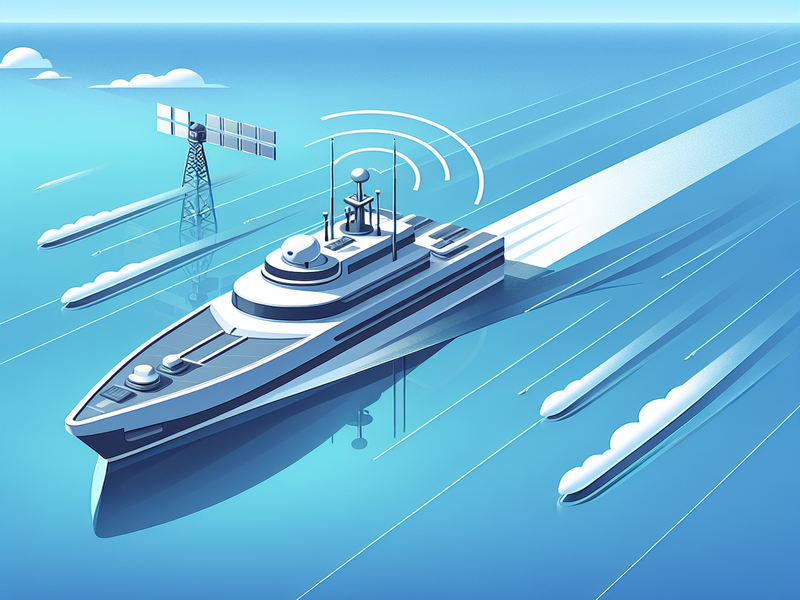
In conclusion, Orca AI’s recent funding and strategic partnerships position it as a leader in the autonomous shipping industry. With its innovative platform and collaboration with Starlink, Orca AI is set to redefine the standards of maritime navigation. As the company continues to explore new opportunities in the defense sector, it is poised to make a significant impact on the future of autonomous shipping.
For more information on Orca AI and its recent funding, visit the original article on TechCrunch.
Andrii Bidochko
CTO UBOS
Andrii Bidochko is an AI entrepreneur and researcher focused on AI agents, reinforcement learning, and autonomous systems. He writes about the technologies shaping the future of machine intelligence, from frontier models and agent architectures to real-world AI applications.