

- Updated: February 16, 2026
- 5 min read
OpenClaw Founder Peter Steinberger Joins OpenAI – Implications for Multi‑Agent AI
Peter Steinberger, the founder of the OpenClaw AI agent platform, has officially joined OpenAI to accelerate the development of multi‑agent systems and bring open‑source AI tools to a broader audience.
Why This Hire Matters for the Future of AI Agents
When Sam Altman announced on X that Peter Steinberger would become part of OpenAI’s research team, the AI community buzzed with excitement. Steinberger’s reputation for building bold, community‑driven agents like OpenClaw makes his move a strategic signal: OpenAI is doubling down on collaborative, multi‑agent architectures that could redefine how businesses and developers interact with artificial intelligence.
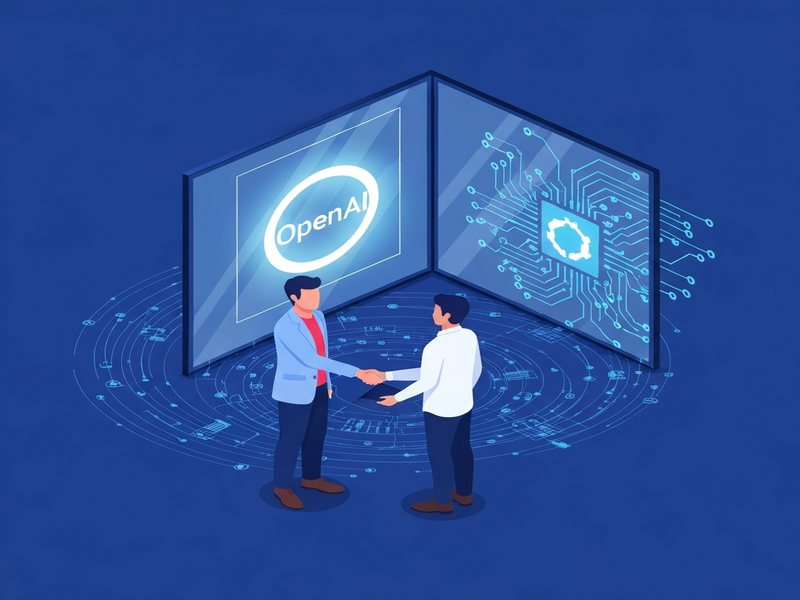
In this article we unpack Steinberger’s journey, the technical DNA of OpenClaw, the specifics of his new role, and what this means for startups, investors, and AI researchers alike.
OpenClaw: From Moltbot to a Multi‑Agent Powerhouse
OpenClaw began life as Moltbot, a modest experiment in autonomous skill execution. Within months, it rebranded to Clawdbot and finally settled on the name OpenClaw, reflecting its open‑source ethos and claw‑like ability to “grab” and combine disparate AI capabilities.
Key milestones include:
- Rapid adoption of its skill marketplace, AI SEO Analyzer, which let developers plug in custom modules.
- Launch of AI YouTube Comment Analysis tool, showcasing real‑time sentiment extraction.
- Creation of Your Speaking Avatar template, an early foray into voice‑driven agents.
Peter Steinberger, a former software engineer turned AI entrepreneur, steered OpenClaw through a turbulent growth phase. He emphasized community governance, releasing the code under an Apache‑2.0 license and establishing the UBOS partner program to attract contributors.
Despite its success, OpenClaw faced challenges: a security audit uncovered over 400 malicious skills on its ClawHub marketplace, prompting a swift remediation effort and a hardening of its verification pipeline.
The OpenAI Offer: What Steinberger Is Bringing to the Table
According to Steinberger’s personal blog, the decision to join OpenAI was driven by three core motivations:
- Scale: OpenAI’s compute resources and data pipelines dwarf any independent startup, enabling rapid prototyping of multi‑agent ecosystems.
- Impact: By embedding OpenClaw’s open‑source modules into OpenAI’s product stack, Steinberger believes he can “bring AI agents to the masses without the headaches of running a company.”
- Collaboration: OpenAI’s culture of cross‑team research aligns with Steinberger’s vision of “extremely multi‑agent” future where agents negotiate, cooperate, and augment each other.
While the exact title and compensation remain undisclosed, Altman’s public statement highlighted Steinberger’s “amazing ideas about getting AI agents to interact with each other.” The move also signals OpenAI’s intent to keep OpenClaw alive as an open‑source project, now under a foundation that will receive direct support from OpenAI’s research budget.
For developers already using UBOS tools, this partnership opens new integration pathways. For example, the OpenAI ChatGPT integration can now leverage OpenClaw’s skill orchestration layer, while the Chroma DB integration provides a vector store optimized for multi‑agent memory.
What This Means for Startups, Researchers, and Investors
For startups, the OpenAI‑OpenClaw synergy reduces the barrier to building sophisticated agent pipelines. Entrepreneurs can now prototype with the UBOS templates for quick start, such as the AI Chatbot template, and instantly connect to OpenAI’s API ecosystem.
For researchers, the collaboration promises a shared benchmark suite for multi‑agent coordination. OpenAI’s internal Workflow automation studio will likely host open‑source experiments that can be reproduced using the Web app editor on UBOS.
For investors, the hire underscores OpenAI’s strategy to acquire talent that can accelerate product differentiation. The “multi‑agent core” that Altman referenced could become a new revenue stream, complementing existing offerings like ChatGPT Plus and the Enterprise AI platform by UBOS.
Moreover, the open‑source nature of OpenClaw ensures that the broader ecosystem—ranging from hobbyists to Fortune 500 firms—will continue to benefit from community contributions, mitigating the risk of vendor lock‑in.
Key Quotes from the Announcement
“The future is going to be extremely multi‑agent. Enabling agents to work together will quickly become core to our product offerings.” – Sam Altman, CEO of OpenAI
“I want to change the world, not build a large company. Teaming up with OpenAI is the fastest way to bring this to everyone.” – Peter Steinberger, Founder of OpenClaw
Read the full story on the original Verge article for additional context.
Looking Ahead: A New Era of Collaborative AI
Peter Steinberger’s transition to OpenAI is more than a headline; it’s a catalyst for a paradigm shift toward interoperable AI agents. As OpenAI integrates OpenClaw’s modular skill system, developers can expect faster iteration cycles, richer agent‑to‑agent dialogues, and more secure, community‑vetted extensions.
If you’re a founder looking to embed AI agents into your product, now is the perfect time to explore the UBOS AI news hub for the latest templates, tutorials, and partnership opportunities.
Stay ahead of the curve—sign up for our UBOS pricing plans, experiment with the AI Video Generator, and watch how multi‑agent AI reshapes the tech landscape.
Explore More on UBOS
Our platform offers a suite of tools that complement the OpenAI‑OpenClaw collaboration:
- About UBOS – Learn our mission and vision.
- AI news – Stay updated on breakthroughs.
- OpenAI updates – Direct feed of OpenAI product releases.
- Startup innovations – Real‑world case studies.
- AI marketing agents – Automate campaigns with intelligent bots.
- UBOS portfolio examples – See how others are using our tools.
- Enterprise AI platform by UBOS – Scale AI across large organizations.
- UBOS solutions for SMBs – Tailored AI for small businesses.