

- Updated: February 5, 2026
- 6 min read
OpenAI Executives’ Political Donations Spark Boycott and AI Industry Debate
OpenAI’s top executives have collectively contributed more than $26 million to former President Donald Trump’s political ecosystem, with Greg Brockman alone donating $25 million to the MAGA Inc. Super‑PAC and CEO Sam Altman adding $1 million to the 2025 inaugural fund.
OpenAI Executives’ Political Donations Spark Boycott and Raise AI‑Industry Ethics Questions
The AI community is witnessing a growing boycott movement aimed at pressuring OpenAI to cease its financial support for politicians who champion policies perceived as hostile to AI safety and civil liberties. The catalyst for this wave of activism is the recent disclosure of sizable political contributions from OpenAI’s leadership, which many argue could influence regulatory outcomes and undermine public trust in the technology.
Breakdown of OpenAI Executives’ Contributions
Federal election‑commission filings reveal a stark picture of how OpenAI’s senior team is channeling money into the political arena. Below is a MECE‑structured summary of the most significant donations.
Greg Brockman – $25 Million to MAGA Inc.
Greg Brockman, co‑founder and president of OpenAI, together with his spouse, contributed a staggering $25 million to the MAGA Inc. Super‑PAC, making them the single largest donors to the Trump‑aligned political operation in the most recent filing year. This contribution dwarfs the next highest corporate donor by roughly $5 million.
Sam Altman – $1 Million to Trump’s 2025 Inaugural Fund
OpenAI’s CEO, Sam Altman, added $1 million directly to the Trump 2025 inaugural fund. While smaller in absolute terms, this donation is symbolically potent because it links the company’s chief executive to a specific campaign effort.
Other Executives and PAC Contributions
- Several senior engineers and board members have each contributed between $10,000 and $250,000 to various pro‑Trump political action committees.
- Collectively, these ancillary donations bring the total political outlay from OpenAI leadership to over $26 million.
Implications for the AI Industry
These financial ties raise a cascade of concerns that ripple across the AI ecosystem, from regulatory frameworks to market dynamics.
- Regulatory Capture Risk: Heavy donations to politicians who oppose AI oversight could lead to weaker legislation, allowing unchecked model scaling and data‑privacy shortcuts.
- Ethical Credibility: Stakeholders—including investors, developers, and end‑users—may question OpenAI’s commitment to its original mission of “beneficial AI for all.”
- Competitive Landscape: Rival firms such as AI marketing agents and open‑source alternatives could gain market share if the boycott gains traction.
- Talent Retention: Recent reports indicate a wave of employee resignations at OpenAI, citing leadership’s political entanglements as a primary factor.
- Public Perception: Media coverage linking OpenAI to the Trump campaign may erode consumer confidence, especially among progressive user bases that dominate ChatGPT’s early adopters.
For organizations seeking to navigate this evolving terrain, platforms like the UBOS platform overview provide a neutral environment for building AI‑driven products without the political baggage.
Key Quote from the Original Disclosure
“OpenAI executives are the biggest donors to Trump’s political machine, contributing $26 million in total, a figure that eclipses the combined political spending of most other AI firms.” – QuitGPT campaign statement
Visualizing the Donations
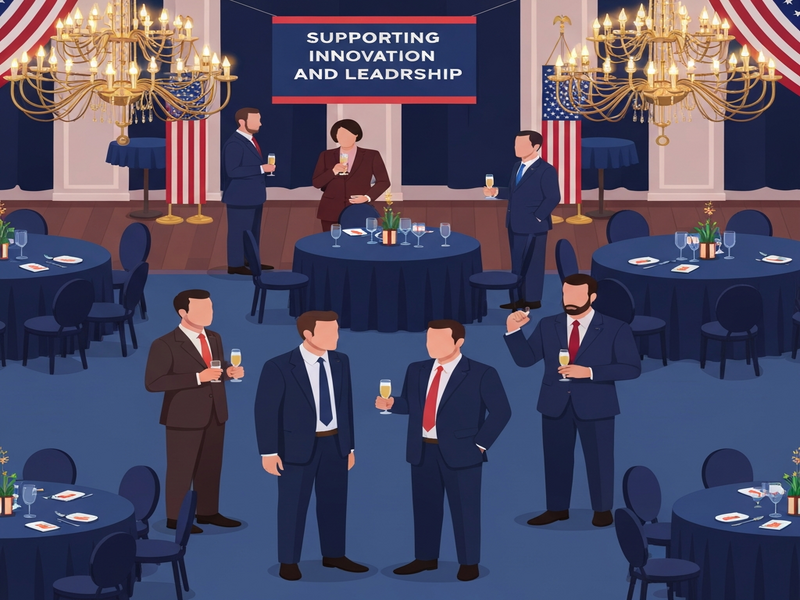
The image below, generated by UBOS’s AI visualizer, illustrates the flow of money from OpenAI’s leadership to political entities, highlighting the disproportionate scale of Brockman’s contribution.
External Source
For a full account of the donation filings and the activist response, see the original reporting on QuitGPT’s website.
Further Reading on UBOS Solutions
While the controversy unfolds, many businesses are exploring alternative AI stacks that prioritize transparency and compliance.
- Discover how to integrate messaging platforms with AI using the Telegram integration on UBOS.
- Leverage conversational AI in Telegram with the ChatGPT and Telegram integration for secure, policy‑compliant bots.
- Explore the OpenAI ChatGPT integration for enterprises that still need OpenAI’s capabilities but want strict governance.
- Utilize vector‑search capabilities via the Chroma DB integration to power semantic search without exposing data to third‑party APIs.
- Give your applications a human‑like voice using the ElevenLabs AI voice integration.
- Start building AI‑enhanced products on the UBOS homepage, which offers a no‑code environment for rapid prototyping.
- Learn more about the company’s mission on the About UBOS page.
- Automate your marketing workflows with AI marketing agents that respect privacy regulations.
- Consider joining the UBOS partner program to co‑develop compliant AI solutions.
- For startups seeking a fast go‑to‑market, explore UBOS for startups and its pre‑built templates.
- SMBs can benefit from UBOS solutions for SMBs, which include built‑in data governance.
- Large enterprises may prefer the Enterprise AI platform by UBOS for scalable, auditable deployments.
- Design custom interfaces with the Web app editor on UBOS, featuring drag‑and‑drop components.
- Orchestrate complex processes using the Workflow automation studio.
- Review the UBOS pricing plans to find a cost‑effective tier for your organization.
- See real‑world implementations in the UBOS portfolio examples.
- Kick‑start projects with ready‑made solutions from the UBOS templates for quick start.
- Try the AI SEO Analyzer to audit your own content for search visibility.
- Generate high‑quality copy with the AI Article Copywriter template.
- Create engaging video assets using the AI Video Generator tool.
- Deploy conversational experiences with the AI Chatbot template, fully compliant with GDPR.
- Build a Telegram bot powered by GPT models via the GPT‑Powered Telegram Bot template.
Conclusion & Call to Action
The revelation that OpenAI’s leadership has funneled over $26 million into Trump‑aligned political channels has ignited a debate that goes beyond partisan lines. It forces the AI sector to confront a fundamental question: can a company that claims to serve humanity remain credible while financially backing policymakers who may undermine that very mission?
Stakeholders—whether you are a developer, investor, or regulator—should demand greater transparency and consider diversifying away from platforms whose governance is clouded by political contributions. If you share concerns about AI ethics and political influence, join the conversation on social media, support alternative open‑source models, or explore neutral AI infrastructure options like those offered by UBOS. Together, the community can shape an AI future that aligns with democratic values and public trust.
Stay informed, stay critical, and consider taking concrete steps: audit your AI vendor’s political ties, adopt compliance‑first tools, and amplify voices calling for responsible AI governance.