

- Updated: March 31, 2026
- 5 min read
OkCupid and Match Group Settle FTC Case Over Photo Data Sharing
OkCupid & Match Group FTC Settlement: What It Means for Data Privacy
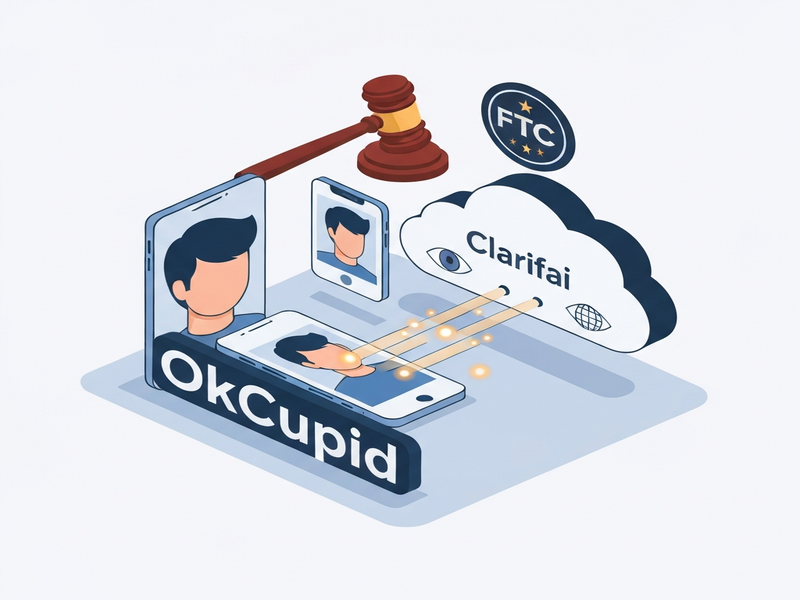
OkCupid and its parent company Match Group have settled with the Federal Trade
Commission (FTC), agreeing to a permanent prohibition on misrepresenting how they
collect, use, and share personal data—without paying any monetary fine.
Quick Summary of the Settlement
In March 2026 the FTC announced that OkCupid, the popular dating app owned by
Match Group, will no longer be allowed to hide or mislead users about the
sharing of nearly three million photos with facial‑recognition firm Clarifai.
The agreement, filed in the U.S. District Court for the Northern District of
Texas, does not include a financial penalty, but it imposes a permanent
ban on deceptive data‑privacy practices and requires ongoing compliance
monitoring.
Background: The 2014 Photo‑Sharing Breach
In September 2014, Clarifai’s CEO emailed an OkCupid founder requesting access
to a massive dataset of user photos. The request was granted, and Clarifai
received roughly three million images, along with location and demographic
data, without any formal contract or user consent. Clarifay later used the
images to train a facial‑recognition system capable of estimating age, gender,
and race—technology later marketed to governments, military, and law‑enforcement
agencies.
OkCupid’s privacy policy at the time promised users that personal information
would not be shared except as disclosed or with an opt‑out option. The FTC
argued that the company violated this promise, and that OkCupid repeatedly
denied involvement when journalists uncovered the data transfer.
FTC Settlement Terms
-
Permanent Prohibition: OkCupid and Match Group are barred
from misrepresenting the scope, purpose, or security of any personal data
they collect, maintain, use, disclose, or delete. -
Transparency Requirements: The companies must provide
clear, conspicuous disclosures about data‑sharing practices and offer
genuine opt‑out mechanisms where required by state privacy laws. -
Compliance Audits: An independent third‑party monitor will
conduct periodic audits to verify that OkCupid’s privacy controls align
with the settlement. -
No Monetary Penalty: The FTC chose not to levy a fine,
citing the companies’ willingness to settle and the potential for
corrective action to benefit users.
Implications for Users and the Tech Industry
The settlement sends a clear signal that deceptive data‑privacy practices will
be met with enforceable restrictions, even when financial penalties are
absent. For users, the immediate benefit is greater transparency about how
their photos and location data might be used by third parties.
For the broader industry, the case underscores the importance of:
- Embedding explicit consent flows before sharing any biometric data.
- Maintaining written contracts that limit third‑party usage of user data.
- Regularly auditing AI‑related data pipelines for compliance with privacy
statutes such as the CCPA, GDPR, and emerging state laws.
Companies that rely on AI services—especially facial‑recognition—must now
evaluate whether their data‑source agreements meet the heightened scrutiny
demonstrated by the FTC in this case.
Expert and FTC Commentary
“The FTC enforces the privacy promises that companies make. When those promises
are broken, we will act—whether that means a fine or a permanent injunction.”
— Christopher Mufarrige, Director, FTC Bureau of Consumer Protection
Privacy law analyst Dr. Lena Ortiz notes that “the lack of a
monetary penalty does not diminish the settlement’s impact. The permanent
prohibition creates a legal ceiling that can be leveraged in future
litigation, effectively turning the settlement into a deterrent for other
firms.”
How UBOS Helps Organizations Meet New Privacy Standards
Companies looking to tighten data‑governance can turn to the UBOS platform overview, which offers built‑in consent management and audit trails.
For startups, the UBOS for startups program provides templates that embed privacy‑by‑design principles from day one.
Small‑ and medium‑size businesses can benefit from UBOS solutions for SMBs, which include automated compliance checks and role‑based access controls.
Enterprises seeking a comprehensive AI governance framework can explore the Enterprise AI platform by UBOS, featuring real‑time monitoring of data flows to third‑party AI services.
The Workflow automation studio lets privacy officers design approval workflows that trigger before any biometric data is exported.
Developers can quickly prototype compliant applications using the Web app editor on UBOS, which includes pre‑built privacy widgets.
To understand pricing and choose the right tier for compliance needs, review the UBOS pricing plans.
Marketers can leverage AI marketing agents that respect user opt‑outs while delivering personalized campaigns.
For a quick start, explore the UBOS templates for quick start, including a “Privacy‑First Data Pipeline” template.
Learn more about the company behind these tools on the About UBOS page.
Template Spotlight: AI‑Powered Privacy Tools
- AI SEO Analyzer – ensures your site’s metadata respects user consent.
- AI Article Copywriter – automatically inserts privacy disclosures into content.
- AI Survey Generator – builds surveys with built‑in GDPR consent fields.
- GPT‑Powered Telegram Bot – demonstrates secure data handling in messaging apps.
Original Reporting
For the full investigative piece, see the Ars Technica article:
OkCupid & Match Pay No Fine for Sharing User Photos with Facial‑Recognition Firm
.
Conclusion: A New Era of Enforced Transparency
The OkCupid‑Match Group settlement marks a pivotal moment for data‑privacy enforcement.
While the absence of a fine may appear lenient, the permanent prohibition on deceptive
practices creates a lasting legal obligation that will shape how dating apps, AI
providers, and any platform handling biometric data operate in the United
States and beyond.
Users can now demand clearer explanations of how their photos are used, and
companies must embed consent mechanisms that survive legal scrutiny. For
technology leaders, the case is a reminder to audit third‑party data pipelines,
adopt privacy‑by‑design frameworks, and leverage platforms like UBOS that automate compliance.
Staying ahead of privacy regulations isn’t just a legal necessity—it’s a competitive
advantage in a market where trust is the most valuable currency.
Andrii Bidochko
CTO UBOS
Andrii Bidochko is an AI entrepreneur and researcher focused on AI agents, reinforcement learning, and autonomous systems. He writes about the technologies shaping the future of machine intelligence, from frontier models and agent architectures to real-world AI applications.